Thousands of micro and small industrial units in Punjab are facing an uncertain future as the September 30, 2026, deadline for relocating from Mixed Land Use (MLU) areas looms. Industry bodies are urging the state government for a permanent policy to prevent mass closures.
- September 30, 2026, is the final deadline for industries in Mixed Land Use (MLU) areas to relocate.
- Failure to move may result in the Punjab Pollution Control Board (PPCB) denying Consent to Operate (CTO) renewals.
- Ludhiana is the hardest-hit city, with over 50,000 micro-units and lakhs of workers at risk.
- Industry bodies like FICO are demanding the formal designation of existing MLU pockets as industrial zones.
The industrial landscape of Punjab is currently gripped by anxiety as thousands of micro and small-scale enterprises operate under a ticking clock. The state government's order allowing industries in Mixed Land Use (MLU) areas—where residential and commercial spaces coexist with workshops—is set to expire on September 30, 2026. This deadline places an immense burden on small entrepreneurs who argue that relocation is a logistical impossibility without viable land alternatives.
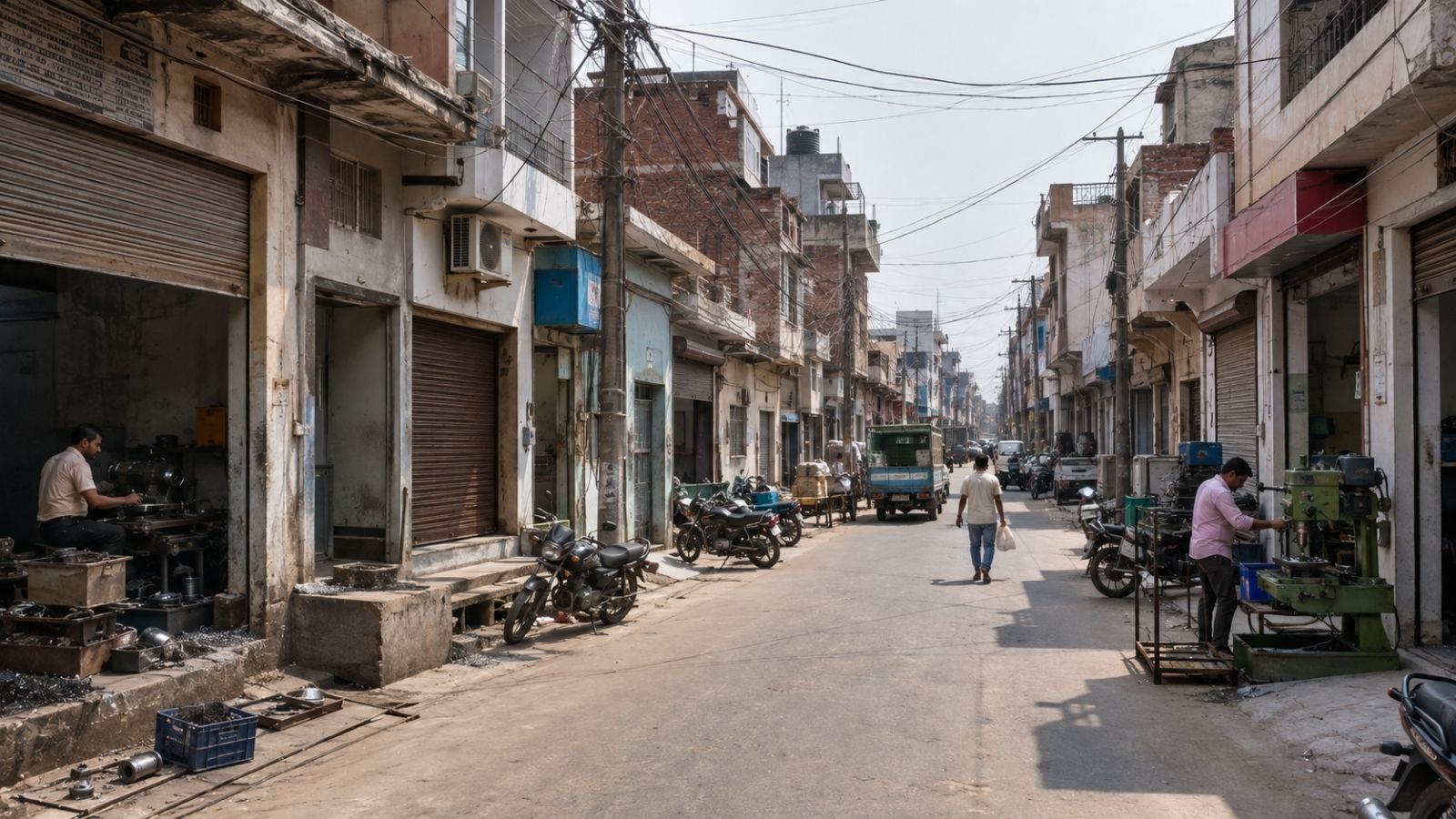
The crisis is most acute in Ludhiana, the state's industrial powerhouse. Localities such as Janta Nagar, Shimlapuri, and Partap Nagar have evolved into dense industrial clusters. According to the Federation of Industrial and Commercial Organisation (FICO), Ludhiana alone houses over 50,000 micro-units employing approximately five to six lakh workers. These units are the backbone of the cycle-parts, sewing-machine, and auto-component supply chains.
Why This Matters
BozokMedia analysis shows that this is not merely an environmental regulation issue, but a socio-economic one. These MLU units provide critical employment for women who can work close to home. A forced shutdown or relocation to distant hubs like the Hi-Tech Cycle Valley could lead to massive unemployment and the collapse of intricate local supply chains that larger industries rely upon.
The struggle between urban planning and economic reality in Punjab highlights the failure to provide scalable, affordable industrial land for the MSME sector.
The history of this deadline is a saga of repeated extensions. Originally set by the SAD-BJP government in 2008-09 with a 10-year window, the timeline was extended by the Congress government in 2018-19, and further extended by the AAP government in 2023-24. Despite these extensions, the Punjab Pollution Control Board (PPCB) remains firm on the environmental necessity of moving polluting units out of densely populated residential zones to curb air and water pollution.
Efforts to facilitate relocation, such as the 360-acre Cycle Valley at Dhanansu village, have seen limited success. Industrialists claim that larger corporations have occupied the prime spaces, leaving the smallest players—the very ones the project was intended for—with nowhere to go.
| Aspect | Government/PPCB Position | Industry (FICO/UCPMA) Position |
|---|---|---|
| Environmental Impact | High pollution in residential areas must stop. | Pollution is manageable; economic survival is priority. |
| Relocation | Move to designated industrial clusters. | Lack of affordable, accessible land for micro-units. |
| Employment | Long-term health of citizens is paramount. | Livelihoods of 6 lakh workers are at stake. |
Frequently Asked Questions
What happens after the September 30, 2026 deadline?
Units that have not relocated may face significant difficulties in obtaining or renewing their Consent to Operate (CTO) from the PPCB, effectively making their operations illegal.
Which cities are most affected by this order?
Ludhiana is the most affected, followed by Jalandhar, Sangrur, Khanna, and Phagwara.