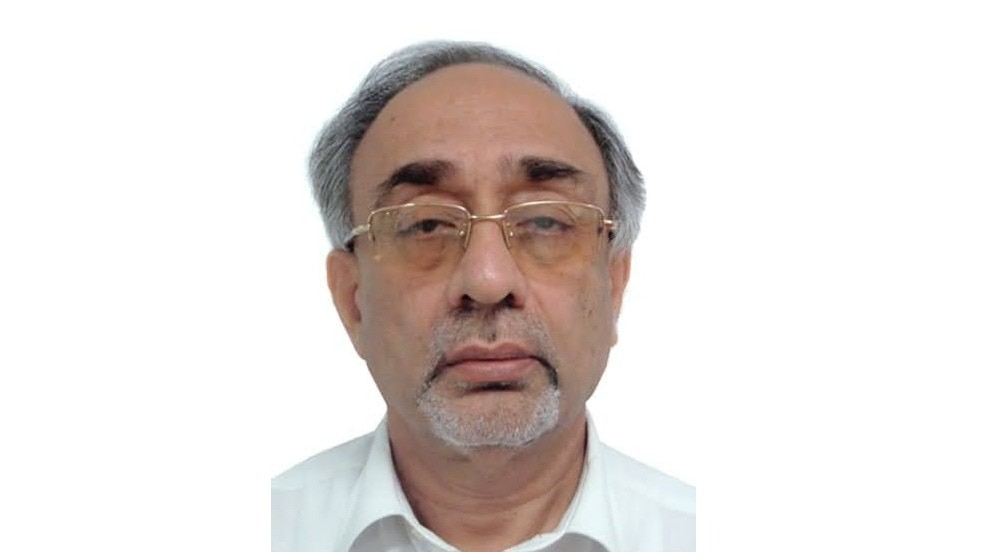
Discover the remarkable trajectory of Satish Kumar Kaura, an IIT Kanpur alumnus who pivoted from manufacturing consumer television tubes to developing cutting-edge avionics for India's defense aircraft.
- Founded Samtel Group in 1973, evolving from consumer electronics to defense avionics.
- Pioneered the first public-private partnership in Indian defense avionics with HAL.
- Recipient of the Padma Shri and the first Distinguished Alumnus Award from IIT Kanpur.
The narrative of India's premier technical institutes often highlights global CEOs and academic scientists, but the story of Satish Kumar Kaura offers a masterclass in industrial resilience and strategic pivoting. A graduate of the class of 1966 from IIT Kanpur in electrical engineering, Kaura's journey is a testament to the power of applying core technical expertise to evolving market needs.
After completing a master's degree in electronics at Carleton University in Canada and gaining international exposure, Kaura returned to India with a vision to build a domestic manufacturing base. In 1973, he established the Samtel Group, followed by Teletube Electronics in 1974. At a time when the Indian electronics sector was dominated by state-owned enterprises and expensive imports, Kaura identified a critical gap: the production of television picture tubes.
The Strategic Bet on Display Technology
Kaura's initial success was built on the rapid expansion of color television in India, particularly around the 1982 Asian Games. Through strategic collaborations with global giants like Mitsubishi Electric and Sumitomo Corporation, Samtel Color achieved a massive installed capacity of 10 million tubes per year. However, the industry faced a catastrophic disruption when Cathode-ray-tube (CRT) technology was rendered obsolete by flat-panel displays.
True entrepreneurship is not about sticking to a product, but about mastering a technology and pivoting it to where the future lies.
Why This Matters
BozokMedia analysis shows that Kaura's ability to transition from the living room to the cockpit is a rare example of 'Industrial Agility.' Instead of folding under the pressure of obsolete consumer tech, he repurposed his expertise in display systems for the high-stakes environment of military aviation. This shift not only saved his business but significantly contributed to India's Atmanirbhar Bharat (Self-Reliant India) mission in defense.
In 2006, this strategic pivot culminated in a joint venture with Hindustan Aeronautics Limited (HAL), creating Samtel HAL Display Systems. This landmark partnership marked the first public-private venture in Indian defense avionics, producing multi-function displays (MFDs) and head-up displays for the Sukhoi-30MKI, LCA, and IJT aircraft. By 2017, the company had delivered its 1,000th MFD to HAL, cementing its role in national security.
Historical Background and Recognition
Coming from a middle-class background with no prior business lineage, Kaura's ascent was purely meritocratic. His contributions were recognized early on; he was the first-ever recipient of the Distinguished Alumnus Award from IIT Kanpur in 1989. In 2004, the Government of India honored him with the Padma Shri for his industrial contributions. He has also served on the Review Committee of DRDO and the Scientific Advisory Council to the Prime Minister.
| Era | Core Focus | Key Technology | Primary Client |
|---|---|---|---|
| 1970s-1990s | Consumer Electronics | CRT Picture Tubes | General Public/TV Brands |
| 2000s-Present | Defense Avionics | Multi-Function Displays | HAL/Indian Air Force |
Frequently Asked Questions
Q1: What is the significance of the Samtel-HAL partnership?
It was the first public-private partnership in Indian defense avionics, reducing reliance on imported cockpit display systems.
Q2: Which aircraft use Samtel's display systems?
Their systems are integrated into the Su-30MKI, LCA (Tejas), and IJT aircraft.