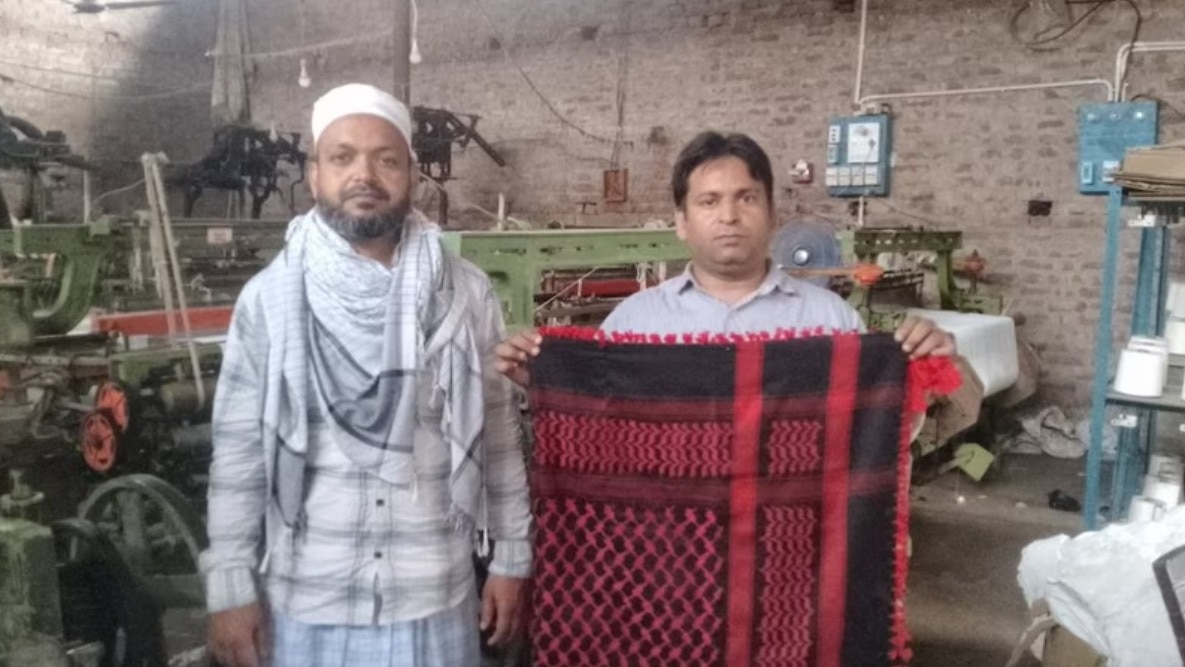
The 'One District One Product' (ODOP) initiative has revolutionized the lives of Barabanki's weavers, transforming a modest 18 lakh rupee loan into a thriving business with a 1 crore rupee turnover.
- ODOP scheme provided critical financial liquidity and market access to traditional artisans.
- Barabanki weavers scaled their operations from an 18 lakh loan to a 1 crore annual turnover.
- Government-led digitalization and e-commerce integration removed middlemen from the supply chain.
The 'One District One Product' (ODOP) initiative by the Uttar Pradesh government has emerged as a catalyst for grassroots economic transformation. In the district of Barabanki, this scheme has transitioned traditional weavers from a state of financial vulnerability to becoming successful entrepreneurs. For decades, these artisans were trapped in a cycle of debt and exploitation by intermediaries, but the strategic intervention of ODOP has rewritten their destiny.
The journey began when a collective of weavers secured an initial loan of 18 lakh rupees. Unlike traditional loans, this capital was paired with technical guidance. The funds were strategically utilized to upgrade ancient looms to semi-automatic versions and source high-quality raw materials, allowing them to enter the luxury textile segment.
Why This Matters
BozokMedia analysis shows that the synergy between traditional craftsmanship and modern financial instruments creates a sustainable economic model. The Barabanki case study proves that rural artisans possess the inherent skill; what they lack is the bridge to the modern consumer. By providing this bridge, the government has not only increased incomes but also preserved a dying cultural heritage.
"The transition from 'Artisan' to 'Entrepreneur' is the single most important shift in the rural economy today."
Beyond the funding, the scaling to a 1 crore rupee turnover was driven by market diversification. Through government-sponsored exhibitions and onboarding onto major e-commerce platforms, the weavers bypassed middlemen. This direct-to-consumer (D2C) approach ensured that the value addition remained with the producer, exponentially increasing their profit margins.
Historical Background
Barabanki has a storied history of weaving, renowned for its intricate patterns and durable fabrics. However, the advent of mass-produced powerloom fabrics and cheap imports nearly decimated the local industry. The ODOP scheme acted as a revivalist force, rebranding the 'local' as 'premium' and attracting a new generation of youth back to their ancestral craft.
| Metric | Pre-ODOP Era | Post-ODOP Era |
|---|---|---|
| Capital Access | Informal/Money-lenders | Institutional/Bank Credit |
| Market Reach | Hyper-local/Middlemen | Global/Digital Platforms |
| Annual Revenue | Subsistence Level | Crore-plus Turnover |
Frequently Asked Questions
Q1: What is the primary goal of the ODOP scheme?
A: To promote one specific product from each district, enhancing local employment and giving traditional crafts a global identity.
Q2: How did Barabanki weavers achieve such rapid growth?
A: Through a combination of institutional credit, technological upgrades, and direct access to digital markets, eliminating exploitative intermediaries.