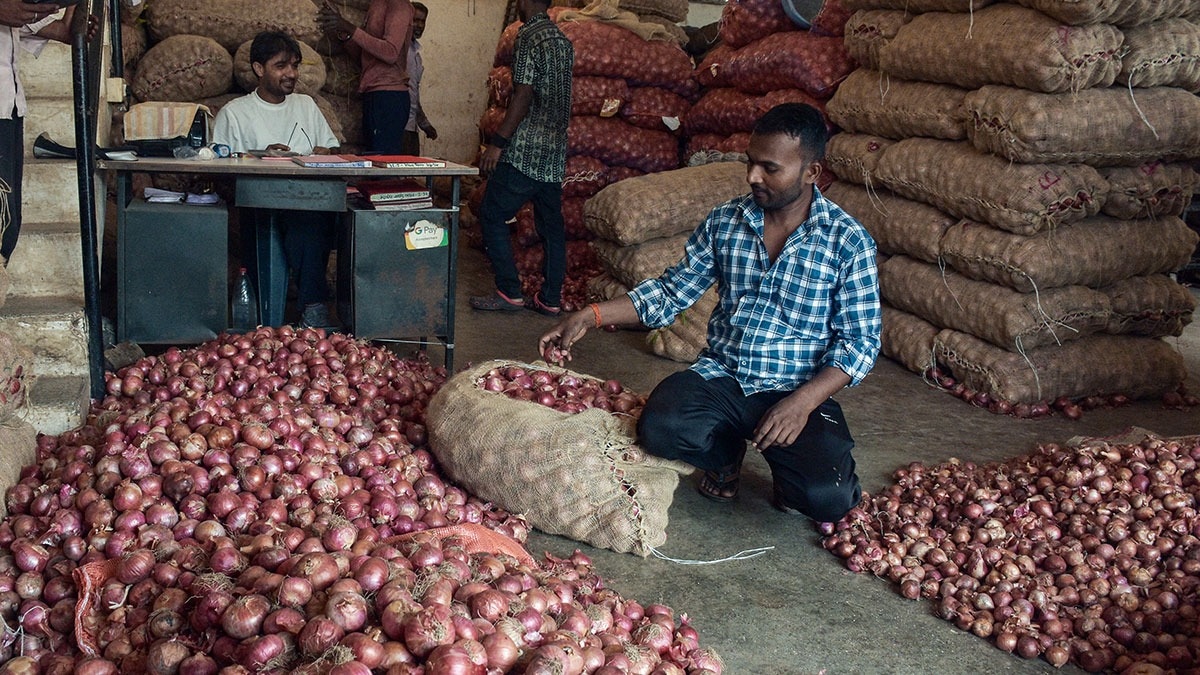
Following a sugar price shock, India is now grappling with a massive spike in onion prices. Despite stable production levels, a failure in buffer stock management has pushed retail prices up by nearly 60%.
- Retail prices surged by 59% year-on-year, averaging ₹43.53 per kg by late August.
- Production remained stable at 30.73 million tonnes, ruling out a crop collapse.
- A 40% shortfall in the government's buffer stock procurement target triggered the crisis.
- Unseasonal rains led to a 30% spoilage rate in stored onions, exceeding the normal 20%.
The onion is arguably India’s ‘most political’ vegetable, and it is once again testing household budgets and the government’s nerve. In Gujarat, retail prices jumped from ₹35-40 to ₹60-70 per kg in just 15 days. Nationally, the average retail price has spiked by 59%, while wholesale rates have climbed by a staggering 68%.
Crucially, this is not a production collapse. India’s 2025-26 onion output is estimated at 30.73 million tonnes, virtually unchanged from the previous year. The crisis is rooted in the failure of the Price Stabilisation Fund. The government set a procurement target of 0.2 million tonnes of rabi onion, but NAFED and NCCF managed only 0.12 million tonnes—a 40% deficit.
Why This Matters
BozokMedia analysis shows that the current crisis is a symptom of a deeper systemic failure in agricultural logistics. When procurement targets are missed and storage spoilage increases, the market becomes volatile. The reliance on reactive measures like 'Kanda Express' rather than preventive buffer management leaves the consumer vulnerable to sudden price shocks during festive seasons.
Environmental factors compounded the issue. Unseasonal rainfall during harvest and sowing windows damaged the quality and shelf life of stored onions. This accelerated rot in warehouses and pushed farmers to release their stocks prematurely in June and July to avoid losses, leaving the government buffer empty when the seasonal gap hit in August.
"The misalignment between procurement targets and actual storage viability has created a perfect storm for price inflation in the onion market."
The Central Government has responded with two primary strategies: physical supply and price relief. The 'Kanda Express' freight rakes are transporting 800 tonnes of onions from Nashik to priority cities like Delhi, Chennai, Madurai, Ernakulam, and Guwahati. Additionally, subsidized sales at ₹35 per kg have been launched in Delhi through NAFED and NCCF.
| Metric | Target/Previous Year | Current Status (2026) |
|---|---|---|
| Total Production (MT) | 30.76 | 30.73 |
| Buffer Stock Procurement | 0.2 Million Tonnes | 0.12 Million Tonnes |
| Retail Price Trend | Stable/Moderate | ~59% Increase |
Frequently Asked Questions
1. Why are prices rising if production is stable?
The rise is due to a shortfall in government buffer stocks and high spoilage rates (30%) caused by unseasonal rains, leading to a supply-demand gap.
2. Which cities are receiving subsidized onions?
The government is focusing on priority centers including Delhi, Chennai, Madurai, Ernakulam, and Guwahati via the 'Kanda Express'.
