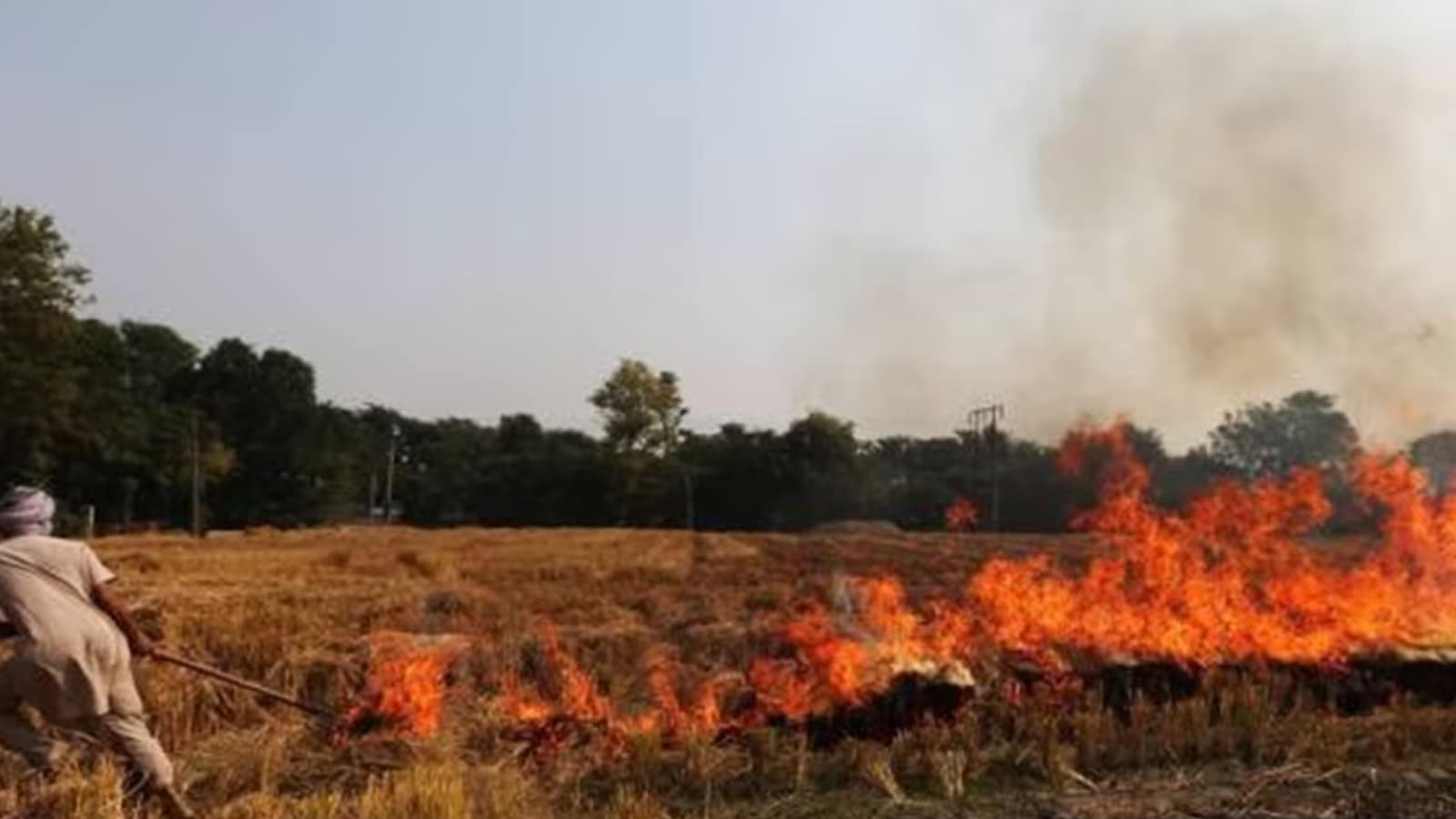
Moving the value-addition of paddy straw closer to the farm through decentralized biochar units could eliminate the incentive for stubble burning while restoring soil health in Punjab.
- Paddy straw has evolved from a waste product to a commodity worth ₹1.5-2 per kg.
- Biochar technology can convert 100kg of straw into 30kg of carbon-rich soil enhancer.
- A decentralized 'village mill' model can reduce transport costs and maximize farmer profits.
Every year, Delhi's air quality plummets as Punjab's farm fires ignite. While satellite monitoring and government mandates attempt to curb the practice, the economic reality for the farmer remains bleak: bulky residue, a razor-thin window before wheat sowing, and high costs for alternatives. However, a fundamental shift is occurring—the perceived value of parali (paddy straw) is rising.
According to experts Shweta Saini and Gopal Sood, demand from power plants, Compressed Biogas (CBG) units, and pellet manufacturers is creating a legitimate market. In parts of Punjab, straw that was once paid to be removed now fetches ₹1.5-2 per kg. The critical question now is: where should this value be created, and who should capture it?
The Promise of Biochar
Biochar is a carbon-rich material produced by heating biomass under limited oxygen. It offers a superior alternative to using biomass as fuel. While burning for energy releases carbon into the atmosphere, biochar locks carbon in the soil for a century or more. For Punjab's stressed rice-wheat system, this could be a game-changer by improving water retention and nutrient-use efficiency in depleted soils.
The solution to stubble burning lies not in removing the straw from the field, but in bringing the value-addition to the field's doorstep.
Why This Matters
BozokMedia analysis shows that the current centralized model is flawed. Transporting bulky, low-value raw straw over long distances consumes the profit margins. The farmer remains a mere supplier of raw material, while the industrial processors reap the rewards. By adopting a decentralized approach—similar to the village flour mill (chakki)—processing can happen locally. This reduces the logistics burden and ensures that the economic incentive to avoid burning is strong and immediate.
The proposed Build-Operate-Transfer (BOT) model suggests that technology providers install units and train local operators, eventually transferring ownership to Farmer Producer Organizations (FPOs) or Self-Help Groups (SHGs). The government's role would shift from managing operations to providing standards and concessional financing.
| Feature | Traditional Burning | Biochar Production |
|---|---|---|
| Environmental Impact | Air Pollution / CO2 Emission | Carbon Sequestration |
| Soil Health | Nutrient Depletion | Enhanced Fertility & Moisture |
| Economic Outcome | Cost/Loss | Revenue Generation |
Frequently Asked Questions
Q1: What is Biochar and why is it better than burning?
A: Biochar is a stable form of carbon produced from biomass. Unlike burning, which pollutes the air, biochar improves soil quality and captures carbon.
Q2: How does the 'Village Mill' model benefit the farmer?
A: It eliminates expensive long-distance transport of bulky straw, allowing farmers to earn more from value-added products created within their own community.