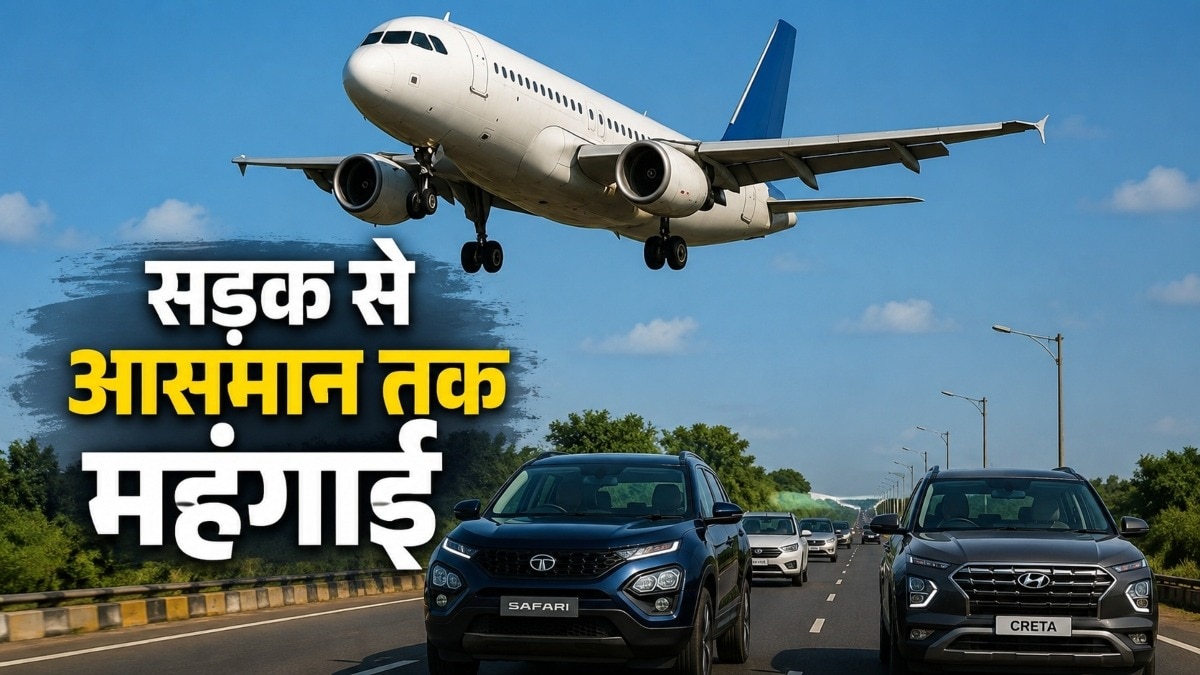
The first day of September has brought a wave of price hikes across India, affecting everything from road transport and aviation fuel to essential household cooking gas.
- Major automakers Tata and Hyundai have increased car prices significantly.
- CNG and PNG prices in Mumbai have risen, impacting daily commutes and kitchens.
- ATF (Aviation Turbine Fuel) prices jumped by 5.46%, likely leading to costlier flight tickets.
- Minimum fares for autos and taxis in Mumbai have been revised upwards.
September 1st has marked a harsh beginning for Indian consumers as a multi-pronged inflation attack has hit various sectors. From the roads to the skies and into the heart of the kitchen, price revisions have made daily living more expensive overnight.
Road Transport: Cars and CNG Get Costlier
The automotive sector has seen a sharp spike. Tata Motors Passenger Vehicles Limited has increased the prices of its cars and SUVs by up to ₹25,000 across various variants. Similarly, Hyundai Motor India has also raised its prices, making vehicle ownership more expensive.
Adding to the burden, fuel prices for public transport have climbed. In Mumbai, Mahanagar Gas Limited (MGL) has implemented a hike of ₹2 per kg for CNG. This has pushed the CNG price in Delhi to ₹88 per kg. The immediate ripple effect was seen in Mumbai's public transport, where the minimum auto-rickshaw fare rose by ₹1 to ₹27, and taxi fares increased by ₹2 to ₹33.
Why This Matters
BozokMedia analysis shows that the simultaneous rise in fuel and vehicle costs creates a compounding effect on the middle class. When basic transport costs rise, it triggers a chain reaction, increasing the cost of logistics and goods, which ultimately fuels broader economic inflation.
"The volatility in fuel pricing combined with automotive price corrections directly erodes consumer disposable income, potentially slowing down domestic consumption."
The Impact on Aviation and Households
The inflation surge has reached the skies as oil marketing companies increased the price of Aviation Turbine Fuel (ATF) by a staggering 5.46%. Since fuel is the largest operational expense for airlines, passengers can expect a hike in airfare in the coming weeks.
At home, the budget has also been disrupted. While domestic LPG cylinder prices remained stable, commercial LPG cylinders saw a hike of ₹9.50. Furthermore, Piped Natural Gas (PNG) in Mumbai increased by ₹1 per SCM, bringing the price to ₹53 per SCM.
| Service/Item | Change | Affected Region |
|---|---|---|
| Tata Cars | Up to ₹25,000 increase | Pan India |
| CNG (Mumbai) | ₹2/kg increase | Mumbai Metro |
| ATF Fuel | 5.46% increase | Aviation Sector |
| PNG Gas | ₹1/SCM increase | Mumbai Households |
Frequently Asked Questions
Q1: Will flight tickets become more expensive?
Yes, the 5.46% increase in ATF prices is likely to be passed on to passengers through higher airfares.
Q2: How much has the auto-taxi fare increased in Mumbai?
The minimum auto-rickshaw fare has increased to ₹27, and the taxi fare has risen to ₹33.