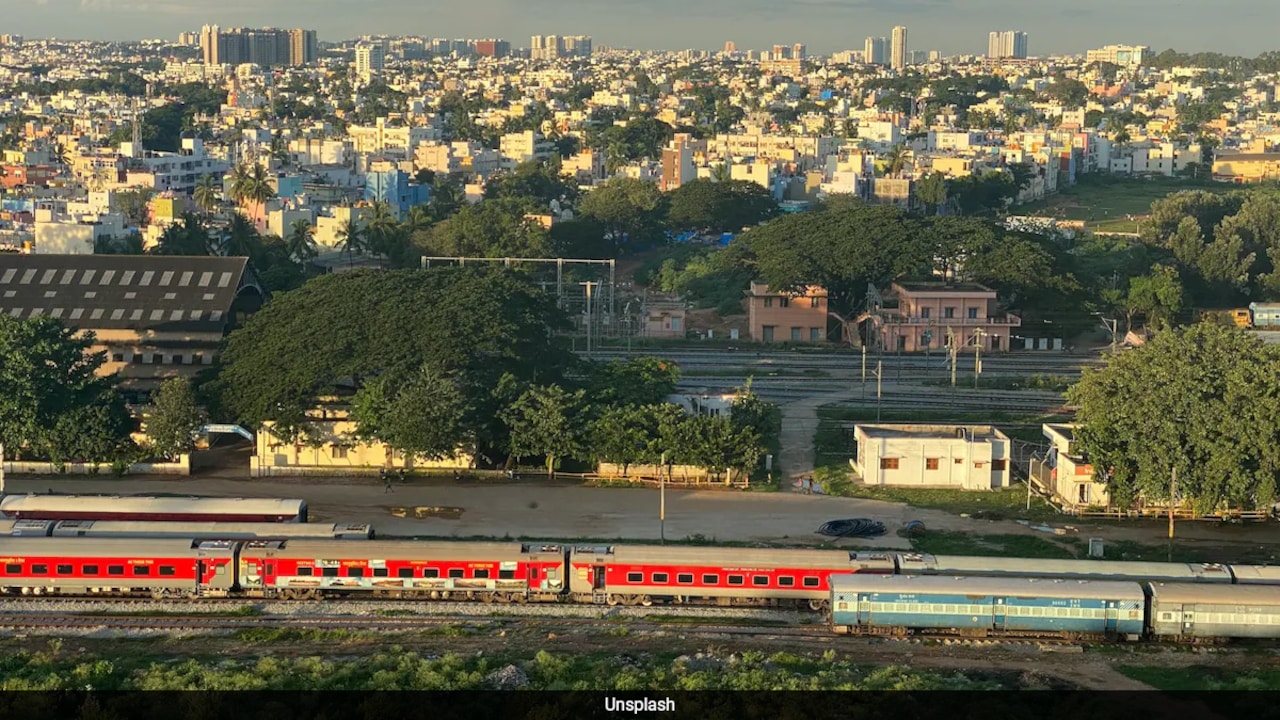
Bengaluru's iconic Krishna Rajendra (KR) Market is undergoing a digital revolution with the introduction of an automated toll system for goods vehicles. Under the new rules enforced by the civic body, traders will face strict penalties for fee evasion, with structured charges applied to various commodities including poultry and seafood.
- An automated digital toll system is being launched at Bengaluru's historic KR Market to streamline operations.
- Entry fees will be strictly structured based on vehicle type and the quantity of goods brought in.
- Strict penalties and electronic surveillance will be deployed to prevent toll evasion and revenue leakage.
Entering Bengaluru's iconic Krishna Rajendra (KR) Market with a goods vehicle will soon require the payment of a fixed entry fee. In a major move to modernize the city's oldest commercial hub, the Bruhat Bengaluru Mahanagara Palike (BBMP) is transitiong towards an automated digital toll collection system. Under this new regime, traders bringing produce and other goods will also have to pay separate charges calculated dynamically based on the volume and type of commodities.
According to the official notification, specific rates have been designated for high-volume perishable goods. For poultry, meat, and seafood, the charge will be fixed at Rs 10 per box or tray. Other agricultural produce and general merchandise will attract scaled fees depending on the size of the consignment. This targeted pricing strategy aims to eliminate arbitrary manual pricing and bring absolute transparency to the market's daily operations.
Manual vs. Digital Toll System Comparison
| Metric | Traditional Manual System | New Digital Toll System |
|---|---|---|
| Collection Method | Manual receipt issuance by contractors | Automated RFID & Digital scanning gates |
| Leakage Risk | High due to lack of real-time audits | Negligible with centralized digital logging |
| Pricing Structure | Flat or unregulated rates | Quantity-based (e.g., Rs 10 per tray for meat) |
Why This Matters
BozokMedia analysis shows that the digitization of KR Market’s entry points is a watershed moment for urban logistics management in Bengaluru. As one of the most congested trading zones in Southern India, the market has long suffered from chronic traffic bottlenecks and unmonitored financial transactions. By implementing automated toll booths, the BBMP will not only boost its civic revenue but also significantly reduce vehicle idling times, leading to a cleaner and more organized market environment.
"The transition to a digital toll framework at KR Market is a crucial step towards stopping revenue leakage and streamlining commercial traffic in one of Bengaluru's most congested zones."
To ensure strict compliance, the civic body is incorporating robust penalty clauses into the new system. Advanced CCTV cameras and automated vehicle registration plate readers will monitor the entry barriers. Any vehicle attempting to bypass the toll gates or falsify goods declarations will face heavy monetary fines, and repeat offenders risk being blacklisted from entering the market premises altogether.
Frequently Asked Questions
Q1: What are the specific charges for meat and poultry products under the new system?
Answer: Traders bringing poultry, meat, and seafood into KR Market will be charged a flat rate of Rs 10 per box or tray.
Q2: How will the BBMP prevent traders from evading these digital tolls?
Answer: The entry points will be secured with automated digital barriers, RFID scanners, and high-definition CCTV cameras to automatically detect and penalize non-compliant vehicles.