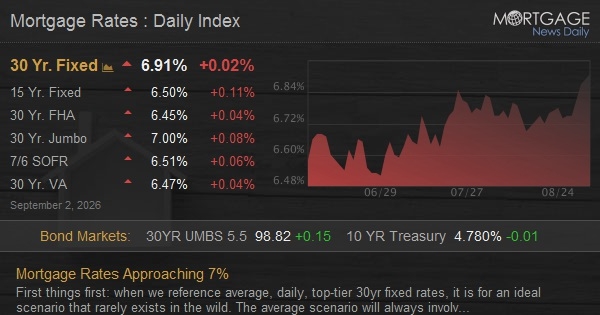
Mortgage rates are climbing rapidly, with 30-year fixed rates hitting 6.91%, the highest level in over a year. This trend signals a tightening credit market for prospective homeowners.
- 30-year fixed mortgage rates have climbed to 6.91%.
- This marks a significant peak, approaching the 7% psychological barrier for the first time in over a year.
- Effective rates for borrowers are often higher than national averages due to upfront costs.
- Rising rates pose a direct challenge to housing affordability and market demand.
The mortgage landscape is witnessing a significant shift as interest rates climb toward a critical milestone. Current market data indicates that 30-year fixed mortgage rates have reached 6.91%, marking the highest level seen in more than a year. This surge brings the market precariously close to the 7% threshold, a level that historically impacts buyer sentiment and market volume.
It is crucial for consumers to understand the distinction between 'average' rates and 'effective' rates. While national surveys like Freddie Mac's weekly report provide a benchmark, they often exclude the upfront costs associated with securing a loan. In contrast, daily indices that account for these additional fees often show that actual borrowers are already facing rates at or above the 7% mark.
Why This Matters
BozokMedia analysis shows that this upward trajectory in mortgage rates creates a ripple effect throughout the entire economy. As borrowing costs rise, the monthly debt service for new homebuyers increases substantially, effectively reducing their purchasing power. This can lead to a slowdown in home sales or a shift in demand toward more affordable housing segments, potentially cooling an overheated real estate market.
The approach to 7% represents a psychological and financial pivot point that could redefine housing affordability for the coming year.
The relationship between interest rates and the housing market is historically inverse. When rates climb, the cost of financing a home becomes a heavier burden, which can lead to a stagnation in property price appreciation. Current inflationary pressures and central bank policies remain the primary drivers behind this volatility.
Historical Background
For much of the last decade, mortgage rates remained at historic lows, fueling a massive boom in residential real estate. However, as central banks globally have pivoted toward tightening monetary policy to combat inflation, the era of 'cheap money' has ended. The current move toward 7% reflects a normalization of the credit market after years of unprecedented stimulus.
Frequently Asked Questions
1. Why are mortgage rates rising right now?
Rates are primarily driven by economic indicators such as inflation and shifts in Treasury yields, which reflect broader monetary policy changes.
2. Will rising rates cause home prices to drop?
While higher rates reduce demand, home prices are also influenced by inventory levels; if supply remains low, prices may not drop significantly despite higher rates.
