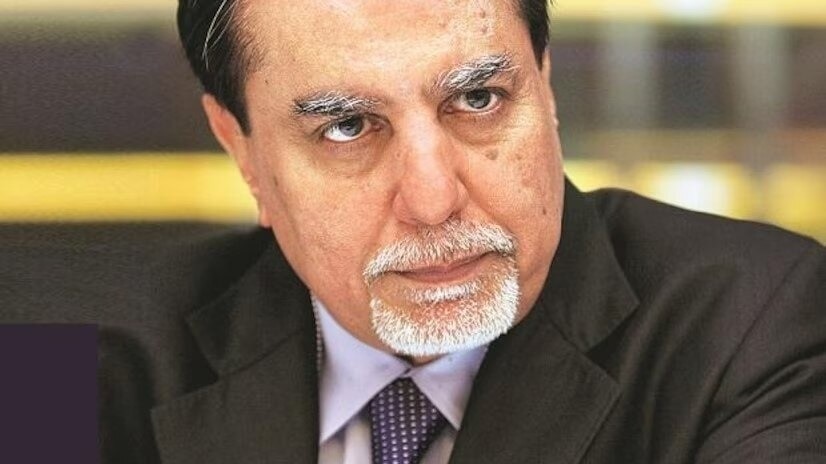
A five-member NCLT bench has stayed the repayment plan proposed by Subhash Chandra and issued a restraining order preventing him from moving any property. This landmark decision shifts the landscape of personal guarantee enforcement in India.
- A five-member NCLT bench has stayed the Subhash Chandra repayment plan.
- The tribunal has barred Subhash Chandra from alienating or moving any property.
- The decision stems from a split verdict among previous tribunal members.
- The case highlights the critical enforcement challenges of personal guarantees under IBC.
In a significant legal development, a five-member bench of the National Company Law Tribunal (NCLT) has stayed the repayment plan involving Subhash Chandra Goenka. Beyond the immediate arithmetic of the proposed Rs 6-crore plan, the tribunal has issued a directive that has sent shockwaves through the financial sector: a total restraint on the movement of the guarantor's assets.
This interim direction is particularly noteworthy because it achieves what many lenders have failed to do through standard loan covenants for decades. Seven years after the Essel Group's defaults began, the tribunal, acting on its own motion, has imposed the first enforceable restriction on the guarantor's ability to alienate assets in this contested proceeding.
Why This Matters
BozokMedia analysis shows that this case exposes a fundamental flaw in how personal guarantees have been treated in India. For years, promoter guarantees were often viewed as mere formalities rather than robust security. This ruling signals a shift toward treating personal liability with the same rigor as corporate insolvency, potentially changing the risk profile for promoters across the country.
The NCLT's intervention marks a turning point where personal guarantees transition from a mere signature to a powerful tool of asset recovery.
The complexity of the case arose from a legal deadlock. Following an application by Sammaan Capital (formerly Indiabulls Housing Finance), the tribunal's members reached three distinct conclusions. One member sought to bind only consenting creditors, another rejected the plan entirely, and a third aimed to bind all creditors. This unprecedented 'triple destination' led the President to constitute a five-member bench to resolve the impasse.
The broader context of personal insolvency in India reveals a stark reality. As of June 2026, IBBI data indicates that recovery from personal guarantors has been abysmal. Against a total debt of approximately Rs 2.86 lakh crore, only about Rs 234.56 crore has been recovered—a recovery rate of barely 1%.
| Metric | Details |
|---|---|
| Total Guarantor Debt (Dec 2025) | ~Rs 2.86 Lakh Crore |
| Total Recovered (as of June 2026) | ~Rs 234.56 Crore |
| Recovery Percentage | < 1% |
Frequently Asked Questions
1. What is the primary restriction imposed by the NCLT?
The NCLT has barred Subhash Chandra from directly or indirectly alienating or moving any of his properties.
2. Is this related to Zee Entertainment's insolvency?
No, this matter specifically concerns the personal guarantees signed by Subhash Chandra and does not impact the corporate insolvency of Zee Entertainment.