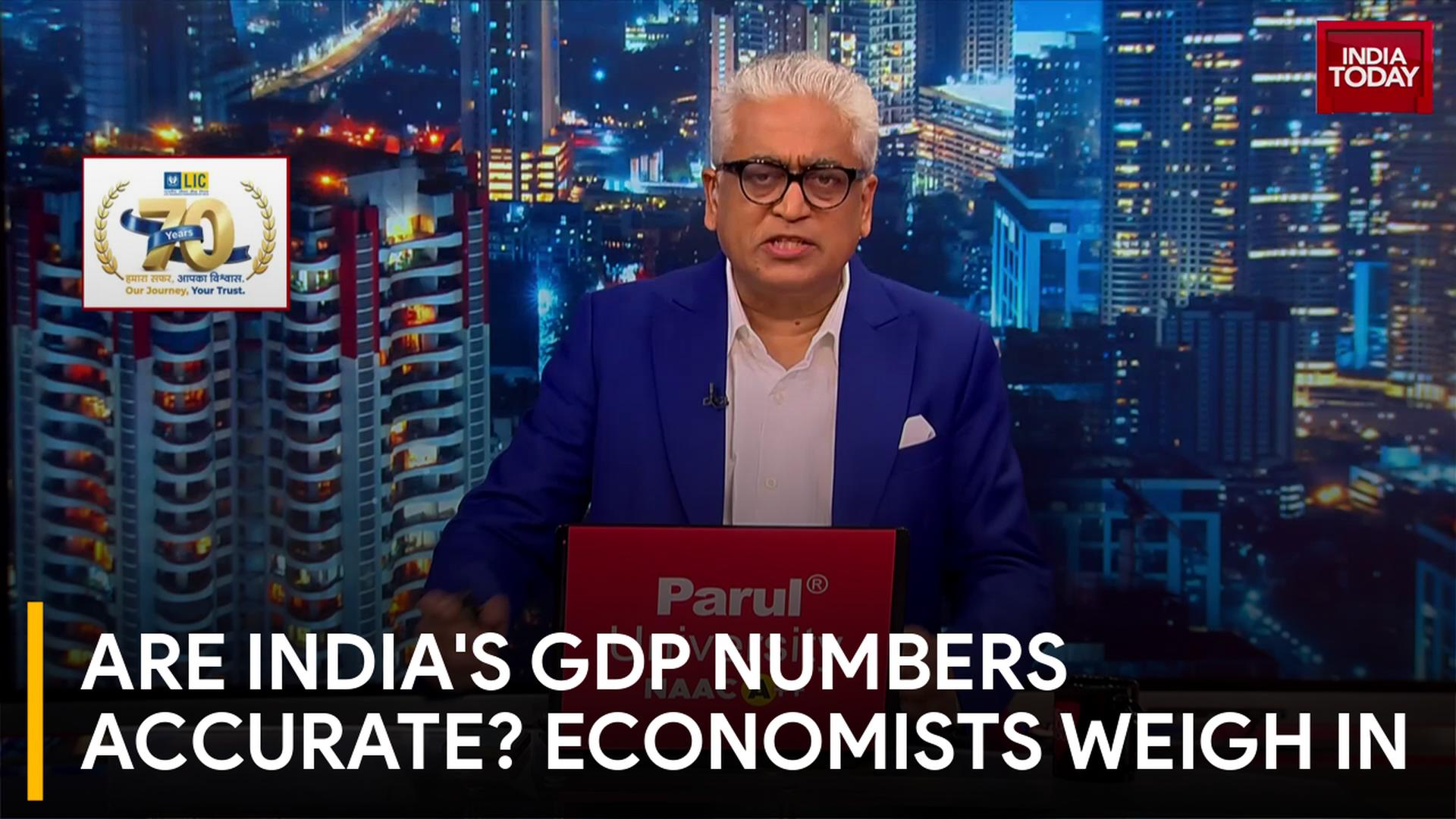
The announcement of a 7.8% Q1 GDP growth rate has ignited political friction. Leading economists Montek Singh Ahluwalia and Surjit Bhalla analyze the technicalities of data revisions and economic challenges.
- India reported a robust 7.8% GDP growth rate for the first quarter.
- The Congress party has challenged the methodology and accuracy of the data.
- Economists dismiss claims of manipulation, citing standard global accounting practices.
- Experts advocate for trade liberalization and structural reforms to reach 'Viksit Bharat 2047'.
The Indian government's announcement of a 7.8% GDP growth rate for the first quarter has triggered intense political sparring and economic scrutiny. While the ruling BJP celebrates the figure as a testament to India's economic resilience amid global headwinds, the opposition, led by the Congress party, has raised alarms regarding the accuracy of the data and its correlation with unemployment and inflation.
The political debate centers on the methodology used for calculating growth and the frequency of data revisions. Critics argue that the figures may not reflect the ground reality of the informal sector or the rising cost of living. In response, government supporters maintain that the growth trajectory is a clear indicator of India's rising prominence in the global economy.
Why This Matters
BozokMedia analysis shows that GDP figures serve as the ultimate barometer for investor confidence and sovereign credit ratings. Discrepancies in data perception can lead to volatility in financial markets and affect long-term foreign direct investment (FDI) inflows.
Revisions in GDP data are a consequence of standard global accounting practices and base-year shifts, not political manipulation.
Stepping into the fray to provide technical clarity, renowned economists Dr. Montek Singh Ahluwalia, Surjit Bhalla, and Nilkanth Mishra examined the nuances of the revised series. They emphasized that changes in the base year and the estimation of the informal sector are standard scientific procedures used worldwide to ensure accuracy.
Dr. Montek Singh Ahluwalia highlighted the long-term vision, noting that achieving the 'Viksit Bharat 2047' target requires not just high growth rates, but also deep-rooted structural reforms. On the other hand, Surjit Bhalla addressed the employment narrative, pointing out that salaried employment has seen a steady expansion since 2011, countering claims of widespread joblessness.
To bolster competitiveness, both economists suggested a shift toward trade liberalization. They recommended lowering import tariffs and actively engaging in multilateral trade pacts to integrate India more deeply into global value chains.
Historical Background
India's GDP calculation methodology underwent a massive overhaul in 2015 when the base year was shifted. This change moved the focus toward a more modern, consumption-based approach, which often leads to significant differences when compared to older data series, sparking periodic debates on statistical accuracy.
Frequently Asked Questions
1. Why does GDP data undergo revisions?
Revisions occur due to changes in base years, updated collection of field data, and adjustments to meet international accounting standards.
2. What is the goal of 'Viksit Bharat 2047'?
It is a national vision to transform India into a fully developed nation by the year 2047 through sustained economic growth and structural reforms.