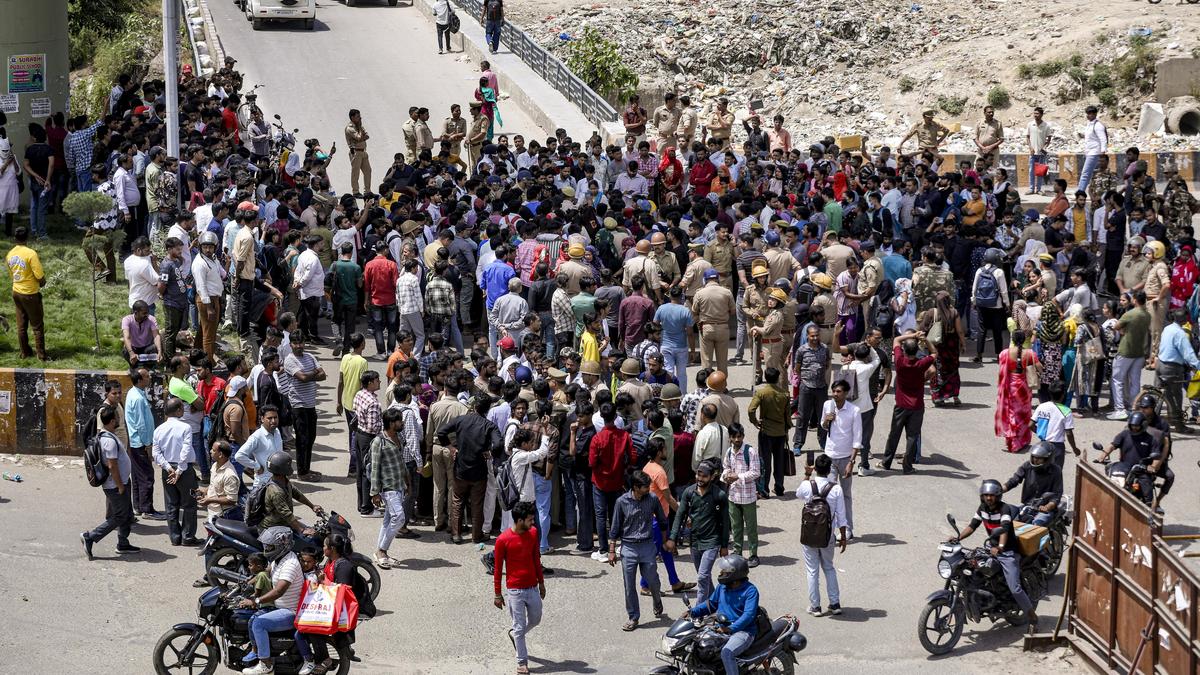
The unrest in Noida's industrial belt signals a deeper structural crisis in India's labor market, characterized by a lack of written contracts and social security despite formal industrial registration.
- The Noida protests are driven by a lack of written contracts and social security, not just wage hikes.
- In Uttar Pradesh, 67.8% of regular workers lack a formal written employment contract.
- Contract labor in India has risen from 35% in 2014-15 to 42% in 2023-24.
The recent scenes of unrest in Noida’s industrial belt—marked by burning vehicles, stone-pelting, and clashes with police—are symptomatic of a much larger malaise in India's labor ecosystem. While the immediate trigger for the protests in Gautam Buddh Nagar was the demand for higher wages, a closer examination reveals that the workers are fighting for fundamental protections that should accompany any formal employment.
The Illusion of Formal Employment
A significant contradiction exists within India's industrial landscape: industries may be formally registered, but the workers within them are often treated informally. Data from the Periodic Labour Force Survey (PLFS) highlights this grim reality. In 2025, approximately 58.2% of non-agricultural workers operated without a written job contract, and 51.7% were ineligible for social security benefits. This 'informalization' of formal sectors creates a class of workers who are vulnerable to exploitation despite working in established factories.
Why This Matters
BozokMedia analysis shows that this structural gap creates a volatile environment where economic shifts can quickly turn into social unrest. When workers lack the safety net of paid leave, medical benefits, or job security, any nominal increase in wages is insufficient to offset the rising cost of living and the inherent instability of their employment.
If anyone raises an issue, they can be removed from the job; the increasing reliance on contract labor has weakened the enforcement of labor protections on the ground.
The Rise of Contractualization
The shift toward contract labor is a primary driver of this instability. According to the Annual Survey of Industries (ASI), the share of contract workers in total industrial employment has climbed from 35% in 2014-15 to 42% in 2023-24. By utilizing intermediaries, firms can bypass the legal obligations associated with direct employment, such as providing ESI (Employee State Insurance) or pension benefits, leaving the workforce in a state of perpetual insecurity.
| State | 2016 Unskilled Wage | 2025/26 Unskilled Wage | Approx. Increase (%) |
|---|---|---|---|
| Delhi | ₹9,568 | ₹18,456 | ~92.9% |
| Haryana | (Reference) | (Revised) | ~88.6% |
| Uttar Pradesh | ₹7,107 | ₹13,690 (Interim) | ~92.7% |
Regional Disparities in Uttar Pradesh
The situation in Uttar Pradesh is particularly acute. The state reports some of the highest levels of labor deprivation in the country. Around 67.8% of regular workers in the state have no written contract, and 59.2% lack access to specified social security benefits. In fact, 46.3% of workers in UP suffer from a 'triple deprivation'—lacking a written contract, paid leave, and social security simultaneously.
Historical Context of Wage Growth
Historically, while minimum wages have seen percentage increases, the base amount remains extremely low. For instance, while Delhi saw a nearly 93% increase in unskilled wages over a decade, the actual purchasing power of these workers has been severely eroded by inflation, making the demand for higher wages a matter of survival rather than mere greed.
Frequently Asked Questions
Question 1: Why are workers in formal factories protesting?
Answer: They are protesting because many are hired through contractors, depriving them of written contracts, social security, and job stability.
Question 2: How has the labor structure changed in India?
Answer: There has been a significant shift toward contract labor, which has grown from 35% to 42% of total industrial employment over the last decade.


