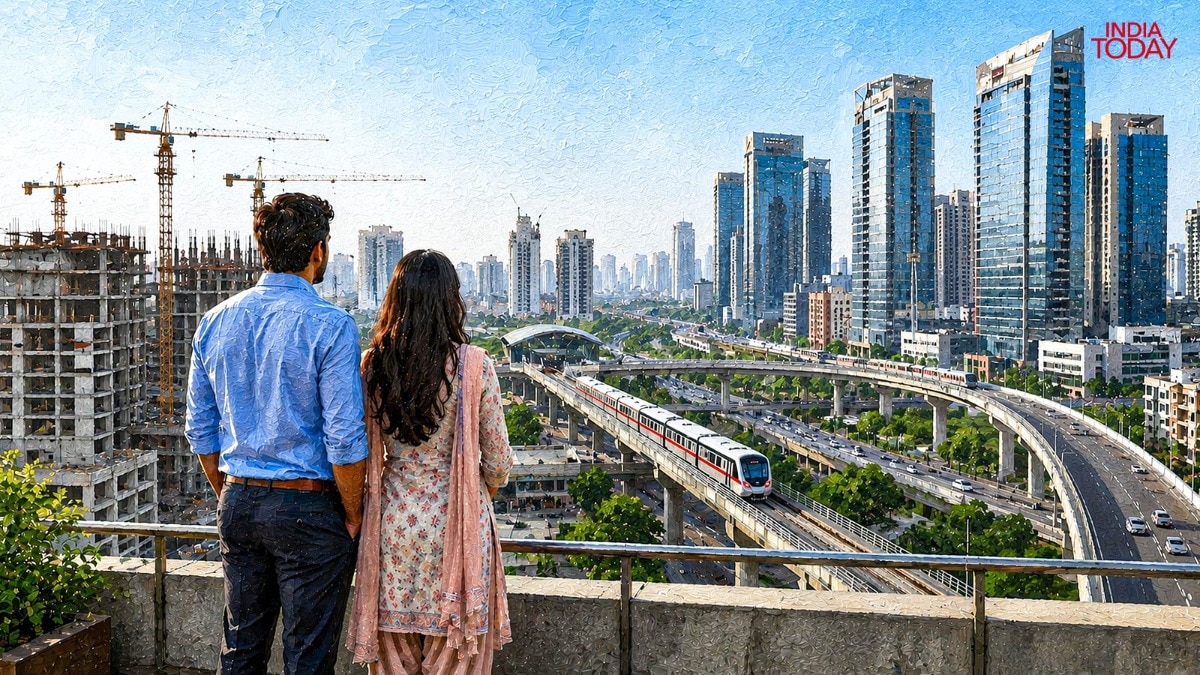
A landmark report by PRICE and Tata Sons reveals that India's urban growth is no longer limited to metros. The nation is evolving into four distinct urban tiers, each driving a unique economic narrative.
- India's urban landscape is divided into four tiers: Big Six, Boomtowns, Breakout Cities, and Frontier Cities.
- The 'Big Six' metros contribute 18.1% of national income despite having only 7.6% of the population.
- Bengaluru leads in household income and savings, while Delhi-NCR dominates in sheer market scale.
- 'Boomtowns' like Pune and Ahmedabad are seeing a massive surge in middle-income households.
India's urban evolution is undergoing a profound transformation. It is no longer a story centered solely around the sprawling metropolises of Delhi and Mumbai. According to "The Many Urban Indias," a 2026 joint report by PRICE (People Research on India’s Consumer Economy) and Tata Sons, a more diverse and multi-layered urban structure is emerging across the subcontinent.
The 'Big Six': Economic Powerhouses
The first tier, known as the 'Big Six,' comprises Delhi, Mumbai, Bengaluru, Hyderabad, Kolkata, and Chennai. While these cities account for a mere 7.6% of India's total population, their economic footprint is gargantuan. They generate 18.1% of the national income and a staggering 30.3% of national savings. Together, they command 46% of the total consumption across the 100 cities studied.
However, the economic character within this group varies significantly. Bengaluru stands out as the leader in wealth accumulation, with an average annual household income of ₹28.3 lakh and the highest savings rate. In contrast, Delhi-NCR derives its power from massive scale. The Delhi-NCR urban consumption market is estimated at $126 billion, rivaling the combined economic might of Mumbai and Bengaluru.
Why This Matters
BozokMedia analysis shows that the economic center of gravity in India is shifting from pure population density to specialized consumption hubs. This diversification means that businesses can no longer apply a 'one size fits all' strategy for Indian cities; they must tailor their approach to the specific wealth profiles of different tiers.
India's urbanization is transitioning from a story of sheer numbers to a complex map of varying income and spending behaviors.
Chennai presents a different demographic profile within the Big Six, characterized by a high consumption-to-income ratio of 67%, which also results in higher relative household debt compared to cities like Hyderabad.
The Rise of Boomtowns and Breakout Cities
The second tier, consisting of 19 'Boomtowns'—including Pune, Ahmedabad, Surat, Lucknow, and Jaipur—is witnessing a rapid expansion of the middle class. A decade ago, only a quarter of these households were middle-income; today, that figure has soared to nearly 51%. These cities are becoming the backbone of India's domestic consumption engine.
The third tier comprises 25 'Breakout Cities' such as Tiruppur, Ludhiana, and Varanasi. These cities are uniquely positioned with a much younger demographic, with approximately 67% of their population falling within the working-age group, providing a robust foundation for future industrial and consumer growth.
| City Tier | Primary Characteristic | Key Examples |
|---|---|---|
| Big Six | High Income & Massive Savings | Bengaluru, Mumbai, Delhi |
| Boomtowns | Rapid Middle-Class Growth | Pune, Ahmedabad, Surat |
| Breakout Cities | Young Workforce & Industrial Potential | Ludhiana, Varanasi |
Frequently Asked Questions
1. Which city has the highest household income in India?
According to the report, Bengaluru has the highest average annual household income at ₹28.3 lakh.
2. What defines a 'Boomtown' in the Indian context?
Boomtowns are fast-growing cities where the middle-income population is expanding rapidly, such as Ahmedabad and Surat.