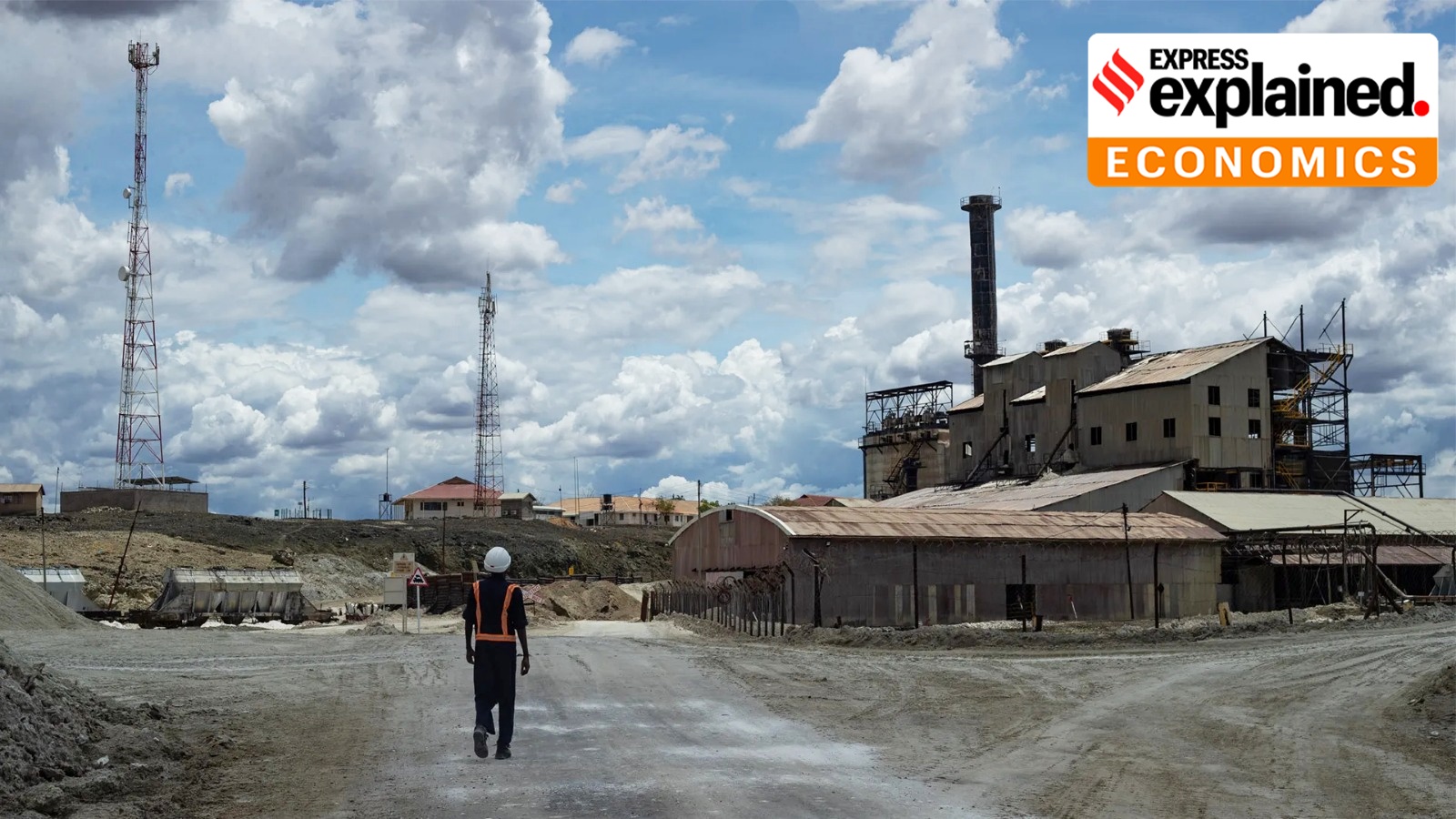
Kenyan President William Ruto has ordered the halting of Tata Chemicals' operations in Magadi, sparking a major legal and economic standoff. We explain why.
- President William Ruto alleges a lack of local investment and industrial development by Tata Chemicals.
- Tata Chemicals Magadi Ltd (TCML) is Africa's largest producer of natural soda ash.
- The company claims full compliance with all regulatory and mining requirements.
- The dispute involves long-term lease rights valid until 2053.
A high-stakes confrontation has erupted between the Kenyan government and the Tata Group. Kenyan President William Ruto has directed the halting of operations for Tata Chemicals Magadi Ltd (TCML), a move that has caught the Indian conglomerate on the defensive. Tata has responded by stating its commitment to resolving the issue through "constructive engagement."
The epicenter of this conflict is the soda ash plant in Magadi, located in Kajiado County. TCML holds a dominant position as Africa's leading producer of natural soda ash, a critical raw material for industries ranging from glass manufacturing to detergents. While Tata has operated the facility since 2005, the political climate in Kenya has shifted dramatically against long-standing extractive contracts.
Why This Matters
BozokMedia analysis shows that this dispute is a litmus test for investor confidence in East Africa. President Ruto’s primary grievance is that Tata has extracted immense mineral wealth without providing commensurate economic benefits to the local Kajiado community. He argued that despite having a century-long presence, the company has failed to build local factories or generate sufficient industrial value-added manufacturing within Kenya.
The tension between historical lease agreements and modern demands for local industrialization is creating a volatile environment for multinational corporations in Africa.
From a legal standpoint, Tata appears to be on solid ground. The company’s rights are anchored in a lease originating from 1928 and extended in 2004, which remains valid until 2053. Notably, in October 2025, the Kenya Court of Appeal ruled in favor of Tata in a separate dispute regarding land rates, protecting the company's constitutional property rights against local county demands.
Historical Background
The Magadi soda ash operations have a deep history, tracing back to 1873 with the UK-based Brunner Mond Holdings. After various transitions, including ownership by ICI, Tata Chemicals eventually took full control in 2005. The current friction stems from a recent communication from the Kenyan Ministry of Mining, Blue Economy and Maritime Affairs regarding regulatory compliance, which TCML claims to have addressed comprehensively.
| Feature | President Ruto's Stance | Tata Chemicals' Position |
|---|---|---|
| Investment | Insufficient local development | Significant economic contribution since 2005 |
| Legal Status | Wants new companies to take over | Valid lease until 2053 |
| Compliance | Claims lack of local benefit | Fully compliant with all regulations |
Frequently Asked Questions
1. What is the main accusation against Tata Chemicals?
President Ruto accuses the company of extracting resources without building local industrial infrastructure or creating enough jobs.
2. How long is Tata's lease in Kenya?
Tata's current lease for the Magadi deposits is valid until the year 2053.


