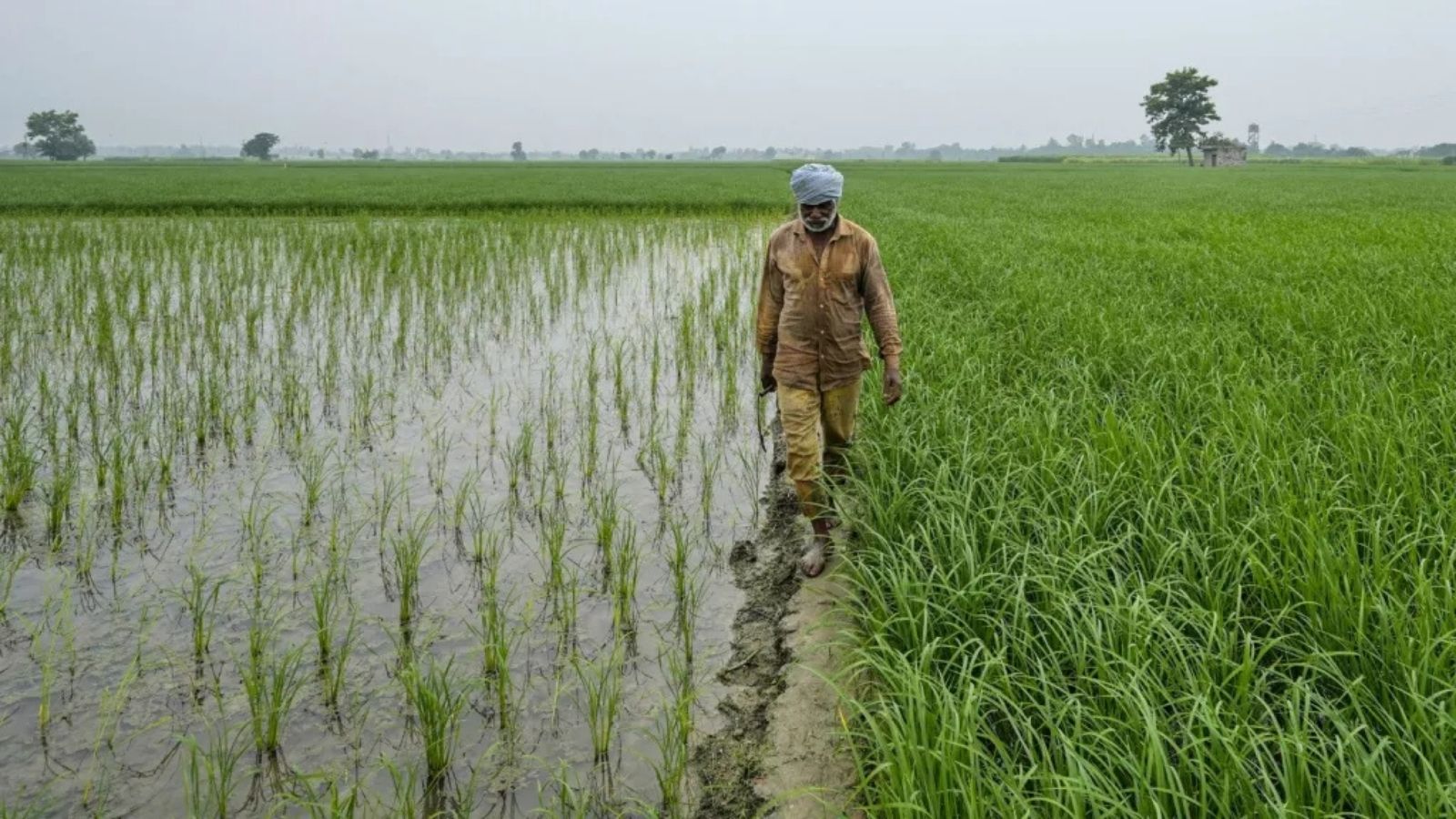
A 36% deficit in monsoon has forced Punjab farmers to rely heavily on tubewells, causing a massive 140% surge in peak power demand. The state was forced to purchase electricity worth ₹119.5 crore in a single day.
- Punjab's peak power demand hit 16,343 MW, a 139.3% increase compared to last year.
- A 36% monsoon deficiency has increased reliance on groundwater for paddy cultivation.
- PSPCL purchased 2,709.45 lakh units of electricity at a cost of approximately ₹119.5 crore.
- Ongoing strikes by power department employees have crippled state-owned thermal plants.
The state of Punjab is grappling with a severe energy crunch as agricultural and domestic demands skyrocket. Due to a 36% deficiency in monsoon rainfall, farmers have turned extensively to tubewells to irrigate water-intensive paddy crops. This shift triggered a massive spike in electricity demand, with the state's peak requirement reaching 16,343 MW on September 2—a staggering 139.3% increase over the same period last year.
To prevent a total blackout, the Punjab State Power Corporation Limited (PSPCL) had to urgently procure 2,709.45 lakh units of power from the open market. This emergency purchase came at a tentative cost of ₹119.5 crore, placing additional strain on the state's already burdened finances.
Why This Matters
BozokMedia analysis shows that this crisis is a perfect storm of environmental, labor, and policy-driven factors. The lack of rainfall has forced a heavy reliance on groundwater, while a simultaneous strike by power department employees has rendered several state-owned thermal plants non-functional. This leaves the state vulnerable and dependent on expensive short-term market purchases.
The intersection of climate volatility and labor unrest has created an unprecedented energy security challenge for Punjab.
The impact is being felt most acutely in the industrial sector. Major hubs including Jalandhar, Ludhiana, Mohali, Khanna, and Mandi Gobindgarh have faced scheduled power cuts of nearly 3 hours and 45 minutes. Industrialists have warned that these disruptions, particularly during night hours, could damage heavy machinery and increase production costs.
The Domestic Demand Factor
Interestingly, the crisis isn't solely driven by agriculture. An engineer from the power department noted that the state's 300-unit free electricity scheme has inadvertently led to a surge in domestic consumption. Residents, incentivized by the subsidy, have increasingly installed high-consumption appliances like air conditioners, further pushing the grid to its limits.
Power Supply Breakdown
| Source Type | Units Available (Lakh) | Context |
|---|---|---|
| State-Owned Sources | 612.65 | Thermal, Hydel, and Renewables |
| External Purchases | 2,709.45 | Market, Tenders, and Traders |
| Total Requirement | 3,347.81 | Aggregate State Demand |
As the state approaches assembly elections, the government is prioritizing the domestic sector to avoid public backlash. This strategy involves absorbing the high costs of market-purchased power to ensure that residential areas remain unaffected, even at the expense of industrial stability and the state exchequer.
Frequently Asked Questions
1. What is the main cause of the power surge in Punjab?
The primary causes are the deficient monsoon necessitating tubewell irrigation and increased domestic use due to free electricity schemes.
2. How are industries being affected?
Industries in major cities are facing rotational power cuts of nearly 4 hours, affecting productivity and equipment safety.
