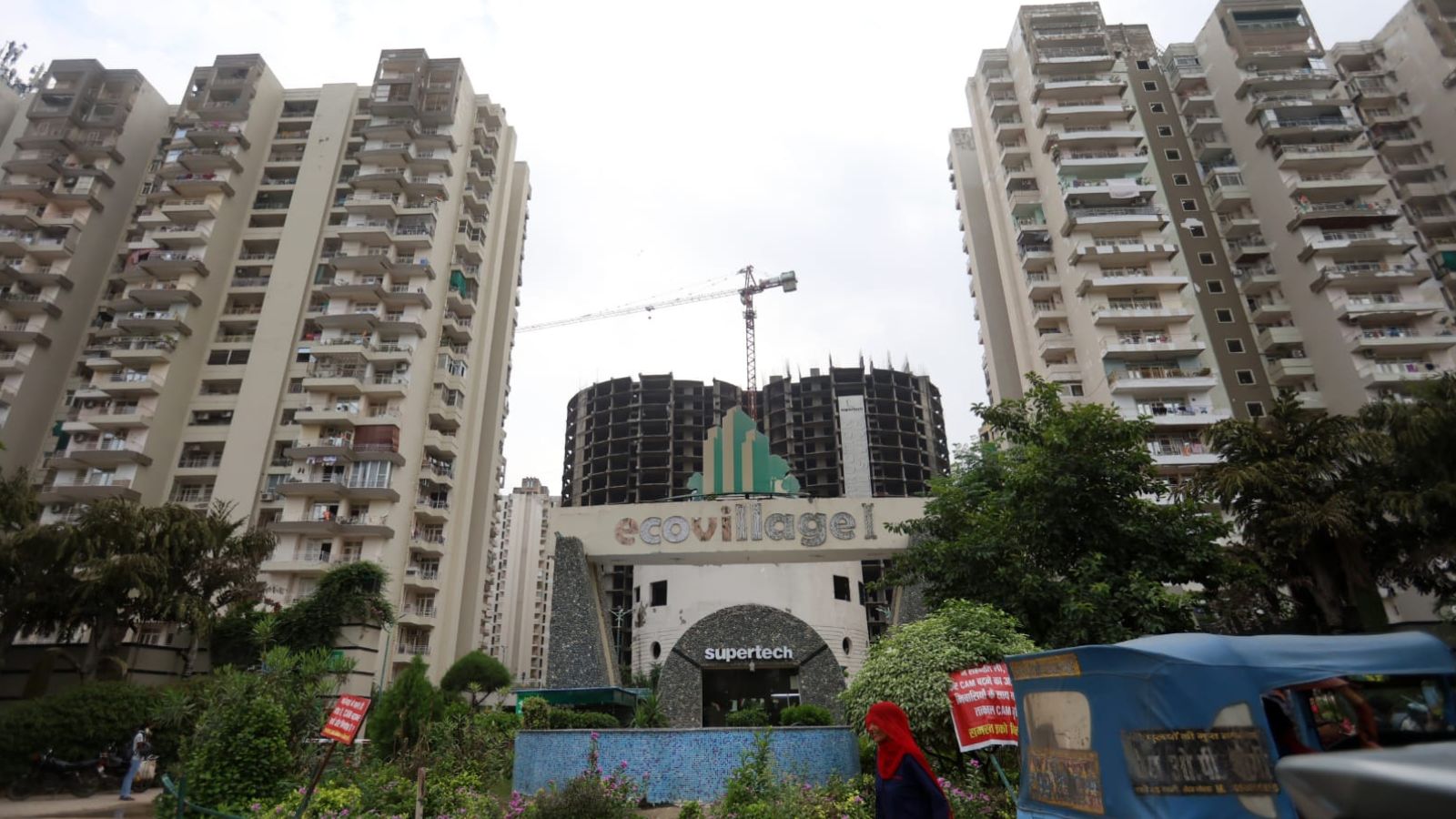
Thousands of homebuyers in Noida and Greater Noida remain trapped in 16 stalled Supertech projects. As construction crawls, legal battles and financial ruin continue to haunt middle-class families.
- Approximately 30,000 homebuyers are stranded across 16 stalled Supertech projects.
- NCLAT has demanded a status report from NBCC regarding slow construction progress.
- Buyers face a double burden of paying rent and servicing home loans simultaneously.
- The Enforcement Directorate (ED) is investigating a ₹700-crore money laundering case involving promoter Ram Kishore Arora.
The ongoing saga of Supertech in Noida and Greater Noida has transitioned from a real estate delay into a profound human tragedy. For thousands of middle-class families, the dream of homeownership has turned into a nightmare of debt, litigation, and psychological distress. After more than a decade, many residents find themselves caught in a limbo where their life savings are locked in unfinished concrete skeletons.
Legal Intervention and Stagnant Construction
On August 25, the National Company Law Appellate Tribunal (NCLAT) took a serious view of the sluggish construction pace across 16 stalled Supertech projects. The tribunal has sought a comprehensive report from NBCC, the state-owned project management consultant tasked with completing these developments. The legal proceedings highlight a growing frustration among petitioners representing societies such as Sports Village, Eco Village, and North Eye.
The plight of individual buyers like Vinod Kumar illustrates the scale of the crisis. Having invested in 2012, Kumar is now 51 and still waiting for his flat, while simultaneously paying rent in Delhi and servicing a home loan. For many, even receiving physical possession has not solved their problems; the inability to complete the official registry means they cannot sell the property or transfer their loans, effectively freezing their wealth.
Why This Matters
BozokMedia analysis shows that the Supertech debacle serves as a critical case study on the systemic vulnerabilities in the Indian real estate sector. When a major developer enters insolvency, the lack of a seamless transition mechanism leaves the end-consumer—the most vulnerable stakeholder—to bear the brunt of the financial and legal fallout.
The Supertech crisis is a stark reminder of the urgent need for stronger developer accountability and faster dispute resolution in urban real estate.
Compounding the crisis is the criminal investigation led by the Enforcement Directorate (ED). The agency is probing a massive ₹700-crore money laundering case against Supertech promoter Ram Kishore Arora. According to the ED, hundreds of crores were allegedly siphoned off to various entities, leaving the company unable to fulfill its obligations to homebuyers.
Comparison of Crisis Scale
| Metric | Details |
|---|---|
| Affected Homebuyers | ~30,000 |
| Stalled Projects | 16 Major Projects |
| Alleged Siphoned Funds | ₹700 Crore |
| Primary Agency for Completion | NBCC |
Frequently Asked Questions
1. Who is responsible for completing the stalled Supertech projects?
The NCLAT has directed NBCC, a state-owned entity, to take charge of completing the 16 stalled projects.
2. Why can't buyers sell their flats even after possession?
Due to the legal insolvency of the developer, the official property registries remain stalled, making legal ownership transfer impossible.


