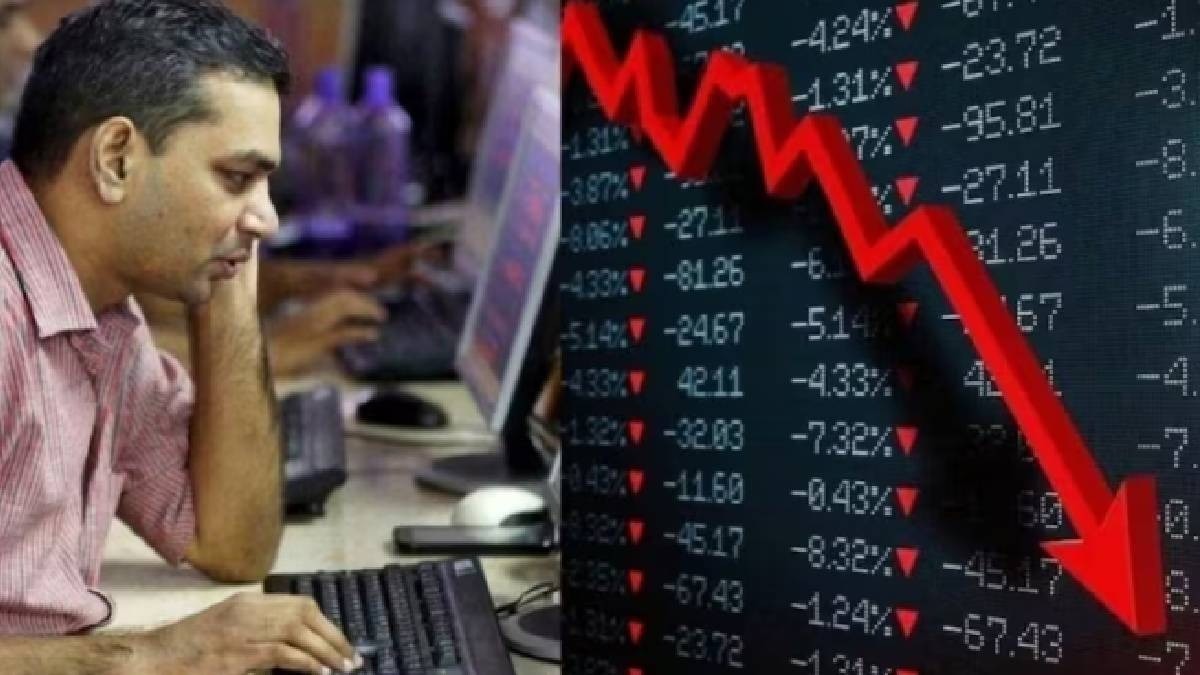
Despite robust GDP growth and strong GST collections, the Indian stock market faced a massive sell-off, wiping out nearly ₹3 lakh crore in investor wealth.
- Sensex dropped 383 points, and Nifty 50 closed at 23,779.
- Investors lost approximately ₹3 lakh crore in market capitalization.
- Surging crude oil prices and US-Iran tensions are primary drivers.
- Heavy selling observed in IT and Metal sectors.
The Indian equity markets are witnessing a paradoxical situation. While macroeconomic indicators like GDP growth and GST collections remain highly positive, the stock market is under intense selling pressure. On the opening of the trading week, the BSE Sensex shed 383 points, and the NSE Nifty 50 slid to close at 23,779, leading to a staggering loss of nearly ₹3 lakh crore for investors.
The Four Pillars of the Market Decline
Market analysts have identified four critical factors driving this downturn. Firstly, the surge in Brent Crude oil prices, which have touched nearly $97 per barrel, is putting immense pressure on the economy. As a major oil importer, India faces higher inflation and squeezed corporate margins due to rising energy costs.
Secondly, uncertainty surrounding the US Federal Reserve's monetary policy has spooked investors. Fears that interest rates in the US might remain elevated for longer have triggered a global risk-off sentiment. Thirdly, escalating geopolitical tensions between the United States and Iran in the Middle East have heightened global volatility. Lastly, consistent selling by Foreign Institutional Investors (FIIs), driven by a strengthening US Dollar Index, has drained liquidity from Indian equities.
Why This Matters
BozokMedia analysis shows that this market volatility is not merely a domestic issue but a reflection of global geopolitical shifts. The heavy selling in IT giants like Infosys and Tech Mahindra highlights the vulnerability of the Indian tech sector to US economic slowdowns. Until the Nifty establishes a firm footing above the 24,000 psychological mark, volatility is expected to persist.
Geopolitical instability and rising energy costs are currently overshadowing India's strong domestic macroeconomic fundamentals.
Despite the broader gloom, some large-cap stocks managed to defy the trend. Companies like Larsen & Toubro (L&T), Bharti Airtel, and Maruti Suzuki closed in the green. However, the midcap and smallcap segments faced significant profit-booking, impacting retail investor portfolios heavily.
Frequently Asked Questions
1. What are the main reasons for the current market crash?
The primary reasons include rising crude oil prices, US-Iran tensions, US interest rate uncertainty, and FII outflows.
2. Which sectors are being hit the hardest?
The IT and Metal sectors, including major names like Infosys and Tata Steel, have seen the most significant selling.