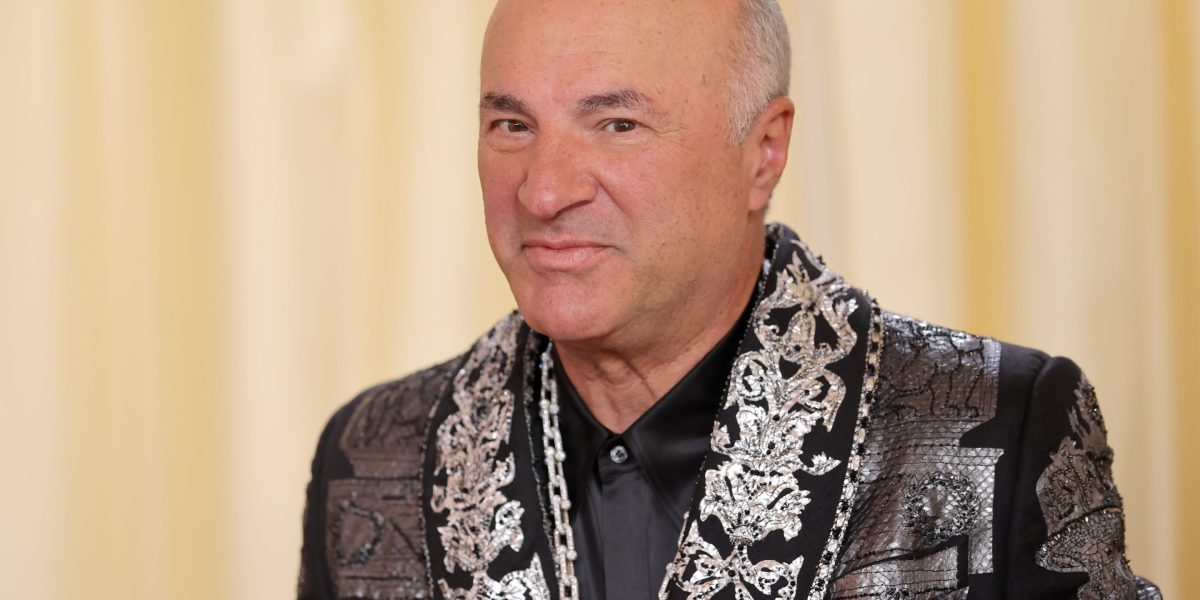
Shark Tank star Kevin O'Leary reveals a straightforward 15% investment rule that could turn an average $68,000 salary into millions by retirement.
- Invest 15% of every dollar earned directly into the market.
- Leverage the power of compounding over a long-term horizon.
- A $68,000 annual income can grow to millions by age 65.
In an era where inflation and the rising cost of living are squeezing middle-class budgets, retirement planning often feels like a distant luxury. However, multimillionaire investor and Shark Tank star Kevin O’Leary insists that saving is more critical now than ever before.
O’Leary’s strategy is rooted in a singular, powerful concept: compounding. His 'golden rule' is deceptively simple: take 15% of every dollar you earn—whether from your primary job, side hustles, or even gifts—and put it directly into the market. "Don’t spend it. Save it. Invest it. Let it compound," O’Leary emphasized in a recent video.
Why This Matters
BozokMedia analysis shows that while the math behind O'Leary's advice is statistically sound, the psychological and economic discipline required to execute it is what separates successful investors from the rest. In a volatile economy, passive saving is no longer enough; active market participation is the key to wealth preservation.
"Don't buy stuff you don't need. Invest it instead." - Kevin O'Leary
The Mathematics of Wealth: For an average American earning $68,000 per year, a 15% investment equates to roughly $10,200 annually, or $850 per month. If this amount is invested consistently over a 40-year career (from age 25 to 65) with an average S&P 500 return of 10%, the portfolio could swell to approximately $5.3 million. Even with a conservative 7% return, the individual would still retire with around $2.2 million.
Historical Background and Economic Reality
While the numbers look impressive on paper, the practical application faces significant headwinds. According to the Bureau of Labor Statistics, the personal saving rate has hovered around 4.4% of disposable income. For many in the $50,000–$79,999 income bracket, rising rents, student loans, and grocery costs make a 15% savings rate feel nearly impossible.
For instance, after taxes, rent, and basic utilities, a worker earning $68,000 might find themselves with very little discretionary income left to meet O'Leary's 15% threshold. This gap highlights the growing divide between theoretical financial advice and the lived reality of the modern workforce.
O’Leary’s philosophy mirrors that of legendary investor Warren Buffett, who famously advocates for low-cost S&P 500 index funds. Both experts agree that consistency and minimizing unnecessary consumption are the pillars of long-term wealth.
| Scenario | Monthly Investment (15% Rule) | Projected Value at 65 (10% Return) |
|---|---|---|
| $68,000 Annual Salary | $850 | ~$5.3 Million |
| $68,000 Annual Salary | $850 | ~$2.2 Million (at 7% Return) |
Frequently Asked Questions
1. Is the 15% rule mandatory to become wealthy?
No, but it provides a mathematically proven pathway to significant wealth through compounding.
2. What is the best way to start investing according to experts?
Many experts, including Warren Buffett, suggest starting with low-cost index funds to capture market growth.