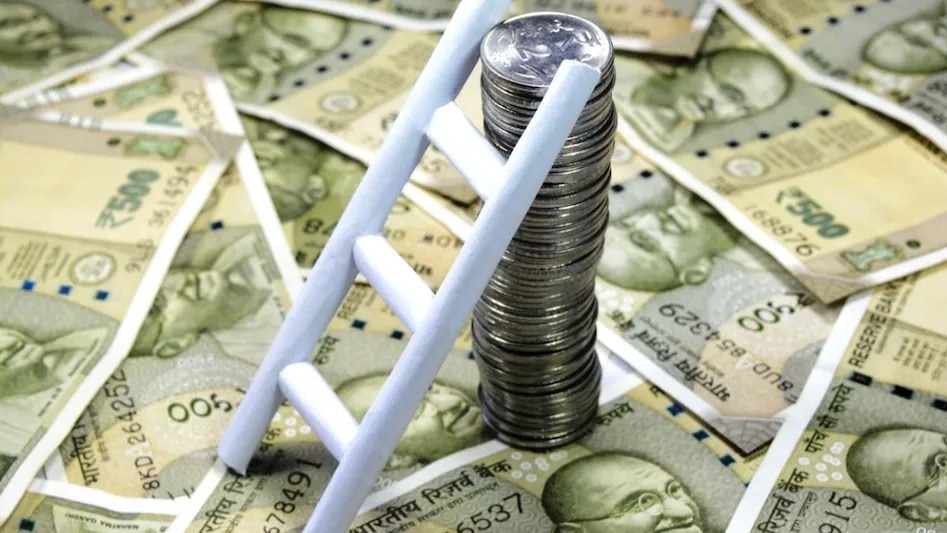
United Nations experts have warned that relying solely on GDP to measure a nation's success is misleading. They propose a comprehensive 'dashboard' of 31 indicators to accurately track economic growth, social welfare, and environmental sustainability.
- GDP measures production value but ignores quality of life and inclusive growth.
- UN experts suggest a global framework consisting of 31 diverse indicators.
- The new model integrates financial health, social development, and environmental stability.
In an era of complex global challenges, Gross Domestic Product (GDP) has long been the gold standard for measuring a nation's economic power. For India, recording a growth rate of 7.8% in the first quarter of the current financial year seems triumphant. However, this figure has come under scrutiny by prominent economists, including former Finance Secretary Subhash Chandra Garg and former Planning Commission Vice-Chairman Montek Singh Ahluwalia.
The core of the debate lies in whether GDP calculations are truly reflective of reality. A UN expert group recently submitted a report arguing that GDP is insufficient to measure a citizen's actual standard of living. While GDP tracks the total value of goods and services produced, it fails to highlight whether the benefits of this growth are reaching the grassroots or are concentrated among the elite.
Why This Matters
BozokMedia analysis shows that an obsession with GDP often leads to 'growth at any cost.' This mindset encourages the depletion of natural resources and ignores systemic inequalities. By shifting to a 31-indicator dashboard, policymakers can move away from misleading singular data points and create targeted strategies that prioritize human welfare and planetary health over mere numerical increases.
"Economic growth is a means to an end, not the end itself; the true measure of success is the well-being of the people and the planet."
The proposed framework is divided into three critical pillars. First, Economic and Financial Status, covering traditional metrics like inflation and trade balance. Second, Social Development and Human Capital, evaluating healthcare access, education quality, and gender equality. Third, Environmental Sustainability, monitoring carbon emissions, renewable energy adoption, and resource conservation.
Historically, the world adopted GDP in the 1930s via Simon Kuznets. However, the world of 1934 did not face the existential threat of climate change or the complexities of a gig economy. Today, a nation's 'success' must be redefined to include the health of its air, the education of its youth, and the equity of its wealth distribution.
| Feature | Traditional GDP | UN Proposed Dashboard |
|---|---|---|
| Primary Focus | Total Market Value of Output | Holistic Human & Planetary Wellbeing |
| Inclusivity | Ignores Wealth Distribution | Emphasizes Social Equity & Health |
| Environment | Ignores Resource Depletion | Tracks Carbon Footprint & Sustainability |
Frequently Asked Questions
Q1: Does this mean GDP is now obsolete?
No, GDP remains a vital tool for tracking economic activity, but it should be used as a supplement to, rather than a replacement for, broader welfare indicators.
Q2: How will the 31-indicator dashboard benefit the average citizen?
It forces governments to implement policies that improve healthcare, education, and environment, ensuring that growth translates into a tangible increase in the quality of life.