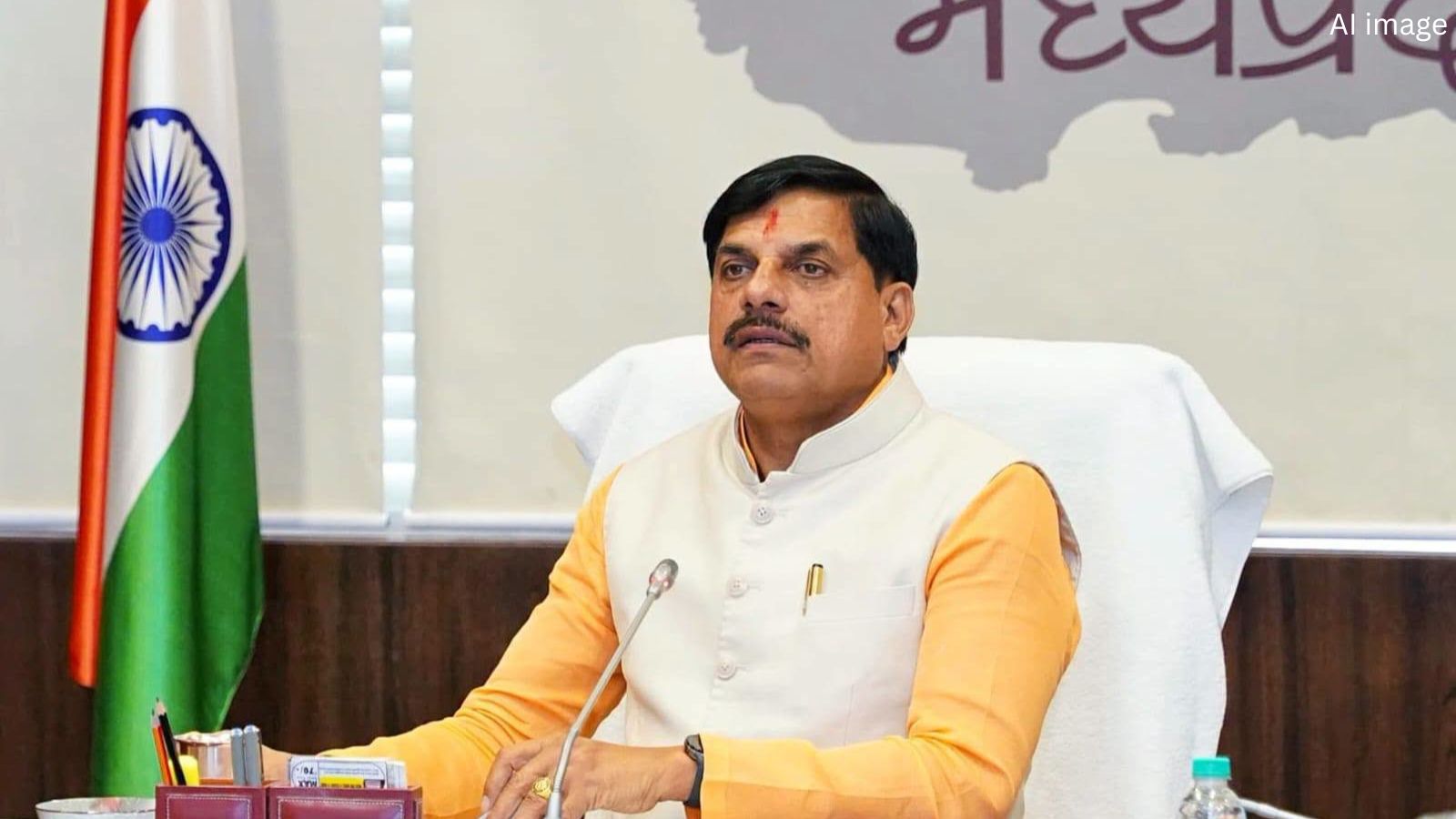
Madhya Pradesh Chief Minister Mohan Yadav's strategic three-day visit to Dubai has resulted in investment proposals exceeding ₹53,000 crore, focusing on AI, green energy, and logistics.
- Investment proposals worth over ₹53,000 crore secured during the Dubai visit.
- Strategic focus on AI, Green Energy, e-Mobility, and Waste-to-Energy sectors.
- Major collaborations explored with DP World, Sharaf Group, and the World Bank.
Madhya Pradesh Chief Minister Mohan Yadav’s high-profile three-day investment outreach in Dubai has yielded monumental results, securing investment proposals worth more than ₹53,000 crore. The state has aggressively pitched itself as a premier manufacturing and investment hub, aiming to bridge the gap between global capital and local technological supply chains.
During the visit from September 6-8, CM Yadav engaged in high-level deliberations with senior UAE officials and captains of global industry. The discussions were centered on diversifying the state's economic portfolio through projects in logistics, food processing, education, artificial intelligence, and sustainable energy solutions.
Infrastructure and Logistics Breakthroughs
A significant highlight was the engagement with DP World, which explored the development of Pawarkheda as a multimodal logistics hub. This initiative is designed to integrate farmers, Farmer-Producer Organisations (FPOs), and MSMEs directly with global markets, reducing transit costs and increasing export efficiency. Simultaneously, the Sharaf Group is evaluating a ₹30-50 million investment for a rail-siding-based logistics park, expected to generate between 300 to 600 specialized jobs.
Why This Matters
BozokMedia analysis shows that this outreach signifies a shift in Madhya Pradesh's economic strategy—moving from traditional agriculture-based growth to a tech-driven industrial economy. The UAE's intent to send a high-level delegation for tourism and hospitality further indicates the growing diplomatic and economic synergy between the region and the state.
"The alignment of state-level incentives with global capital flows is the only way to achieve sustainable double-digit industrial growth."
On the technology front, the World Bank explored cooperation in digital governance and AI to streamline administrative efficiency. Furthermore, BEEAH discussed the implementation of circular-economy solutions, specifically looking at scaling the success of Indore’s renowned solid-waste and Bio-CNG model across other urban centers.
| Sector | Key Partner | Potential Impact |
|---|---|---|
| Logistics | DP World / Sharaf Group | Global Market Access & Job Creation |
| Sustainability | BEEAH | Waste-to-Energy Scaling |
| Governance | World Bank | AI-Driven Digital Transformation |
Frequently Asked Questions
1. What are the primary sectors targeted for investment?
The focus is on logistics, artificial intelligence, green energy, food processing, and waste-to-energy projects.
2. How will the DP World project benefit local farmers?
By creating a multimodal hub at Pawarkheda, farmers and FPOs will have direct access to global supply chains, ensuring better pricing and reduced spoilage.