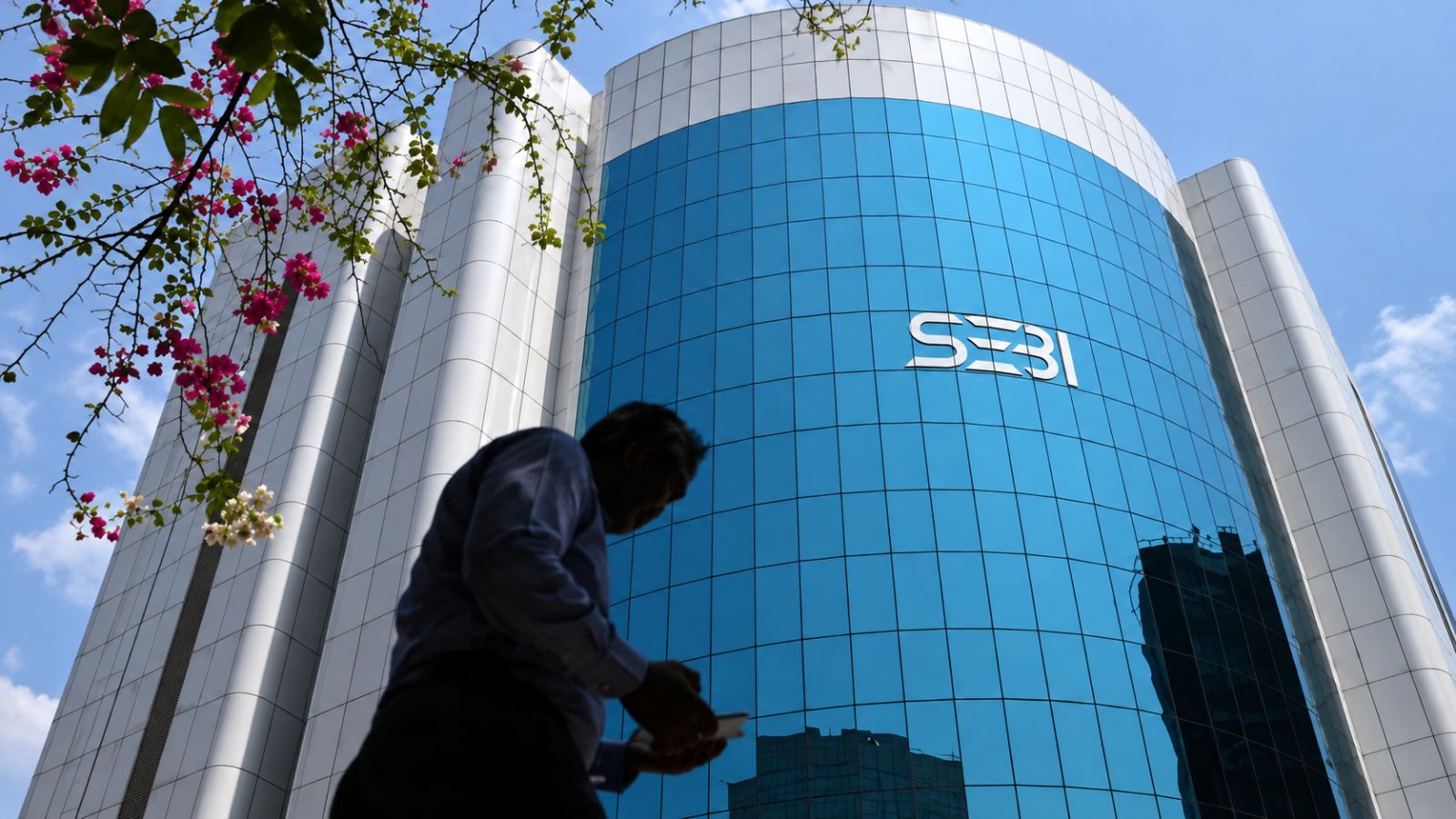
The Securities and Exchange Board of India (SEBI) has proposed easing restrictions on the governing boards of MIIs and introducing standardized qualifications for key managerial roles to widen the talent pool and enhance cybersecurity and risk management.
- Proposal to ease restrictions on who can serve on the boards of MIIs.
- Introduction of an SOP for CTO, CISO, Compliance Officer, and Chief Risk Officer roles.
- New definition of 'well-diversified shareholding' to prevent conflicts of interest.
- Aim to resolve the shortage of suitable candidates for Public Interest Directors (PIDs).
The Securities and Exchange Board of India (SEBI) has moved to modernize the governance framework of Market Infrastructure Institutions (MIIs), which encompass stock exchanges, clearing corporations, and depositories. The proposed changes are designed to expand the pool of eligible directors while simultaneously tightening the professional requirements for critical roles in technology, cybersecurity, compliance, and risk management.
In a detailed consultation paper, the regulator outlined two primary objectives. First, it seeks to relax the stringent restrictions on governing board compositions. Second, it proposes a Standard Operating Procedure (SOP) that defines the mandatory qualifications, certifications, and experience required for four pivotal positions: Chief Technology Officer (CTO), Chief Information Security Officer (CISO), Compliance Officer (CO), and Chief Risk Officer (CRiO).
Why This Matters
BozokMedia analysis shows that the modern financial ecosystem is characterized by convergence. Large conglomerates often operate across broking, insurance, and asset management. The previous "blanket approach" to conflicts of interest often disqualified highly competent professionals simply because of their association with a parent company, even if they had no operational role in the trading arm. This move transitions SEBI from rigid exclusion to risk-based inclusion.
Under the new proposal, SEBI intends to extend exemptions currently granted to public financial institutions to companies with "well-diversified shareholding." Specifically, no non-public sector shareholder should hold 10% or more of the shares or voting rights, directly or indirectly, to qualify for this carve-out.
"The evolution of market regulation must mirror the evolution of corporate structures to ensure that governance does not become a bottleneck for competence."
Historically, these restrictions were a byproduct of the demutualisation of stock exchanges. Following the Bimal Jalan Committee's recommendations in 2012, SEBI barred trading or clearing members from board positions to ensure that those providing the infrastructure were not the same people utilizing it for profit, thereby preventing systemic conflicts of interest.
However, SEBI noted that MIIs have struggled to find suitable candidates, particularly for Public Interest Directors (PIDs). In complex holding-company structures, a director of one subsidiary could be deemed ineligible simply because another distant subsidiary was a trading member, effectively narrowing the talent pool unnecessarily.
Frequently Asked Questions
1. What are Market Infrastructure Institutions (MIIs)?
MIIs are the core entities of the capital market, including stock exchanges (where trading happens), clearing corporations (where trades are settled), and depositories (where securities are held).
2. Why is SEBI introducing an SOP for officers like the CISO?
Given the rise in cyber threats and systemic risks, SEBI wants to ensure that the people managing technology and risk at the national level possess verified, high-level certifications and experience.
