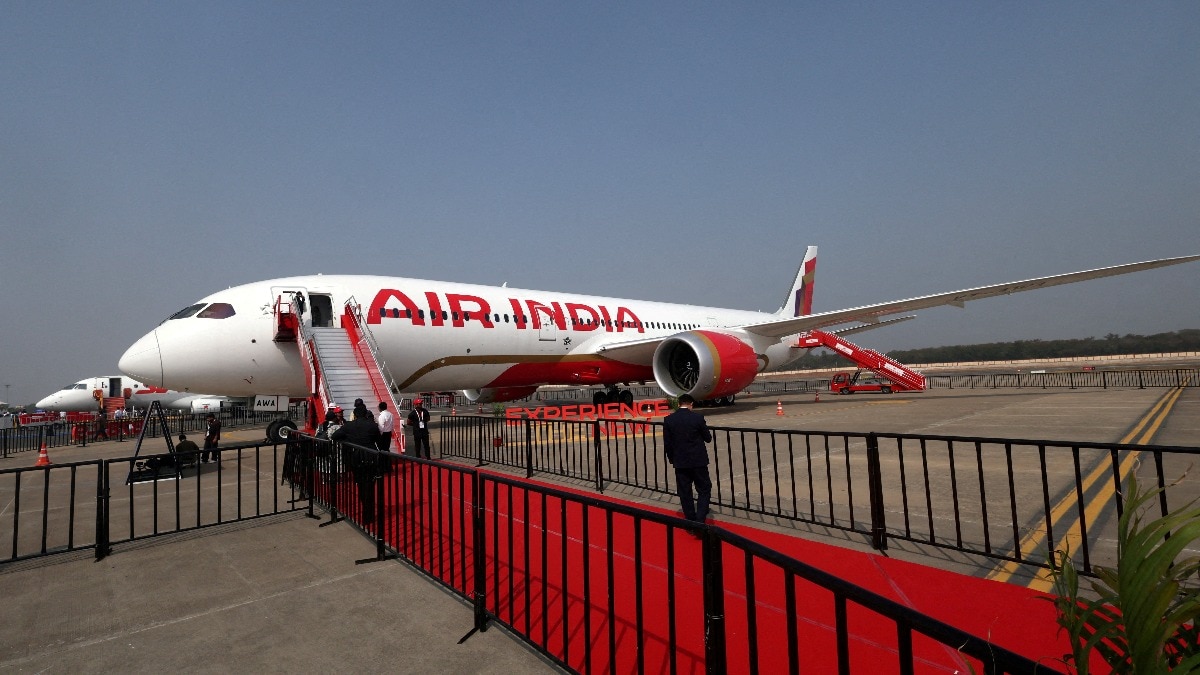
Singapore Airlines is reportedly conditioning its further investment in Air India on increased board influence and strict loss-reduction targets. This comes as the Indian carrier grapples with significant financial losses and a leadership transition.
- Singapore Airlines may demand more voting power and loss-reduction targets before providing fresh capital.
- Air India is seeking approximately $1.5 billion in equity; Tata Sons has already approved $1.1 billion.
- The push for control follows Air India's reported $2.33 billion loss for the fiscal year ending March.
- Tewolde Gebremariam, former Ethiopian Airlines chief, has been appointed as the new CEO.
In a strategic move to safeguard its investments, Singapore Airlines is expected to negotiate for stronger governance safeguards and a more influential role in the management of Air India. According to sources familiar with the matter, the airline is hesitant to inject further capital without concrete assurances regarding the Indian carrier's financial trajectory and operational oversight.
The current friction arises as Air India seeks an infusion of roughly $1.5 billion in fresh equity to stabilize its operations. While Tata Sons, the majority owner, has already greenlit an investment of $1.1 billion, Singapore Airlines—which holds a 25.1% stake—is being asked to contribute proportionally. However, the airline is leveraging this request to seek greater voting power on the board and the establishment of strict KPIs to curtail the massive losses Air India has been incurring.
Why This Matters
BozokMedia analysis shows that this is not merely a financial dispute but a struggle for strategic control. Singapore Airlines is facing internal and external pressure to justify the dilution of its resources into a turnaround project that Tata Sons admits could take up to a decade. By demanding more say in management, Singapore Airlines is attempting to shift from a passive investor to an active strategist to prevent further erosion of its profits.
"The demand for increased voting rights signals a lack of confidence in the current turnaround speed, shifting the relationship from a partnership to a monitored investment."
The leadership at Air India is also in flux. The appointment of Tewolde Gebremariam, the former head of Ethiopian Airlines, as the new CEO marks a departure from the previous leadership of Campbell Wilson, who was a Singapore Airlines veteran. This change in leadership may be a catalyst for Singapore Airlines to redefine its role within the corporate structure.
Historically, the partnership was cemented in 2022 through the merger of Vistara into Air India. Under the original terms, Singapore Airlines was granted a single board seat, currently held by CEO Goh Choon Phong. While their 25.1% stake allows them to block special resolutions (such as mergers or winding up), they have had limited influence over day-to-day operational decisions.
Meanwhile, the Singaporean state investor Temasek has maintained a distance from the direct funding decisions, emphasizing that Singapore Airlines must manage its internal resources and risks. Despite this, Temasek continues to view India as a critical long-term growth market, with diversified investments in healthcare and technology.
| Feature | Current Status | Proposed Demand |
|---|---|---|
| Board Influence | One Board Seat | Increased Voting Power |
| Financial Oversight | Passive Monitoring | Strict Loss-Reduction Targets |
| Funding Role | Proportional Equity | Conditional Capital Infusion |
Frequently Asked Questions
Q1: Why is Singapore Airlines hesitant to provide more funding?
The airline is concerned about Air India's massive $2.33 billion loss and wants more control over how the money is used to ensure a successful turnaround.
Q2: Who is the new CEO of Air India?
Tewolde Gebremariam, the former chief of Ethiopian Airlines, has been appointed to lead Air India.