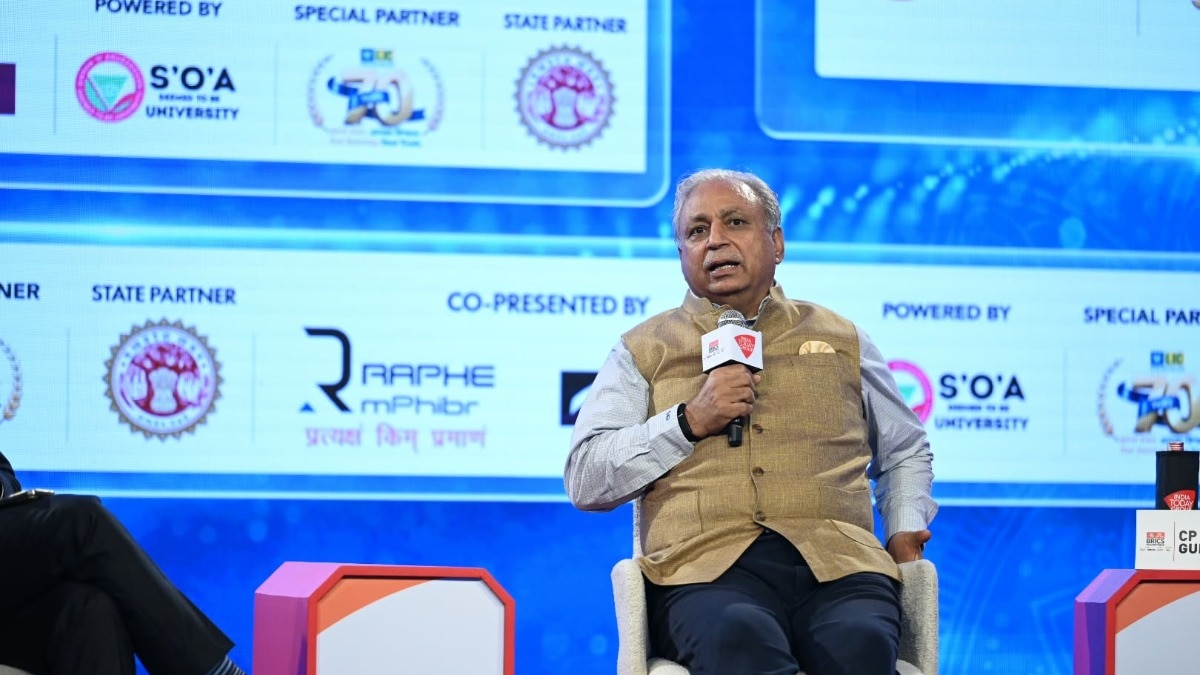
CP Gurnani, Co-Founder of AIONOS, asserts that Artificial Intelligence is not a threat to employment but a catalyst for skill enhancement and affordable global solutions.
- India's massive data pool is a strategic asset in the global AI competition.
- AI should be viewed as a utility, similar to electricity, integrated into daily life.
- The focus should shift from owning the entire tech stack to building practical, scalable applications.
- Continuous learning and adaptability are critical for maintaining employability in the AI era.
Speaking at the India Today BRICS Roundtable in New Delhi, CP Gurnani, Co-Founder and Vice Chairman of AIONOS, provided a nuanced perspective on the integration of Artificial Intelligence (AI) into the workforce. He argued that while AI will inevitably reshape the professional landscape, India is uniquely positioned to transform this disruption into a competitive advantage by focusing on skill development and the creation of affordable, high-impact solutions.
Gurnani emphasized that AI is not an entirely alien technology but rather an evolution in how humans interact with machines. The rise of multi-lingual conversational AI has democratized access, allowing individuals who were previously intimidated by traditional digital interfaces to engage with technology. He likened the future of AI to electricity—an invisible but essential force that powers everything without the user needing to understand the underlying physics.
Why This Matters
BozokMedia analysis shows that India's strategic edge lies in its ability to perform 'frugal innovation.' While superpowers battle over high-end semiconductor chips and massive compute power, India can dominate the 'Application Layer.' By building AI services that are cost-effective and tailored for emerging markets, India can establish itself as the primary AI provider for the Global South.
"India should focus on what it can build and use rather than worry only about owning every part of the AI technology stack."
A critical component of this strategy is data. Gurnani highlighted that India possesses an unparalleled volume of real-world data across healthcare, fintech, and logistics. By leveraging these datasets, Indian firms can create AI models that are more practical and adaptable than those trained on sterile, Western datasets. He also suggested a pragmatic approach to geopolitics, suggesting that India should be open to learning from any global innovation, including those from China, to accelerate its own progress.
Addressing the pervasive fear of job losses, Gurnani pointed out that the tech industry continues to expand. He noted the surge in the creator economy and tech-led entrepreneurship as evidence that AI creates new categories of work. The real crisis, he warned, is not a lack of jobs but a gap in 'employability.' He urged the workforce to move away from a reliance on traditional degrees and embrace a culture of lifelong learning through digital certifications and online platforms.
| Perspective | Common Fear | CP Gurnani's View |
|---|---|---|
| Employment | AI will replace human workers | AI will augment productivity and create new roles |
| Infrastructure | Dependence on advanced chips | Focus on application and platform services |
| Education | Fixed institutional degrees | Continuous, agile skill updating |
Frequently Asked Questions
Q1: Will AI lead to mass unemployment in India?
A: According to CP Gurnani, the impact is often exaggerated. AI will reshape roles, making continuous upskilling the key to remaining relevant.
Q2: How can India compete with AI giants like the US or China?
A: By leveraging its vast data pool and experience in building low-cost, scalable solutions for the Global South.


