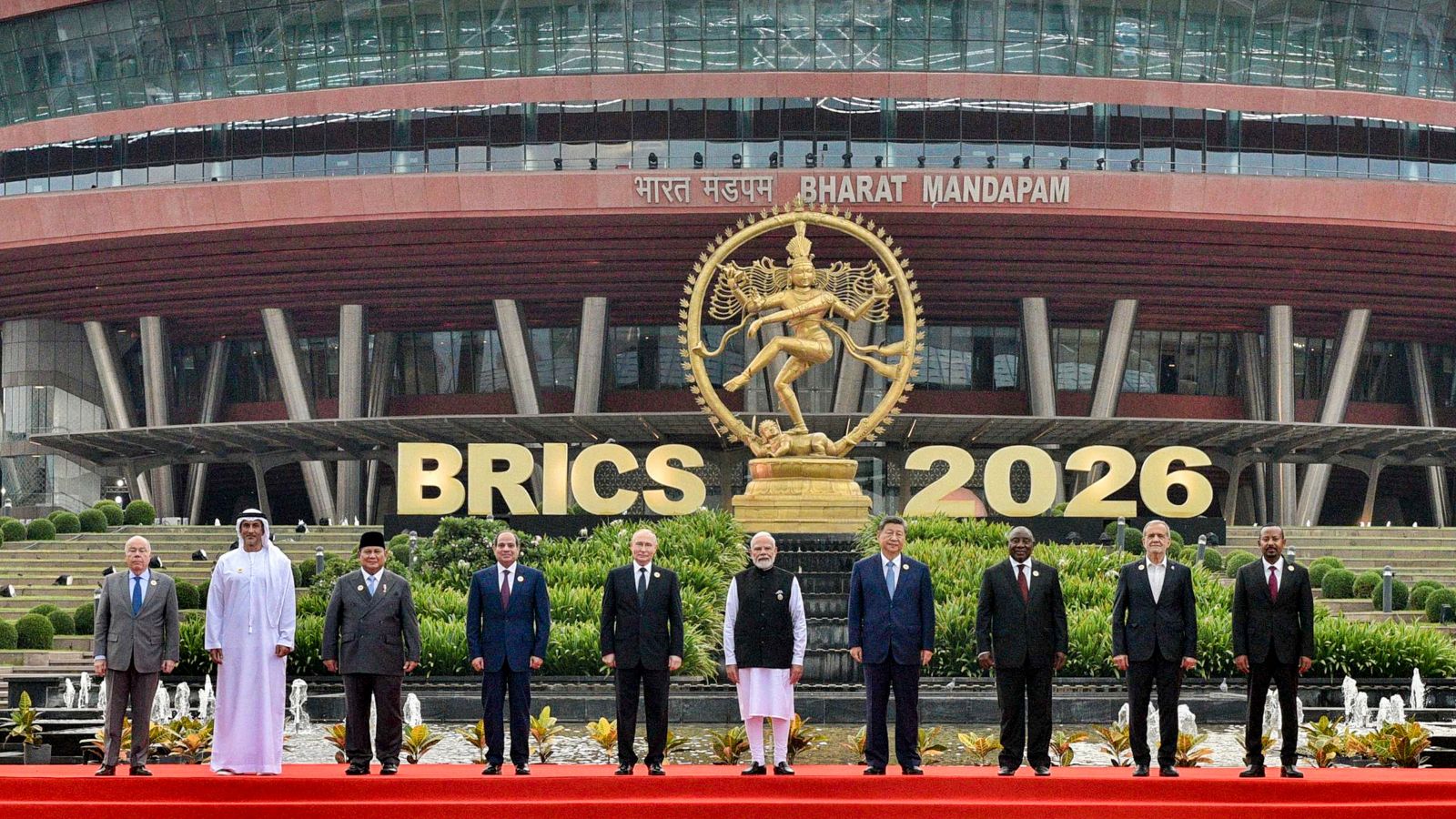
In a landmark move, BRICS nations have adopted the 'New Delhi Declaration 2026', raising alarms over unilateral tariffs and pushing for radical reforms within the World Trade Organization (WTO).
- BRICS members unanimously adopted the 'New Delhi Declaration 2026'.
- Serious concerns raised over unilateral tariffs and non-tariff barriers.
- Strong push for WTO reform and protection of developing economies.
- Condemnation of unilateral economic sanctions as violations of international law.
New Delhi: Members of the BRICS bloc on Saturday adopted the historic 'New Delhi Declaration 2026', signaling a unified front against the rise of unilateral tariff and non-tariff measures. The declaration expresses grave concern that such measures distort global trade and run contrary to the established norms of the World Trade Organization (WTO).
The consensus comes despite geopolitical tensions in West Asia that have occasionally divided member states. The declaration highlights that trade-restrictive actions—whether through indiscriminate tariff hikes or protectionism disguised as 'environmental objectives'—threaten to disrupt global supply chains and exacerbate existing economic disparities between developed and developing nations.
Why This Matters
BozokMedia analysis shows that this declaration is a direct response to the increasing use of economic coercion by major powers. As the US utilizes sweeping tariffs and the EU implements carbon-related trade barriers, BRICS is positioning itself as the guardian of the 'Global South' and the principles of equitable trade.
Unilateral coercive measures have far-reaching negative implications for human rights, including the rights to development, health, and food security.
A significant portion of the declaration addresses the issue of economic sanctions. Citing the work of former RBI Governor Urjit R. Patel, the bloc criticized the use of 'secondary sanctions' as tools of economic hegemony. Patel's research identifies the US as a 'hegemonic sanctioner,' noting that it administers significantly more sanctions than any other international body, often impeding the legitimate commerce of third-party nations.
Demanding WTO Reform
The BRICS nations are calling for a revitalized WTO that is non-discriminatory, transparent, and inclusive. They specifically advocated for the preservation of Most-Favoured-Nation (MFN) treatment and Special and Differential Treatment (S&DT) for Least Developed Countries (LDCs).
| Issue | Developed Nations Approach | BRICS Position |
|---|---|---|
| Trade Barriers | Increasing unilateral tariffs | Multi-lateral & WTO-compliant |
| Climate Policy | Implementation of carbon tariffs | Respect for S&DT provisions |
| Sanctions | Used as geopolitical tools | Violation of international law |
Furthermore, the bloc called for the immediate restoration of a fully functioning WTO Appellate Body to ensure that trade disputes can be resolved through a rules-based legal framework rather than through power politics.
Historical Background
The BRICS grouping has evolved from an emerging markets concept into a powerful geopolitical bloc. As the global economy shifts toward multipolarity, the group's ability to reach consensus on complex economic issues like the New Delhi Declaration demonstrates its growing institutional maturity.
Frequently Asked Questions
1. What is the main grievance of BRICS in the 2026 Declaration?
The main grievance is the rise of unilateral tariffs and economic sanctions that disrupt fair global trade.
2. How does BRICS view environmental tariffs?
BRICS views some environmental tariffs as a form of protectionism that ignores the special needs of developing nations.