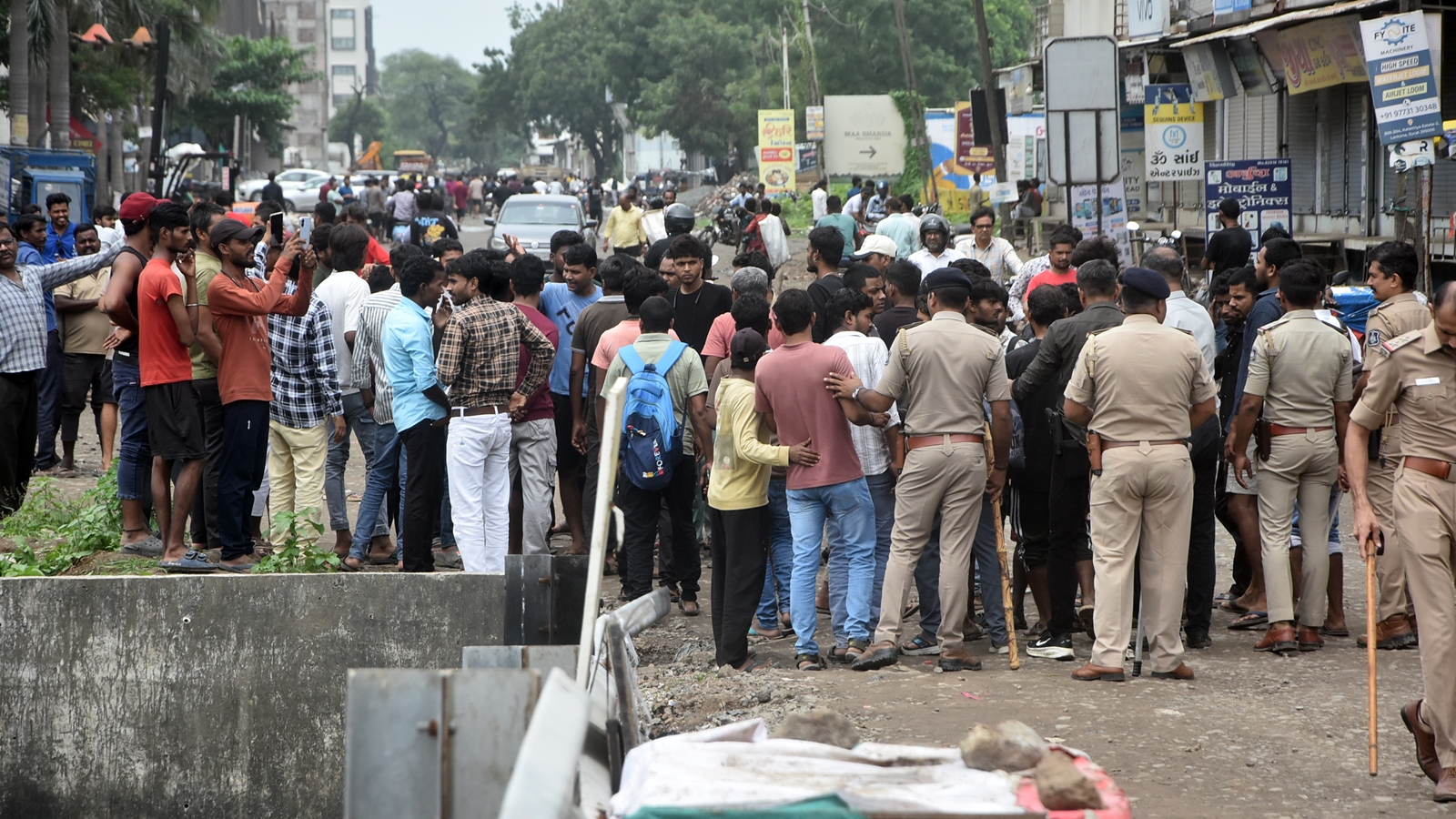
Hundreds of textile workers in Surat staged a protest at the district collector's office, demanding 8-hour shifts and Sunday holidays, alleging broken promises by factory owners.
- Textile workers in Surat are protesting against excessive 12-hour work shifts.
- Demands include an 8-hour workday, Sunday weekly offs, and timely wage payments by the 7th of each month.
- The Janmabhumi Bharat Majdoor Union has submitted a memorandum to the police.
Surat, Gujarat: The industrial landscape of Surat witnessed intense agitation on Saturday as hundreds of textile workers gathered at the district collector’s office. The protesters expressed deep resentment over being forced to work grueling 12-hour shifts, despite previous assurances from embroidery unit owners that their working conditions would improve.
Broken Promises and Growing Unrest
The workers claimed they had resumed their duties following commitments from factory owners to address their grievances. However, the situation on the ground remains unchanged. The workers alleged that no concrete decisions have been implemented, leaving them to work long hours without adequate breaks.
Ajay Dubey, President of the Janmabhumi Bharat Majdoor Union, submitted a formal memorandum to the police. The union’s demands are multi-faceted: a mandatory weekly off on Sundays, ensuring wages are disbursed by the 7th of every month, and the strict enforcement of existing labor laws within the textile sector. The memorandum highlighted a staggering statistic: over 18 lakh migrant workers are currently employed in Surat's textile industry, many of whom lack basic benefits like PF, ESI, and gratuity.
Why This Matters
BozokMedia analysis shows that the tension in Surat reflects a broader systemic issue in India's manufacturing hubs, where the pressure of production often overrides the fundamental rights of the workforce. As Surat continues to be a global leader in textiles, the stability of its labor force is crucial for national economic security and social stability.
The gap between industrial productivity and labor welfare is widening, creating a volatile environment in India's manufacturing corridors.
The protest also saw moments of high tension. During the demonstration, allegations were made regarding police intimidation. Deputy Commissioner of Police (SOG) Rajdeepsinh Nakum had to intervene, warning agitators against violating instructions to prevent the registration of FIRs.
The Industry Perspective
On the other side of the dispute, factory owners have raised operational concerns. Vishal Goti, an owner of embroidery units at Vedant Eco Park-2, explained that due to power-related issues, they currently provide a weekly off on Thursdays. He argued that granting an additional holiday on Sunday would severely impact production and business viability.
Historical Background
This is not an isolated incident. In mid-August, violent clashes occurred in the Amroli suburb when workers stormed several embroidery units. That unrest led to multiple FIRs and several arrests, highlighting the deep-seated friction between the labor force and management in the Surat industrial zones.
Frequently Asked Questions
Question 1: What are the primary demands of the Surat textile workers?
Answer: They are demanding an 8-hour work shift, a weekly off on Sundays, and timely payment of wages by the 7th of each month.
Question 2: Why are factory owners resisting the Sunday holiday demand?
Answer: Owners claim that due to electricity issues, they already provide a Thursday off, and a Sunday holiday would disrupt production cycles.