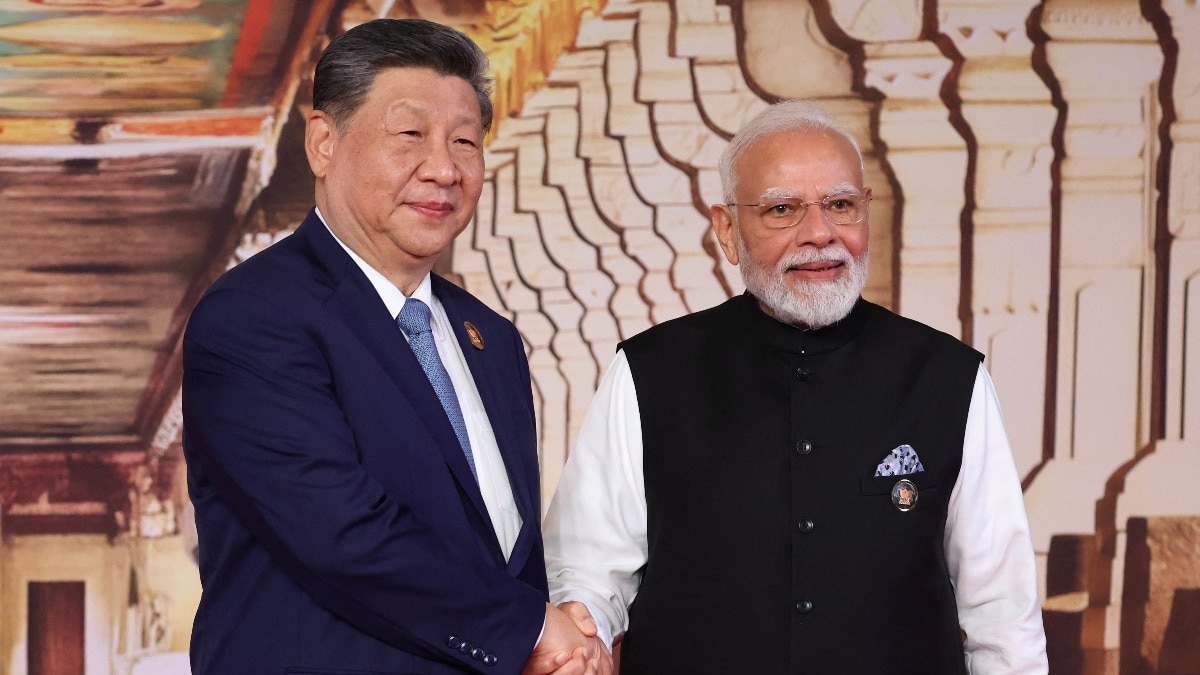
While China continues to be the primary economic driver of the BRICS bloc, recent data reveals that India has achieved a significantly higher growth rate in GNI over the last five years.
- China accounted for 72% of the total increase in BRICS income.
- India's GNI grew by 52% between 2020-2025, compared to China's 32%.
- China's economy remains approximately five times larger than India's.
- China dominates 94% of the increase in BRICS goods exports.
A deep dive into the economic landscape of the BRICS nations reveals a complex tug-of-war between established dominance and emerging momentum. According to the latest analysis by economist Surjit Bhalla, China remains the undisputed heavyweight of the bloc. While the BRICS share of global income rose from 21.9% in 2011 to 28.9% in 2025, this growth is heavily skewed toward Beijing. In fact, removing China from the equation would see the remaining members' share of global income actually decline.
The Chinese Hegemony: The numbers paint a stark picture of China's influence. China's share of BRICS income climbed from 45.6% in 2011 to 60.2% in 2025. Most notably, China was responsible for 72% of the total income increase within the group over the analyzed period. This concentration of wealth underscores the group's current reliance on the Chinese economic engine.
India's High-Velocity Growth
However, a more granular look at the last five years (2020-2025) reveals a shifting dynamic. Using the World Bank's GNI per capita (Atlas method), the data shows that India is sprinting while China is steadily walking. India's aggregate Gross National Income (GNI) surged from $2.67 trillion in 2020 to $4.04 trillion in 2025—a massive 52% increase.
BozokMedia analysis shows that during this same window, China's GNI grew by approximately 32%. This means India's growth rate outpaced China's by 20 percentage points. While this does not mean India has caught up in absolute size—China's GNI is still nearly five times larger—it signifies a narrowing of the relative economic gap. In 2020, India's GNI was 18% of China's; by 2025, it had edged up to 20%.
India is proving to be the most dynamic growth engine within the bloc, even as China maintains its massive absolute economic lead.
Why This Matters
The divergence in growth rates is critical for the future geopolitical alignment of the BRICS bloc. As India moves toward becoming a more significant economic pillar, the group may transition from a China-centric alliance to a more multipolar economic entity. This could alter trade dynamics and investment flows across the Global South.
| Metric (2020-2025) | India | China |
|---|---|---|
| GNI Growth Rate (%) | ~52% | ~32% |
| Absolute GNI Increase | $1.37 Trillion | $4.86 Trillion |
| Export Dominance | Modest Improvement | 94% of BRICS Increase |
Despite the income growth, India faces a significant hurdle in global trade. While India's income is rising, its share of global goods exports has seen only marginal improvements compared to the explosive export growth seen by China and other members like Vietnam. To truly challenge the status quo, India must translate its domestic income growth into global trade dominance.
Frequently Asked Questions
1. Is India's economy larger than China's?
No, China's economy remains significantly larger, with a GNI roughly five times that of India.
2. What is the main difference between India and China's BRICS contribution?
China contributes more in absolute dollar terms, but India is growing at a much faster percentage rate.