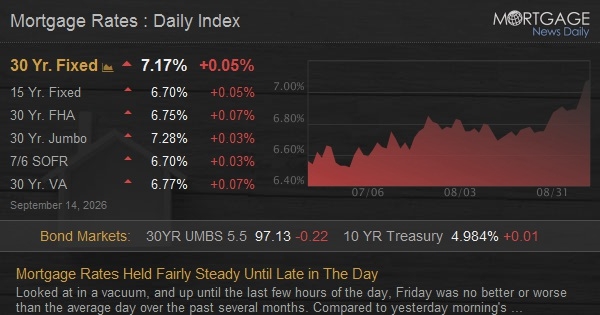
Mortgage rates saw an uptick toward the end of Friday's trading, reaching levels seen in early 2025. The shift follows hotter-than-expected inflation data that has reignited speculation over Federal Reserve policy.
- Mortgage rates increased by 0.05% toward the end of the day.
- Current rates have aligned with levels seen in February 2025.
- Hotter inflation data has increased expectations for Fed rate hikes.
- Bond market volatility erased early morning gains by market close.
In a day characterized by subtle shifts and late-day volatility, mortgage rates remained relatively steady before climbing toward the close of business on Friday. While the movement appeared negligible in the morning, multiple lenders increased their rates in the final hours, pushing the average up by 0.05%. This movement is significant as it officially brings mortgage rates back to the benchmarks established in early 2025.
The Inflation Catalyst
The primary driver behind today's market movement was the release of economic data showing a slight uptick in inflation. This 'hotter' reading has shifted market sentiment, leading investors to price in a higher probability of the Federal Reserve taking more aggressive action to combat rising prices. Consequently, the benchmark levels for mortgages are now mirroring the environment seen in February 2025.
Why This Matters
BozokMedia analysis shows that the relationship between inflation and long-term rates can be counterintuitive. Sometimes, higher inflation data can actually stabilize long-term rates if it reassures investors that the Fed will act decisively. If the data is not so extreme as to change the long-term outlook but significant enough to trigger Fed action, it creates a 'perfectly warm bowl of porridge' scenario for the markets.
The market is currently walking a tightrope between inflation fears and the necessity of Fed intervention to maintain stability.
Intraday trading revealed an interesting paradox. Despite the inflation data, the bond market initially improved this morning. Analysts suggest this might have been driven by short-covering—where traders close out bets that rates would fall—rather than a sustainable long-term trend. By the end of the day, bond yields returned to their morning highs, erasing the early optimism.
Historical Context
Looking at the broader trajectory, mortgage rates have been hovering near May 2025 levels for much of the recent period. This sudden jump back to February 2025 levels marks a shift in the momentum, suggesting that the period of relative stability may be facing new headwinds from inflationary pressures.
Frequently Asked Questions
1. Why did mortgage rates rise at the end of the day?
The rise was driven by multiple lenders adjusting their rates following economic data that suggested inflation remains a persistent concern.
2. What should I watch for next week?
The upcoming Federal Reserve announcement will be the most critical indicator for the future direction of mortgage rates.
| Mortgage Term | Current Rate | Change |
|---|---|---|
| 30-Year Fixed | 7.17% | +0.05% |