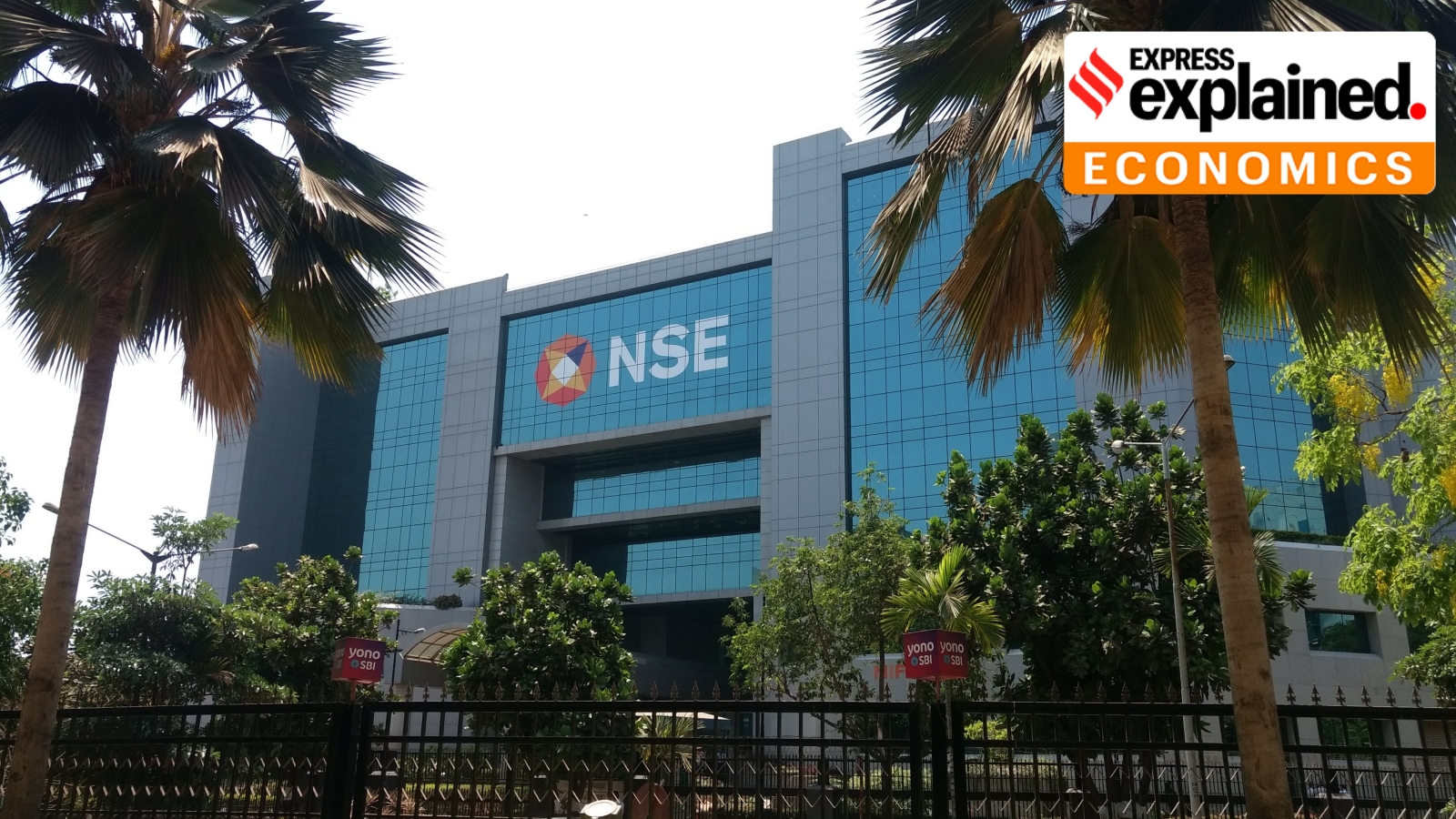
Major shareholders of the National Stock Exchange (NSE) have significantly reduced their stake sales in the upcoming IPO. This strategic move is driven by lower-than-expected valuations and the potential for massive future returns.
- The NSE IPO is set to open on September 17 with a price band of ₹1,700-₹1,785 per share.
- Selling shareholders have reduced the OFS size from ₹30,000 crore to approximately ₹22,562 crore.
- Major entities like SBI and GIC are offloading fewer shares to retain long-term upside.
- NSE maintains dominant market shares in key segments like Cash and Equity Derivatives.
The much-anticipated Initial Public Offering (IPO) of the National Stock Exchange (NSE) is finally approaching. Scheduled to commence on September 17, the issue has fixed a price band of ₹1,700-₹1,785 per share. While the market buzz is palpable, a significant shift has occurred: the shareholders participating in the Offer-for-Sale (OFS) have drastically cut their intended stake sales.
The total amount to be raised through the OFS has been revised downward to around ₹22,562 crore from the initial estimate of ₹30,000 crore. Since proceeds from an OFS go directly to the selling shareholders rather than the company, this reduction implies that these institutional giants are choosing to keep more skin in the game rather than exiting fully.
The Mathematics of the Stake Reduction
The selling shareholders are now expected to offload roughly 126 million shares, a sharp decline from the 149 million shares originally planned in June. State Bank of India (SBI) has reduced its stake sale from 1% to approximately 0.7%. Interestingly, SBI Capital Markets has also been added as a selling shareholder, expected to offload 0.35% of its stake.
Other major players, including the General Insurance Corporation of India (GIC) and Bank of Baroda, have also trimmed their stake sales by 18 and 13 basis points, respectively. These institutions had originally acquired their holdings at extremely low costs and are now selling at 17-18 times that price, yet they are choosing to hold back more shares.
Why This Matters
BozokMedia analysis shows that this decision is a calculated bet on the exchange's long-term valuation. Market participants had anticipated a much higher valuation of over ₹5 lakh crore, but the current price band values the exchange at approximately ₹4.42 lakh crore.
The lower valuation creates a 'value gap' that makes it more lucrative for existing shareholders to hold onto their shares for future capital appreciation rather than exiting now.
If NSE shares appreciate to levels like ₹3,000 post-listing—similar to the trajectory seen by BSE since its 2017 listing—the long-term gains for holders like SBI could dwarf the immediate liquidity provided by the IPO.
Historical Context and Market Dominance
To put this in perspective, BSE shares have grown nearly 29 times since their listing in 2017. NSE possesses an even more formidable market position. According to data, NSE dominates several critical segments:
| Segment | NSE Market Share |
|---|---|
| Cash Market | ~93% |
| Equity Futures | ~99.79% |
| Equity Options | ~74.71% |
| Currency Derivatives | ~99-100% |
Frequently Asked Questions
1. What is the price band for the NSE IPO?
The price band is set between ₹1,700 and ₹1,785 per share.
2. Why did the OFS amount decrease?
Major shareholders decided to sell fewer shares to benefit from potential future price increases due to the lower current valuation.