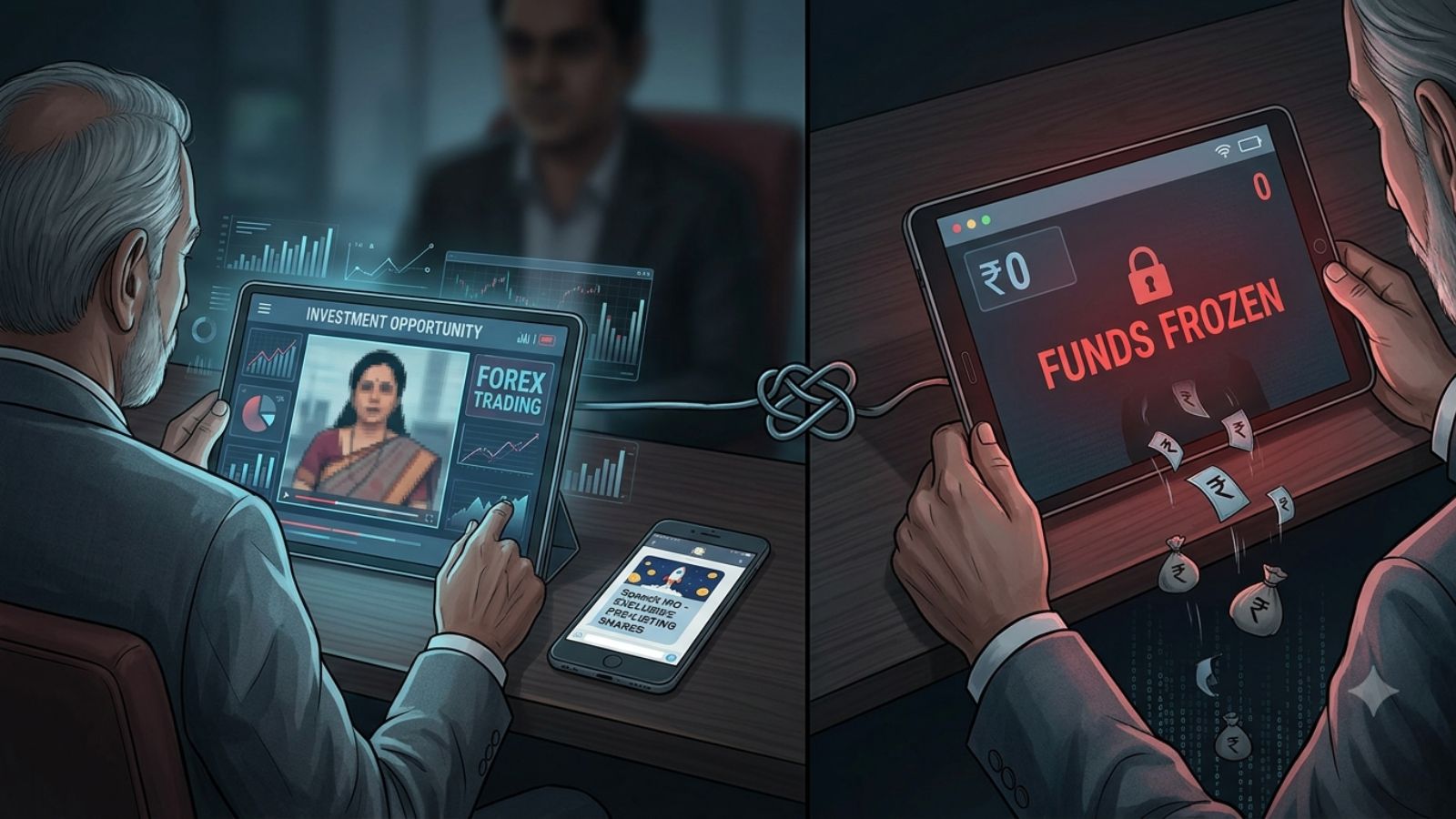
A 72-year-old retired banker in Pune was duped of ₹1.05 crore by fraudsters posing as officials from the RBI, ED, and Mumbai Police under the guise of a terror funding probe.
Key Takeaways
- The 72-year-old victim was held under a fake 'digital arrest' for four days.
- Fraudsters impersonated officials from the RBI, ED, Mumbai Police, and the Supreme Court.
- Victim was coerced into transferring ₹1.05 crore for 'account verification'.
- The scam was detected when the criminals refused to show valid identity cards.
Pune: In a chilling display of cyber-criminality, a 72-year-old retired central government banker has been defrauded of ₹1.05 crore. The fraudsters utilized a high-pressure tactic known as 'digital arrest,' impersonating high-ranking officials from the Mumbai Police, Reserve Bank of India (RBI), Enforcement Directorate (ED), and even the Supreme Court.
The Pune Cyber Police have registered an FIR following the incident. According to the investigation, the criminals convinced the victim that his bank accounts were linked to a massive money laundering and terror financing investigation. To add legitimacy to their claims, they sent forged documents featuring official government letterheads via WhatsApp.
Why This Matters
BozokMedia analysis shows that cybercriminals are increasingly pivoting toward psychological warfare, specifically targeting senior citizens who hold significant savings. By leveraging the victim's respect for authority and his background as a former government employee, the scammers bypassed his natural skepticism through fear and intimidation.
The 'digital arrest' phenomenon is a psychological trap designed to paralyze a victim's judgment through continuous video surveillance and fear of legal consequences.
The ordeal began on July 25, when the victim received a call alleging his Aadhaar and debit card were involved in illegal activities. This was followed by a WhatsApp video call where the perpetrator, positioned against a backdrop of the national flag and the Maharashtra Police emblem, posed as a Colaba police officer. The victim, fearing for his family's safety, eventually transferred the funds in three RTGS transactions between July 27 and July 28.
Historical Background: The Rise of Digital Arrests
'Digital arrest' is a relatively new but rapidly growing cybercrime trend in India. Unlike traditional phishing, this method involves continuous video calls where the victim is told they are under 'virtual custody,' preventing them from contacting anyone until the 'investigation' (and subsequent extortion) is complete.
Frequently Asked Questions
1. How can I identify a digital arrest scam? If someone calls you via video, claims you are under arrest, and demands money or immediate secrecy, it is a scam.
2. What is the immediate step to take after a cyber fraud? Contact the National Cyber Crime Helpline at 1930 or report it immediately at cybercrime.gov.in.