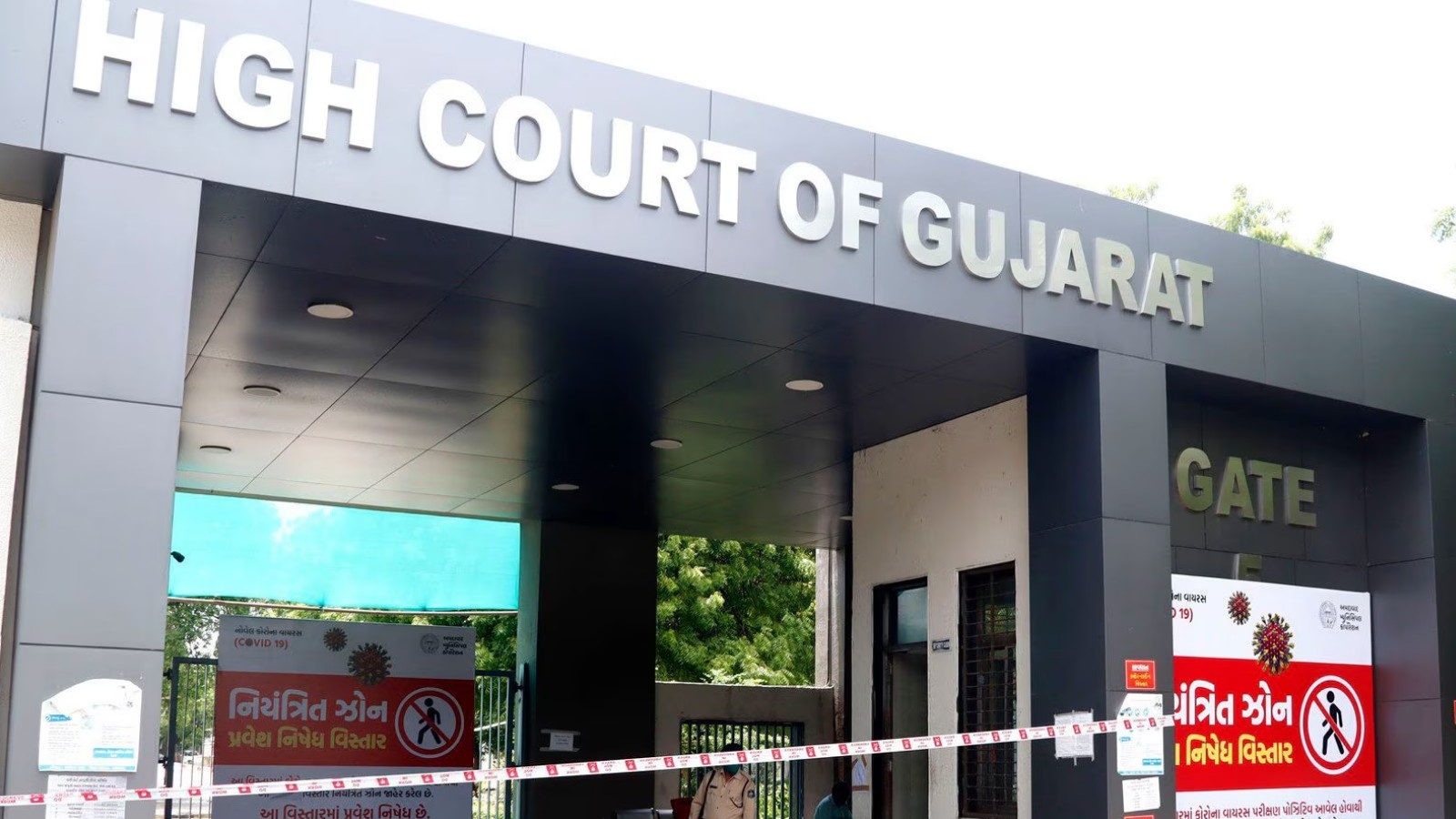
In a landmark judgment, the Gujarat High Court granted bail to a pregnant woman accused of assaulting her hungry child, calling the incident a 'collective failure' of society rather than just an individual crime.
Key Takeaways
- Gujarat High Court granted bail to a mother accused of fatally assaulting her two-year-old daughter.
- The court ruled that extreme poverty and hunger are systemic failures rather than just individual moral failings.
- The judgment cited classical literature including the Bhagavad Gita, the Bible, and Victor Hugo's 'Les Misérables'.
- Justice H D Suthar emphasized that 'criminals are not born but made' by circumstances.
Vadodara: In a profound observation that bridges the gap between law and sociology, the Gujarat High Court has granted regular bail to a pregnant woman accused of the fatal assault of her two-year-old daughter, Eesha. The court moved beyond the technicalities of the crime to address the underlying tragedy of systemic poverty.
A Philosophical Indictment of Society
Justice H D Suthar, while presiding over the case of Lakhi Solanki, wove a tapestry of religious and literary wisdom to deliver the verdict. By citing the Bhagavad Gita, the Bible, Islamic teachings, and the works of Aristotle, the court concluded that when starvation drives a mother to such an extreme act, the failure lies with the collective social welfare mechanisms rather than the individual alone.
Why This Matters
BozokMedia analysis shows that this judgment sets a significant precedent for how the Indian judiciary views 'crimes of desperation.' Instead of viewing poverty-driven violence through a purely punitive lens, the court has highlighted the state's constitutional obligation to protect vulnerable families from the brink of starvation.
"Man is not evil but hunger that is evil."
The prosecution had alleged that the assault occurred after the child repeatedly demanded food due to prolonged starvation while the father was away. However, the court noted that the applicant herself rushed the child to the hospital, suggesting a lack of mens rea (criminal intent) and characterizing the incident as a "reckless act" born out of desperation and irritation from constant crying.
Literary and Historical Context
The judgment drew striking parallels to Victor Hugo’s 'Les Misérables', specifically the character Jean Valjean, to illustrate how extreme deprivation can push ordinary citizens toward illegal acts. Furthermore, the court referenced Pannalal Patel’s 'Manvini Bhavai', a masterpiece depicting the horrors of the Chhappania famine, to ground the legal decision in the harsh realities of Indian history.
| Perspective | Prosecution Argument | Court's Observation |
|---|---|---|
| Intent | Fatal assault due to irritation. | Reckless act; no malafide intention. |
| Cause | Individual criminal act. | Collective failure of social welfare. |
| Responsibility | The accused mother. | Society and the State. |
Frequently Asked Questions (FAQ)
1. What was the primary reason for the court granting bail?
The court considered the woman's pregnancy, her lack of criminal antecedents, the long duration of custody, and the fact that the crime was driven by extreme hunger.
2. How did the court view the role of the state?
The court viewed the incident as a reflection of the failure of social welfare mechanisms and the state's duty to prevent such vulnerabilities.