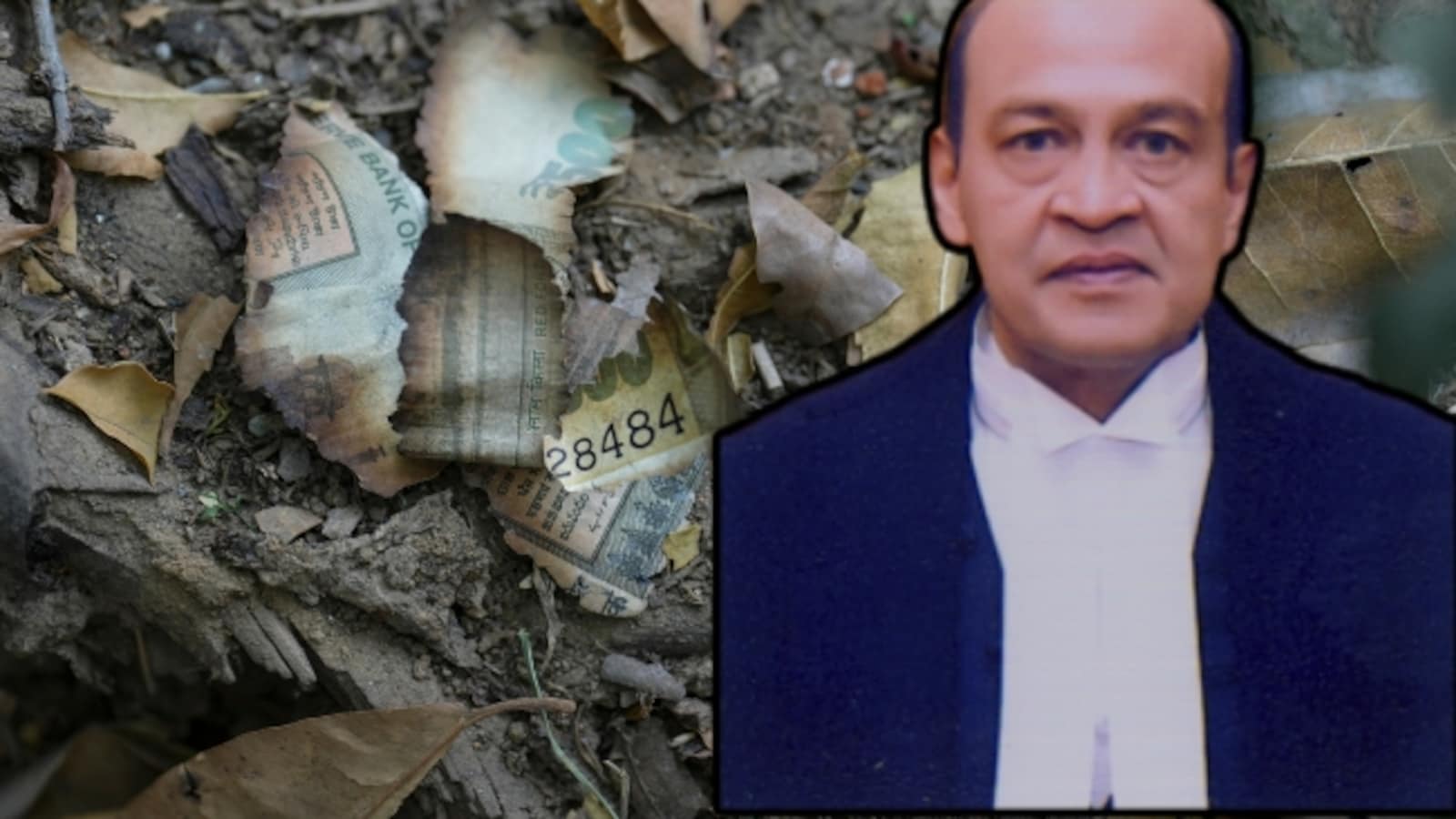
The Supreme Court has refused to entertain a petition seeking an FIR against former Delhi High Court Judge Justice Yashwant Varma, labeling the legal move as an attempt at 'cheap publicity'.
Key Takeaways
- Supreme Court rejected the plea seeking an FIR against former Judge Justice Yashwant Varma.
- The court remarked that such petitions are often filed for 'cheap publicity'.
- The controversy stems from the discovery of unaccounted cash at the judge's residence.
- Justice Varma has resigned from the Allahabad High Court, pending presidential approval.
New Delhi: In a significant observation on Friday, the Supreme Court of India dismissed a petition seeking the registration of an FIR against former Delhi High Court Judge, Justice Yashwant Varma. The apex court did not mince words, stating that such petitions are frequently filed merely for "cheap publicity."
The legal battle arises from a massive controversy that erupted in March last year, following reports of a large cache of unaccounted cash being discovered at Justice Varma's official bungalow. The discovery occurred after a fire broke out in the building, prompting emergency services to alert the police. Justice Varma has vehemently denied all allegations regarding the presence of unaccounted wealth.
Historical Background
Justice Yashwant Varma was appointed to the Delhi High Court in October 2021. Following the cash controversy in March 2023, he was removed from active duty and subsequently transferred to the Allahabad High Court. Amidst impeachment proceedings initiated by Parliament, Justice Varma submitted his resignation to President Droupadi Murmu. As of now, the resignation is awaiting formal acceptance, and the possibility of impeachment remains a legal contingency.
Why This Matters
BozokMedia analysis shows that this case highlights the tension between internal judicial inquiries and external criminal investigations. When high-ranking judicial officers face allegations of financial impropriety, the method of investigation—whether through an in-house committee or an independent agency like the CBI—becomes a matter of intense constitutional scrutiny.
The distinction between administrative accountability and criminal liability remains one of the most sensitive fault lines in judicial oversight.
The petitioner, Ghanshyam Upadhyay, had argued that an in-house inquiry is insufficient for cognizable offenses and demanded a Special Investigation Team (SIT) supervised by the Supreme Court. However, the top court found no merit in the plea, viewing it as a sensationalist attempt rather than a legitimate legal grievance.
Frequently Asked Questions
1. What was the incident that triggered the investigation?
A fire at Justice Varma's official residence led to the discovery of a large amount of unaccounted cash by emergency responders.
2. What is the current status of Justice Varma?
He has resigned from his position at the Allahabad High Court, but his resignation is currently pending acceptance by the President of India.