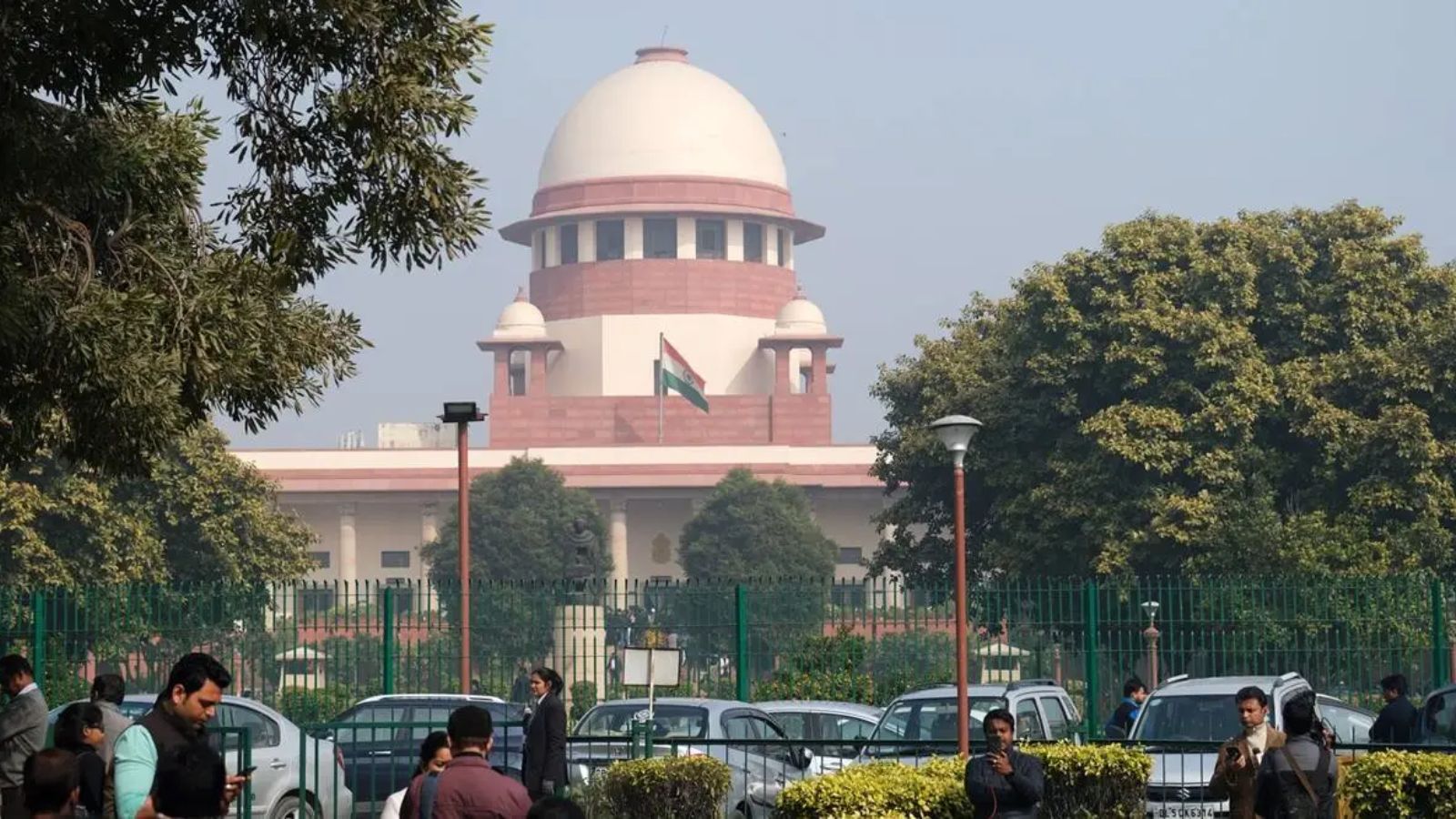
The Supreme Court has agreed to probe whether the Digital Personal Data Protection (DPDP) Act, 2023, could undermine the Right to Information (RTI) Act and stifle investigative journalism by classifying vast amounts of data as 'personal'.
Key Takeaways
- The SC will examine the harmonization of the DPDP Act and the RTI Act.
- Concerns exist that the DPDP Act could be used to block transparency by labeling data as 'personal'.
- Investigative journalism faces potential threats due to new consent requirements.
- The court is scrutinizing if the new law effectively repeals earlier transparency mandates.
New Delhi: In a significant legal development, the Supreme Court of India on Friday agreed to investigate whether the Digital Personal Data Protection (DPDP) Act, 2023 could be weaponized to cripple the Right to Information (RTI) Act. The court is examining if the new law's restrictive approach to data sharing could effectively gag investigative journalists and erode public transparency.
A Clash of Central Legislations
Justice Joymalya Bagchi remarked that both the DPDP Act and the RTI Act are central legislations that require careful harmonization. "The earlier law (RTI Act, 2005) gave certain access with conditions. Here, there is an en bloc embargo. Is this latter law repugnant to the earlier law? This has to be looked into with extreme circumspection," the judge noted.
The court observed a fundamental difference in scope: while the RTI Act operates on a much larger domain covering all forms of data, the DPDP Act is strictly limited to data in digital form.
Impact on Investigative Journalism
Petitioners, represented by advocate Vrinda Grover, argued that the DPDP Act has turned the fundamental right to privacy on its head. Instead of protecting citizens from State incursion, the law is being used to shield the State and public functionaries from RTI disclosures. Specifically, Section 44(3) of the DPDP Act is accused of amending the RTI Act to allow authorities to blankly refuse information on 'personal' grounds.
The essence of investigative journalism relies on access to data; if data principals can mandate erasure, the ability to hold power to account vanishes.
Why This Matters
BozokMedia analysis shows that this legal tug-of-war represents a critical juncture for Indian democracy. The tension lies between the individual's right to privacy and the citizen's right to know, a balance that has defined the post-2005 era of Indian governance.
Comparison of Frameworks
| Feature | RTI Act (2005) | DPDP Act (2023) |
|---|---|---|
| Primary Objective | Transparency & Accountability | Data Privacy & Protection |
| Data Scope | Physical & Digital | Digital Form Only |
| Access Basis | Public Interest Overrides Privacy | Consent of Data Principal |
Frequently Asked Questions
1. How does Section 44(3) affect RTI?
It allows public authorities to refuse information by classifying it as 'personal' data, potentially bypassing previous public interest tests.
2. Are journalists granted special status under the new law?
No, the court noted that journalists are not currently considered a 'special category' with unreserved access to data.