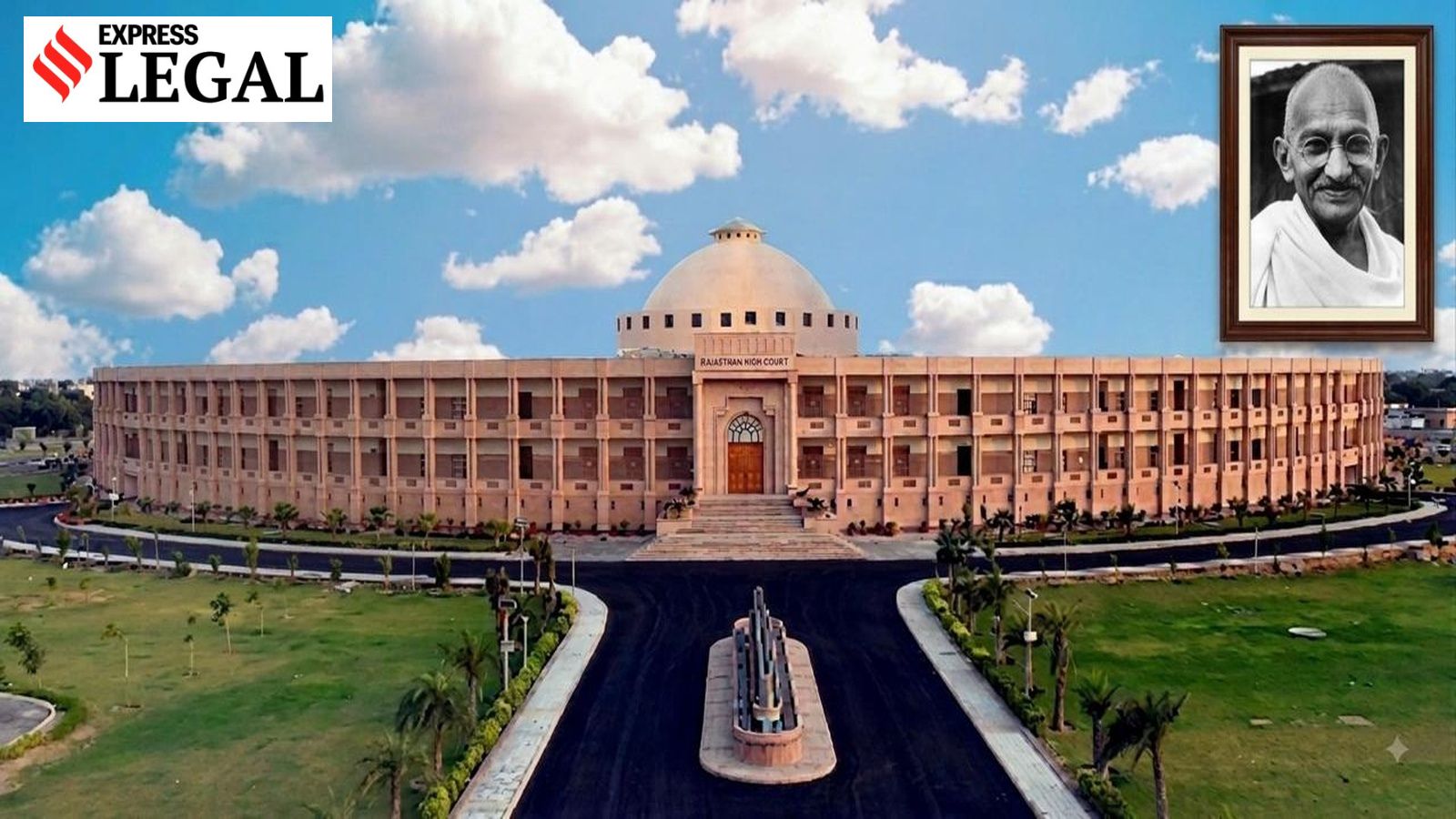
The Rajasthan High Court has ruled that religious faith alone cannot establish legal ownership of a property, upholding the attachment of Gurudwara Mehtabgarh Sahib in Hanumangarh.
Key Takeaways
- The Rajasthan High Court dismissed a plea challenging the attachment of Gurudwara Mehtabgarh Sahib.
- The court ruled that religious association or long-term management does not equate to legal title or ownership.
- The appointment of a receiver was upheld as a preventive measure to maintain law and order.
- The judgment referenced Mahatma Gandhi's 1933 philosophy on places of worship.
In a landmark observation, the Rajasthan High Court has declared that religious faith, no matter how profound, cannot serve as a legal basis for establishing dominion over property. The court upheld the decision to attach Gurudwara Mehtabgarh Sahib in Hanumangarh and the subsequent appointment of a receiver, dismissing a challenge filed by the gurudwara's mukhya sewadar.
Legal Title vs. Religious Association
Justice Farjand Ali, presiding over the case, noted that while the petitioner's devotion may be unquestionable, it does not grant exclusive possession of the land. The court emphasized that long-standing management of a religious site establishes a religious connection but fails to provide a lawful source of right or title without proper legal documentation.
Why This Matters: BozokMedia Analysis
BozokMedia analysis shows that this ruling reinforces the principle that preventive administrative actions under the Bharatiya Nagarik Suraksha Sanhita (BNSS) are distinct from adjudicating property rights. The court's decision highlights that the primary objective of attaching disputed religious properties is the preservation of public peace, rather than declaring a winner in a property dispute.
'Faith is a spiritual matter, but ownership is a legal one; the court cannot substitute religious devotion for lawful title.'
The dispute originated following an incident in October 2025, where a group allegedly attempted to enter the premises with weapons. This led the Sub-Divisional Magistrate (SDM) to invoke sections 164 and 165 of the BNSS to prevent a breach of peace, appointing a receiver to maintain neutral control over the premises.
Historical Context: The Gandhian Reference
In a unique jurisprudential move, the court drew upon an article written by Mahatma Gandhi in his journal Harijan in 1933. Gandhi described places of worship as an answer to man's craving to reach the "unseen." The court used this to differentiate between the spiritual essence of worship and the secular necessity of legal ownership.
Frequently Asked Questions
1. Can management of a Gurudwara prove ownership?
No, according to the High Court, management only proves religious association, not legal title.
2. What is the purpose of appointing a receiver?
A receiver is appointed to maintain neutral control and prevent violence or breach of peace in disputed properties.
Editor Comment
This judgment draws a vital line between spiritual devotion and civil law. It serves as a reminder that in the eyes of the state, documentation and legal procedure supersede religious tradition in matters of property.