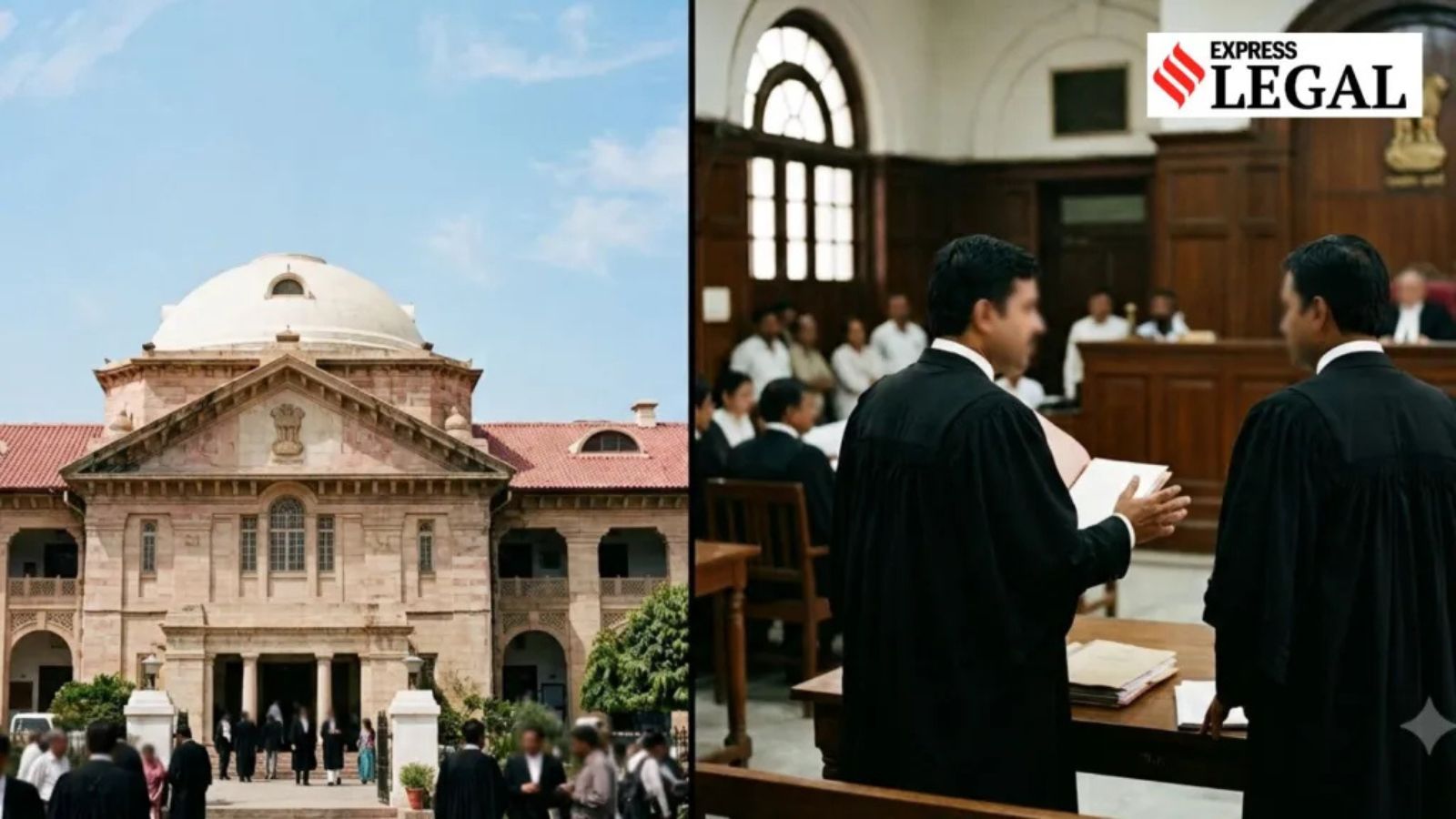
The Allahabad High Court rejected four petitions filed by an advocate seeking Rs 4.8 crore in pending professional fees from Uttar Pradesh’s Basic Education Department. The court ruled that fee disputes are private matters and must be pursued in civil courts, not through writ petitions.
Key Takeaways
- Advocate served as special counsel for UP for roughly 16 years.
- He claimed Rs 4.8 crore in unpaid fees based on 2009 and 2011 government orders.
- The High Court directed him to file the claim in a civil court, deeming the writ petition non‑maintainable.
Details of the Court’s Order
Justices Shekhar B. Saraf and Abdhesh Kumar Chaudhary observed on August 14 that disputes over counsel fees are privileged, private matters that should not be aired before a court. The petitioner failed to produce any official acknowledgment or fee bill from the Department, rendering his claim untenable.
The advocate asserted that he was engaged as special counsel for cases arising from Sitapur, Lucknow, Hardoi and Raebareli districts, invoking government orders from 2009 and 2011 that prescribe maximum fees. The state countered that he was removed from the panel in October 2011 and many of his claims fell outside his tenure.
Why This Matters
BozokMedia analysis shows that this ruling underscores a broader trend where Indian courts are steering fee‑disputes away from judicial intervention, urging parties to resolve them through mediation or civil litigation. This could reshape how government‑appointed lawyers seek compensation, potentially curbing future litigation overload.
"Fee disputes between advocates and clients are best settled outside the courtroom to preserve judicial efficiency," senior advocate Rajesh Kumar noted.
Frequently Asked Questions
Will the advocate still receive the Rs 4.8 crore? The court has allowed him to pursue the claim in a competent civil court, so the final amount depends on that proceeding.
Does this set a precedent for future fee disputes? Yes, it signals that similar disputes will likely be directed to civil forums, reducing judicial backlog.