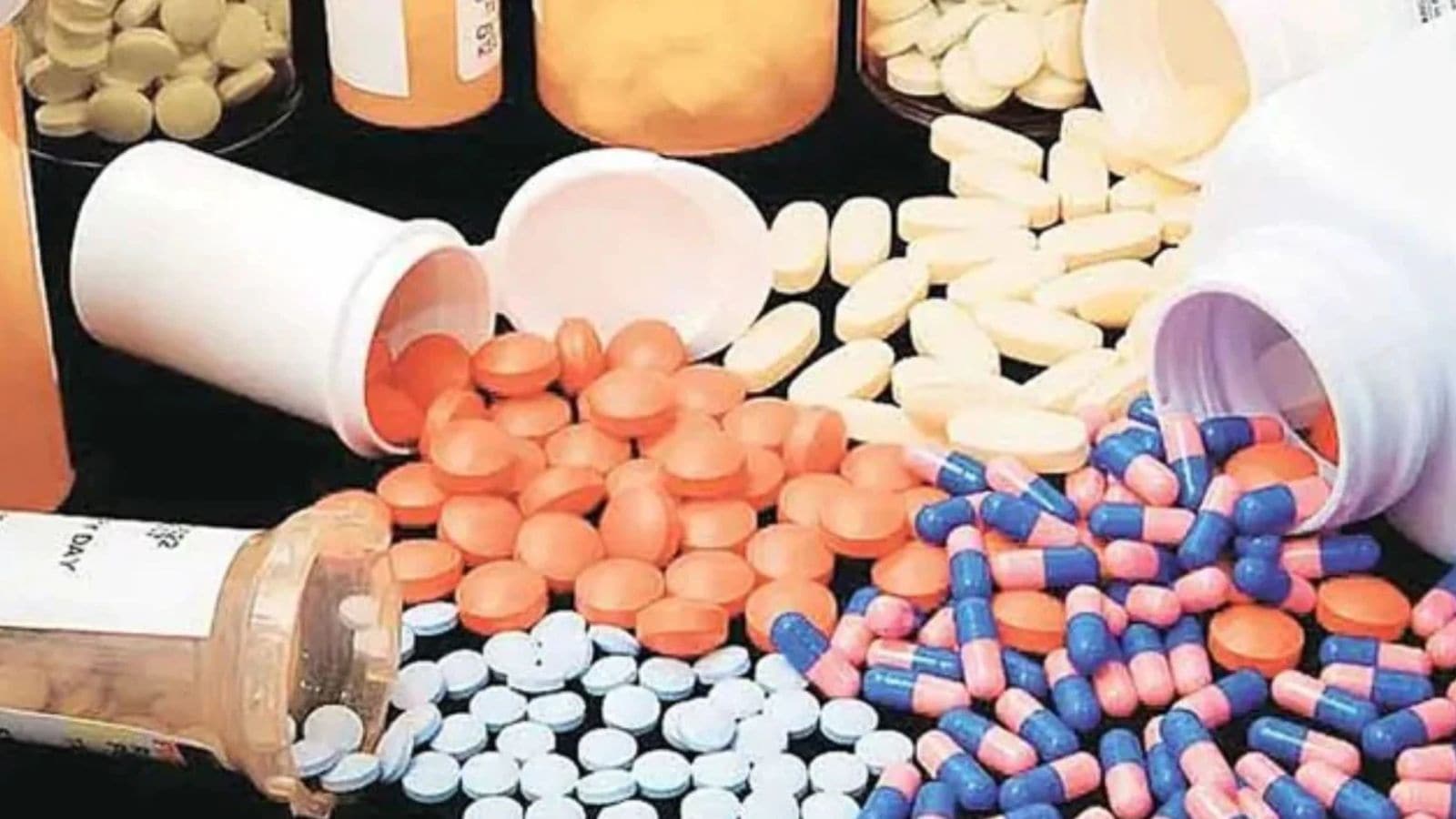
A massive pharmaceutical racket was busted near Bidadi, Bengaluru, where spurious drugs worth ₹4.91 crore, including critical ICU medicines, were recovered from an unlicensed farmhouse operation.
- ₹4.91 crore worth of spurious drugs seized in a Bengaluru outskirts raid.
- Illegal operation involved relabelling cheap generics as expensive imported brands.
- Critical ICU medicines were found to be mislabelled and potentially dangerous.
- A nationwide racket involving Himachal Pradesh and Telangana is suspected.
In a major crackdown on pharmaceutical fraud, the Bengaluru South police and the Karnataka Food Safety and Drug Administration uncovered an unlicensed drug repacking unit near Bidadi. The raid, conducted on Tuesday evening at a farmhouse, led to the recovery of spurious drugs valued at approximately ₹4.91 crore.
Addressing the media on Wednesday, Karnataka Health and Family Welfare Minister U T Khader revealed that the operation was not an isolated incident but part of a sophisticated nationwide racket. The illicit unit allegedly procured low-cost medicines from fake manufacturing units in Himachal Pradesh and Telangana, which were then relabelled to mimic high-end, expensive, and imported pharmaceutical brands.
Why This Matters
BozokMedia analysis shows that this crime transcends mere financial fraud; it is a direct assault on public health. The most alarming revelation is that even medicines intended for patients in Intensive Care Units (ICUs) were mislabelled. This level of deception in critical care settings poses a lethal risk to patients who are already in vulnerable states.
The infiltration of counterfeit life-saving drugs into hospital supply chains is a catastrophic failure of pharmaceutical oversight.
During the inspection, officials discovered that generic medicines from various states were being refilled into new vials and rebranded to deceive hospitals and pharmacies. Furthermore, the seizure of 30 boxes of expired medicines suggests a sinister attempt to reintegrate outdated drugs back into the active supply chain to maximize illegal profits.
Historical Context and Investigation Scope
The scale of this operation suggests a well-oiled logistical machine. The prime accused, Prashanth, a medical representative, allegedly leased 10 acres of land in Kurubakeranahalli for ₹10 lakh per year to run this illegal enterprise for the last 18 months. To tackle the complexity of this case, Minister Khader has requested Home Minister Priyank Kharge to constitute a Special Investigation Team (SIT).
The proposed SIT will conduct a deep-dive probe into the logistics, identify the agents involved in the distribution, and most importantly, trace the hospitals and ICUs where these drugs were administered over the last year and a half to monitor patient outcomes.
Superintendent of Police Srinivas Gowda confirmed that an FIR has been lodged. While one individual, Prabhudev, has been arrested and two others are under interrogation, the mastermind, Prashanth, remains at large. The police are currently tracing his movements to bring him to justice.
Frequently Asked Questions
1. How were the fake drugs being sold?
The drugs were relabelled to look like expensive imported brands and then sold to unsuspecting local shops and hospitals.
2. What is the next step in the investigation?
A Special Investigation Team (SIT) is being sought to investigate the entire supply chain and identify all hospitals that used these medicines.