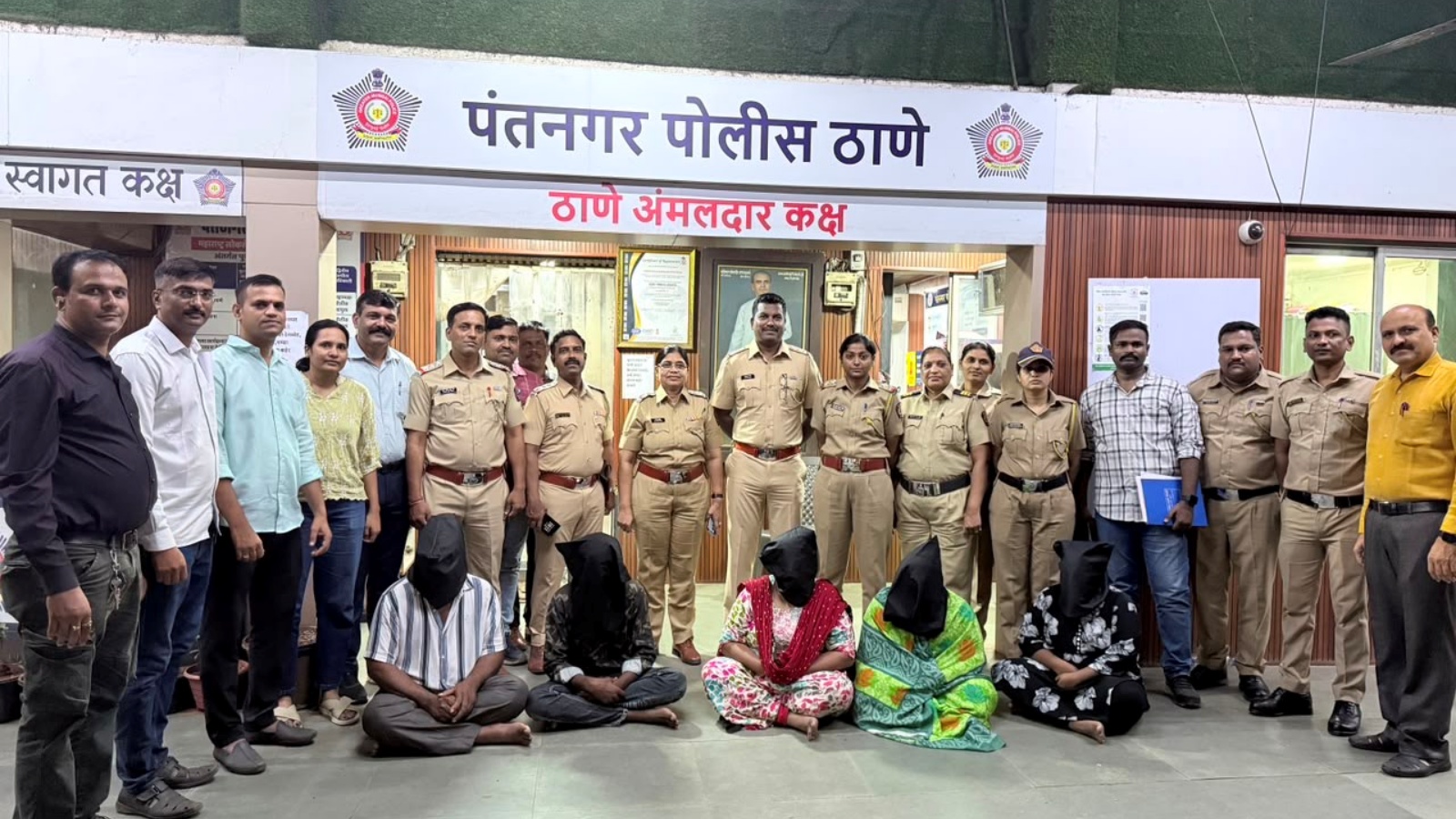
Rajasthan's cyber police are battling a massive surge in 'mule accounts,' with over 82,000 identified. Fraudsters are targeting vulnerable students and laborers to facilitate international money laundering.
- Over 82,407 mule accounts were identified in Rajasthan between January and July 2026.
- Cybercriminals are exploiting poor laborers and students using the pretext of government schemes.
- Funds are being routed through these accounts to criminal networks in Dubai and Kuwait.
The rapid proliferation of "mule accounts" is presenting a formidable challenge to the Rajasthan Police. According to data from the state police headquarters, a staggering 82,407 accounts have been identified as being used to route or receive money linked to cyber fraud between January 1 and July 12, 2026. This trend highlights a sophisticated method used by criminals to mask the paper trail of illicit transactions.
During this period, law enforcement agencies registered 723 cases and arrested 657 individuals. DIG Shantanu Kumar of the Rajasthan Cyber Cell noted that many account holders are not necessarily mastermind criminals but are often driven by desperation or naivety. In many instances, individuals willingly hand over their banking credentials in exchange for small sums of money, only to later face criminal charges under the Information Technology Act and the Bharatiya Nyaya Sanhita (BNS).
Why This Matters
BozokMedia analysis shows that the use of mule accounts creates a massive investigative bottleneck. By using layers of legitimate-looking accounts, cybercriminals can effectively decouple the crime from the perpetrator, making it incredibly difficult for authorities to trace the money back to international hubs.
"People who may not be directly involved in committing cyber fraud have willingly handed over their bank accounts to fraudsters in return for money, effectively becoming accomplices in a conspiracy."
A massive crackdown in Dungarpur recently exposed the sheer scale of this menace. Police uncovered a network involving approximately 450 mule accounts linked to suspicious transactions totaling nearly ₹160 crore. The investigation revealed that criminals, sometimes aided by bank employees, targeted students and laborers under the guise of providing free PAN cards, scholarships, or loans.
The implications are global. Evidence suggests that these accounts are used to facilitate funds generated from stock-market, cryptocurrency, and betting frauds, which are then channeled to operators located in Dubai and Kuwait. In districts like Barmer, agents travel from major cities to collect documents and passbooks from unsuspecting locals, offering small commissions of ₹8,000 to ₹10,000.
Frequently Asked Questions
1. What is a 'Mule Account'?
A mule account is a bank account used by criminals to receive and transfer stolen money, often belonging to an unsuspecting or complicit third party.
2. Can I be arrested for letting someone use my account?
Yes, if you provide your account details for transactions you know (or should know) are illegal, you can be charged with conspiracy and fraud.
| Region/Case | Identified Mule Accounts | Primary Target Group |
|---|---|---|
| Rajasthan (Statewide) | 82,407 | Laborers, Students, Rural Residents |
| Dungarpur Investigation | ~450 | Students, Low-income workers |