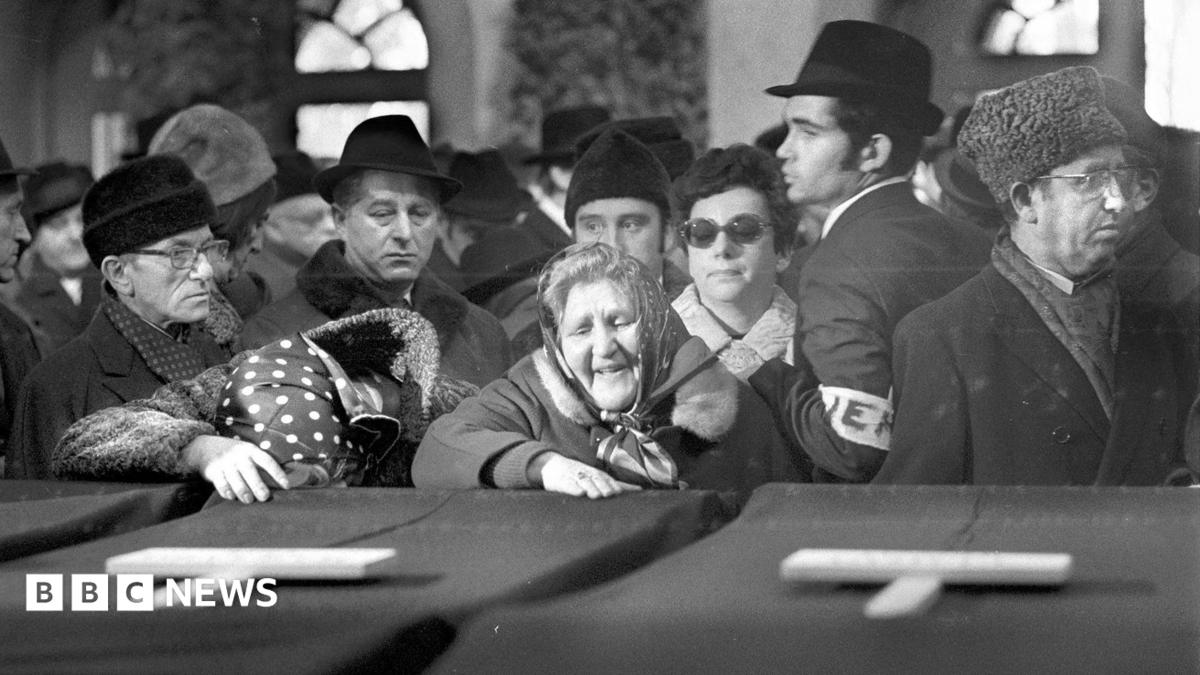
German investigators believe they have identified the arsonist responsible for the 1970 Munich Jewish community center fire that killed seven Holocaust survivors. The suspect, a suspected neo-Nazi, died in 2020.
For over five decades, the identity of the person who set fire to a Jewish community center in Munich remained one of Germany's most haunting mysteries. Today, German prosecutors believe they have finally solved the case. The suspected perpetrator is identified as a 25-year-old lone neo-Nazi with known antisemitic tendencies, who targeted a retirement home within the community building in 1970.
The attack, which occurred on February 13, 1970, resulted in the deaths of seven elderly individuals, all of whom were Holocaust survivors. The brutality of the act was compounded by the fact that the victims had already survived one of history's greatest atrocities, only to fall victim to another wave of antisemitic violence.
Why This Matters
BozokMedia analysis shows that this breakthrough highlights the long, often painful process of reckoning with Germany's post-war extremist history. While the identification provides closure to the historical record, it also underscores the systemic failures that allow such radicalized individuals to evade justice for decades.
The identification of the suspect provides historical truth, yet the passage of time has robbed the victims of legal retribution.
The investigation reveals chilling details about the suspect, identified by Der Spiegel as Bernd V. Witnesses reported that shortly before the fire, the suspect was heard making antisemitic remarks, stating that he wanted to "set them on fire." Furthermore, he was described as having a "Hitler-fixation," often listening to recordings of Nazi speeches during his youth.
One significant aspect of this case is the perceived failure of law enforcement. Evidence suggests that the suspect's name was brought to investigators' attention as early as the 1970s by a fellow inmate, but the case was dropped due to insufficient evidence at the time. This delay allowed a perpetrator to live a full life despite the gravity of his alleged crimes.
The re-opening of the case was prompted by credible information provided by a woman last year, following the death of a relative who knew the man well. This new testimony has provided the "compelling grounds" necessary to finally name the perpetrator, even though the suspect died in 2020.
Frequently Asked Questions
Question 1: Can the suspect be prosecuted?
Answer: No, because the suspect, Bernd V, died in 2020.
Question 2: How did investigators find new evidence?
Answer: A witness came forward with credible information regarding the suspect's actions and statements on the night of the crime.