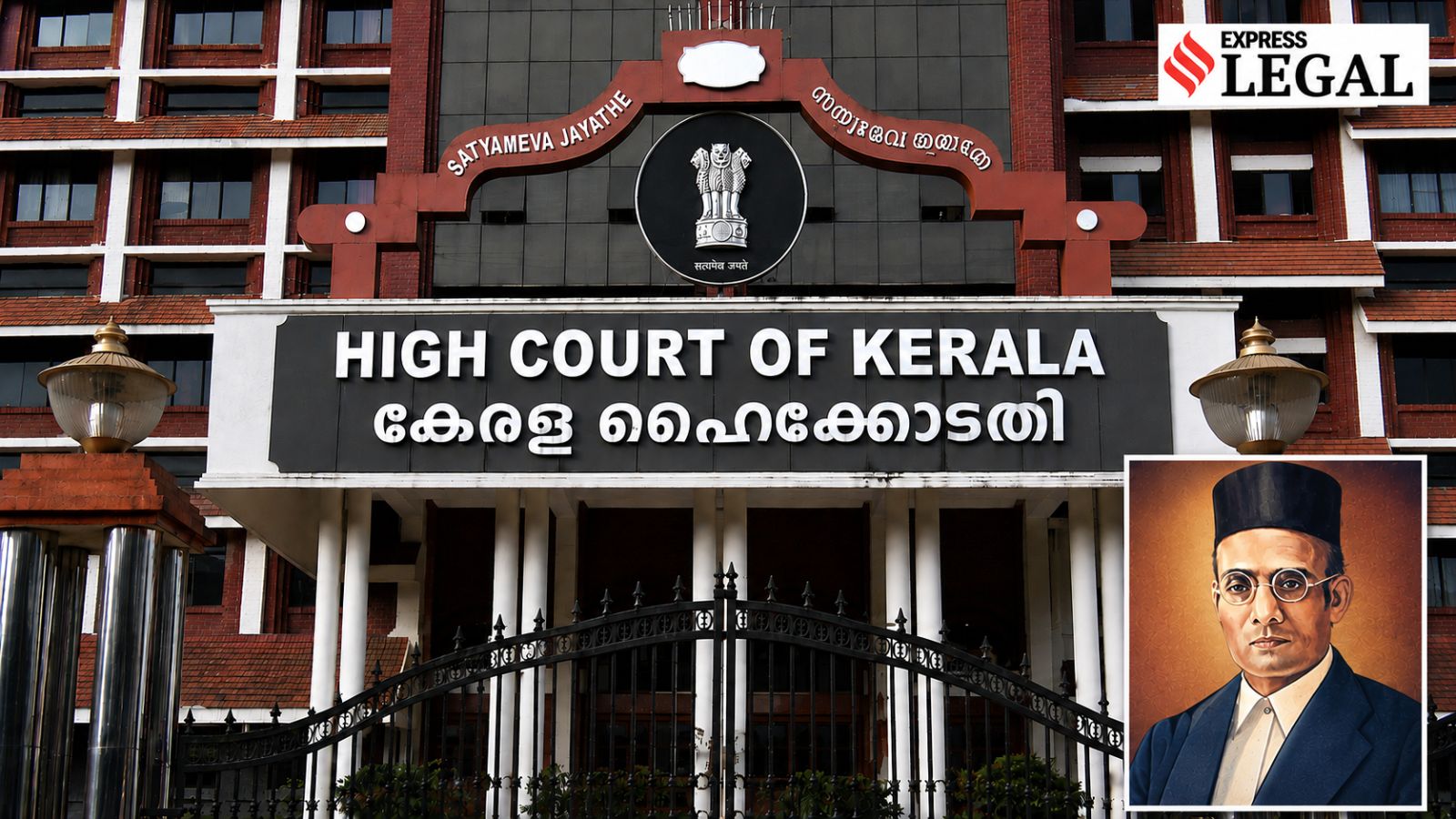
The Kerala High Court has stayed the suspension of a school teacher following a controversial quiz question about V.D. Savarkar. However, the court has permitted the disciplinary inquiry into the matter to proceed.
- Kerala High Court stayed the suspension of teacher Guruparasad Rai K.
- Disciplinary inquiry into the controversial quiz question will continue.
- The court stated that the suspension was not necessary for the conduct of the inquiry.
Kochi: The Kerala High Court has put a stay on the suspension of a school teacher who faced disciplinary action over a quiz question that identified V.D. Savarkar as the freedom fighter who received the "maximum punishment" from the British. The court, however, has allowed the disciplinary inquiry into the disputed question to continue.
Background
The case arose when Guruparasad Rai K., a teacher at Aided Upper Primary School (AUPS) Pallathadka in the Kasaragod district, challenged his suspension in the High Court. The quiz competition in question, 'Social Science Club Freedom Quiz 2026', was conducted for schools in the Kumbla and Manjeswaram sub-districts. One of the five tie-breaker questions asked: "Who was the freedom fighter who received the maximum punishment from the Britishers?" The answer provided was V.D. Savarkar, which sparked controversy, leading to an inquiry by the Education Department and the teacher's subsequent suspension.
Court's Observation
Justice Viju Abraham, on August 19, stated, "The continued suspension of the petitioner is not required for the proper conduct of the enquiry… suspension of an employee pending disciplinary proceedings and departmental enquiry is not automatic but is discretionary." The matter has been scheduled for further hearing on September 18.
Teacher's Contentions
The petitioner argued that preparing a question paper for a quiz could not, in itself, constitute an act of indiscipline warranting action. He contended that the action against him was taken because the question was not palatable to a section of society. He also argued that Savarkar was a freedom fighter who had spent a considerable period in jail, making the action against him unwarranted. Furthermore, the teacher highlighted that the question paper, after preparation, was sent to the Assistant Education Officer, who then distributed it to headmasters of various schools. He emphasized that the Education Officer had reviewed the paper before circulation and had raised no objections to the disputed question, nor had any action been taken against that officer.
State Government's Defence
The state government defended the action against the teacher, asserting that it was not based on the teacher's opinion or ideology. In its counter-affidavit, the Education Department stated that identifying Savarkar as the freedom fighter who underwent the maximum punishment or imprisonment under British rule was factually incorrect. Officials claimed that the teacher failed to exercise due care while preparing the question paper, leading to the inclusion of a controversial and objectionable question and answer that resulted in public complaints. The government informed the court that disciplinary proceedings were initiated due to the teacher’s alleged negligence of duty and that the suspension was validly ordered under Section 12A of the Kerala Education Act and relevant provisions of the Kerala Education Rules.
Court Notes Assistant Education Officer's Role
Taking note of the government's own counter-affidavit, which stated that proceedings were initiated due to alleged negligence of duty and not due to any opinion or ideology, the High Court observed that the question paper prepared by the teacher had been sent to the Assistant Education Officer, who distributed it to headmasters of various schools for the quiz. The court noted that the officer was aware of the contents of the question paper but did not raise any objection to the questions prepared by the teacher. The court also took cognisance of the fact that no action had been taken against the officer.
Key Takeaways
Did You Know?: V.D. Savarkar was sentenced to two life imprisonments, totaling 50 years, and spent a significant period in the Cellular Jail in the Andaman Islands.
Why This Matters
Why This Matters
BozokMedia analysis shows that this ruling underscores the delicate balance between educational content accuracy and freedom of expression for teachers, especially concerning controversial historical narratives. The court's stance that suspension is not always a prerequisite for disciplinary inquiries ensures that educators are not unduly kept away from their duties pending investigation, while still allowing for due process.
Expert Insight
This case highlights the intricate balance between academic freedom and societal sensitivities around historical interpretations, necessitating judicial intervention to ensure fairness.
Frequently Asked Questions
- Why was the teacher's suspension stayed?
The court found that the teacher's continued suspension was not necessary for the proper conduct of the disciplinary inquiry and that suspension is a discretionary power.
- Was the historical accuracy of the quiz question decided?
No, the High Court did not rule on whether the disputed answer was historically correct but focused on the procedural aspects of the suspension and inquiry.
Frequently Asked Questions
- Why was the teacher's suspension stayed?
The court found that the teacher's continued suspension was not necessary for the proper conduct of the disciplinary inquiry and that suspension is a discretionary power. - Was the historical accuracy of the quiz question decided?
No, the High Court did not rule on whether the disputed answer was historically correct but focused on the procedural aspects of the suspension and inquiry.