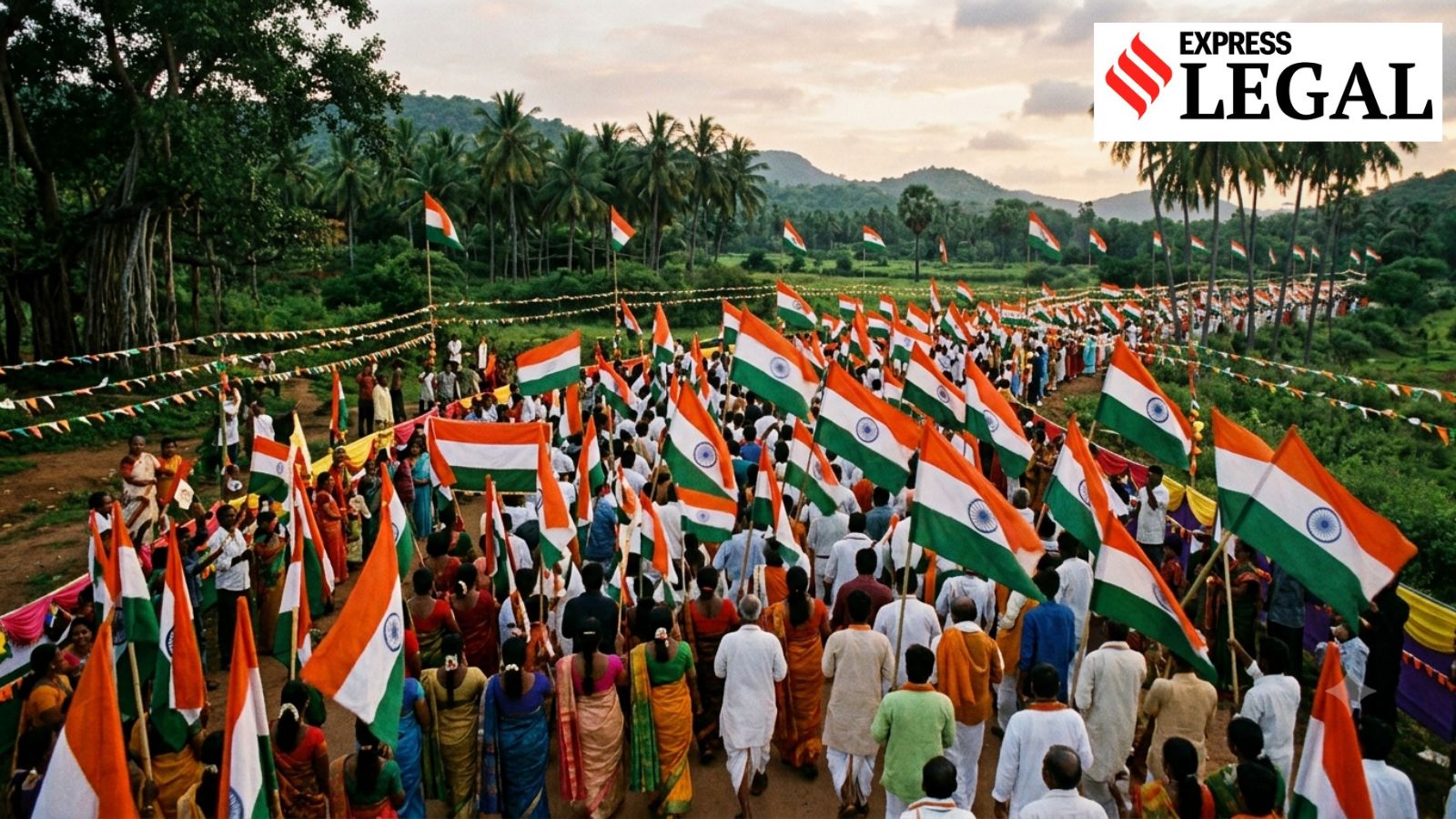
The Karnataka High Court has ruled that the right to participate in Independence Day celebrations cannot be denied to citizens simply because criminal proceedings are pending against them.
- Pending criminal proceedings do not strip a citizen of their right to participate in national celebrations.
- Police restrictions must be based on objective material, not speculative apprehensions.
- The court upheld the principle that an accused is presumed innocent until proven guilty.
In a significant judgment reinforcing civil liberties, the Karnataka High Court has declared that the right to participate in Independence Day celebrations belongs to every citizen, regardless of whether criminal proceedings are pending against them. Justice Suraj Govindaraj delivered this observation while hearing a petition challenging a police refusal to grant permission for a local procession.
The case arose when the Hindu Jagrana Vedike in Mysuru sought permission for an 'Akhanda Bharatha Sankalpa Dhina' torchlight march. The local police had denied permission, citing potential communal tension and traffic disruptions. However, the High Court quashed this endorsement, emphasizing that Independence Day is a matter of national importance that transcends religion, caste, or community.
Why This Matters
BozokMedia analysis shows that this ruling serves as a vital check on administrative overreach. By demanding 'objective material' rather than 'general apprehensions,' the court has reinforced the constitutional mandate that law enforcement cannot use speculative fears to curtail fundamental freedoms.
Until a competent Court records a finding of guilt, every accused is presumed to be innocent and retains their fundamental rights.
The court specifically addressed the police's concerns regarding traffic and communal harmony. It noted that a disciplined procession moving along a route would only cause temporary inconvenience, which is not a valid ground to deny the right to commemorate a national occasion. Furthermore, the court rejected the state's argument that organizers with pending chargesheets could potentially disturb public peace, stating that such fears must be backed by specific evidence.
The judiciary emphasized that unless a competent court has specifically restrained a person from participating in such events, the police cannot unilaterally deny permission based on a person's legal status. The court allowed the petition, permitting the march under specific conditions to ensure public order.
Frequently Asked Questions
1. Can police stop a procession due to traffic concerns?
According to the court, temporary traffic inconvenience is not a sufficient reason to deny permission for a national celebration.
2. Does a chargesheet against an organizer affect their right to hold an event?
No, the filing of a chargesheet does not mean a person loses their right to participate in national festivities unless they are convicted or restrained by a court.