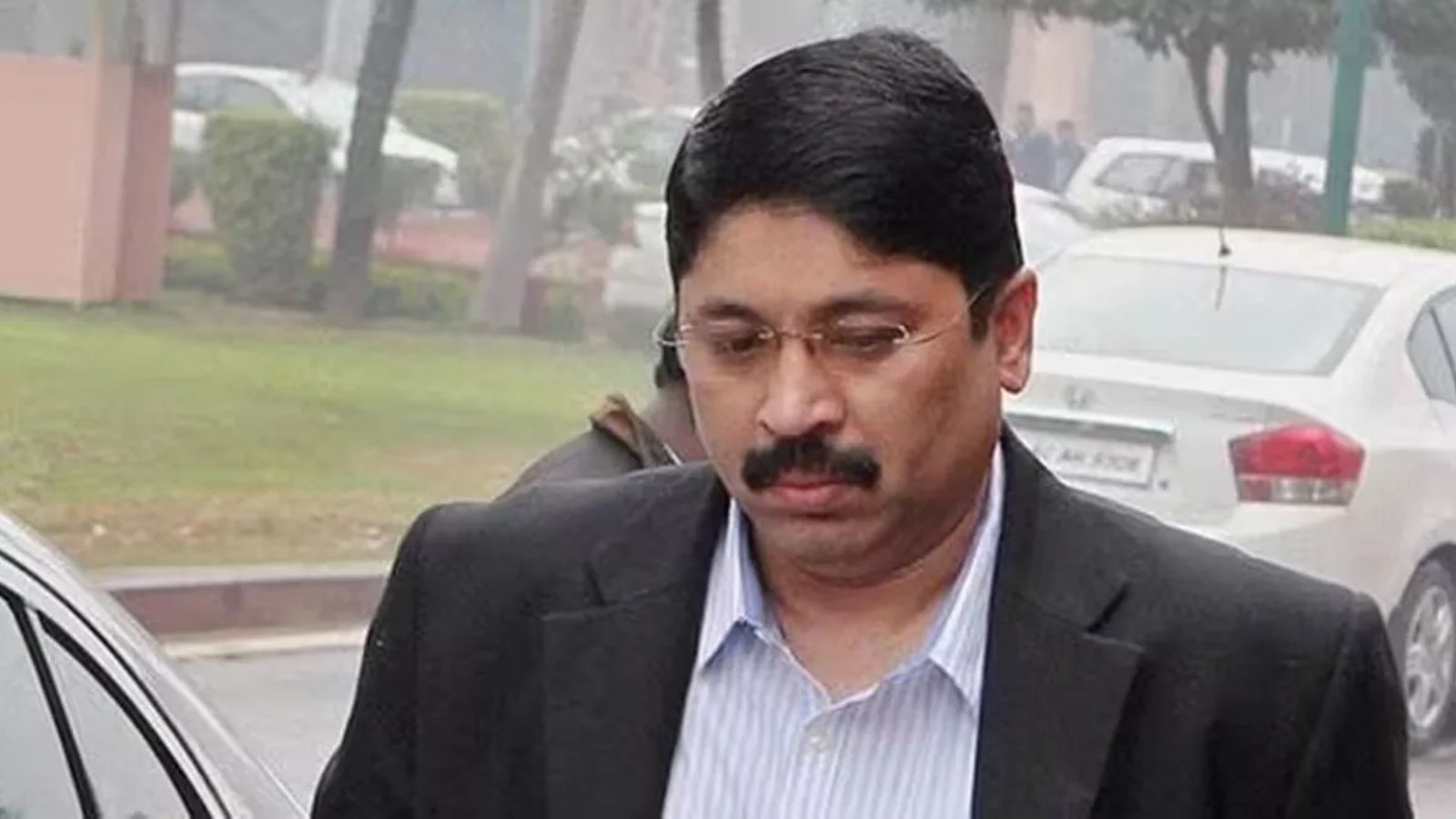
The Supreme Court has set aside the Madras High Court's order that allowed Dayanidhi Maran to summon the former Telecom Secretary as a court witness. The top court ruled he may only call the official as a defence witness.
- The Supreme Court restored the trial court's order, overturning the Madras HC verdict.
- Dayanidhi Maran can only summon the Telecom Secretary as a 'defence witness'.
- The case involves allegations of illegal telecom facilities used between 2004-2007.
In a significant legal development, the Supreme Court of India on Friday set aside the Madras High Court's order which had allowed former Union Minister and DMK MP Dayanidhi Maran to summon the then Union Telecom Secretary as a court witness in the ongoing illegal telephone exchange case.
A bench comprising Justices K V Viswanathan and Arun Palli clarified that while the High Court's order was set aside, the respondent retains the option to summon the Secretary, Telecom, strictly as a defence witness if he so desires. This decision effectively restores the original trial court's order from October 2025, which had initially refused Maran's plea.
Historical Background of the Case
The allegations against Maran stem from his tenure as the Union Minister of Communications and Information Technology between 2004 and 2007. According to the CBI chargesheet, Maran, in conspiracy with senior BSNL officials and associates of Sun TV Network, allegedly procured high-end telecommunication facilities for his private residences in Chennai and New Delhi.
The prosecution alleges that these facilities—including hundreds of telephone lines, broadband, optical fibre, and video conferencing systems—were far beyond the entitlement of a Minister or Member of Parliament. Furthermore, it is alleged that these resources were extensively used for the operational needs of Sun TV Network, causing a wrongful loss of approximately Rs 1.78 crore to public sector entities like BSNL and MTNL.
Why This Matters
BozokMedia analysis shows that this ruling is a masterclass in judicial balancing. By distinguishing between a 'court witness' and a 'defence witness', the Supreme Court has prevented the potential harassment of a high-ranking official while ensuring that the accused's right to a fair trial and the ability to present a defence remains intact.
Legal experts suggest that this distinction prevents the prosecution's witnesses from being unfairly burdened by the procedural complexities of cross-examination in a court-led capacity.
During the proceedings, Senior Advocate Siddharth Luthra, representing Maran, had argued that summoning the Secretary as a court witness would be 'onerous', as the court would then have to determine procedures and norms through him. The CBI, represented by Additional Solicitor General S V Raju, had expressed no objection to the Secretary being called as a defence witness.
Frequently Asked Questions
1. What was the difference between the High Court and Supreme Court rulings?
The High Court allowed the Secretary to be called as a 'court witness', whereas the Supreme Court ruled he can only be summoned as a 'defence witness'.
2. What is the core allegation in the illegal telephone exchange case?
The allegation is that Dayanidhi Maran used his ministerial position to obtain free, high-end telecom infrastructure for personal and business (Sun TV) use at the expense of the public exchequer.
