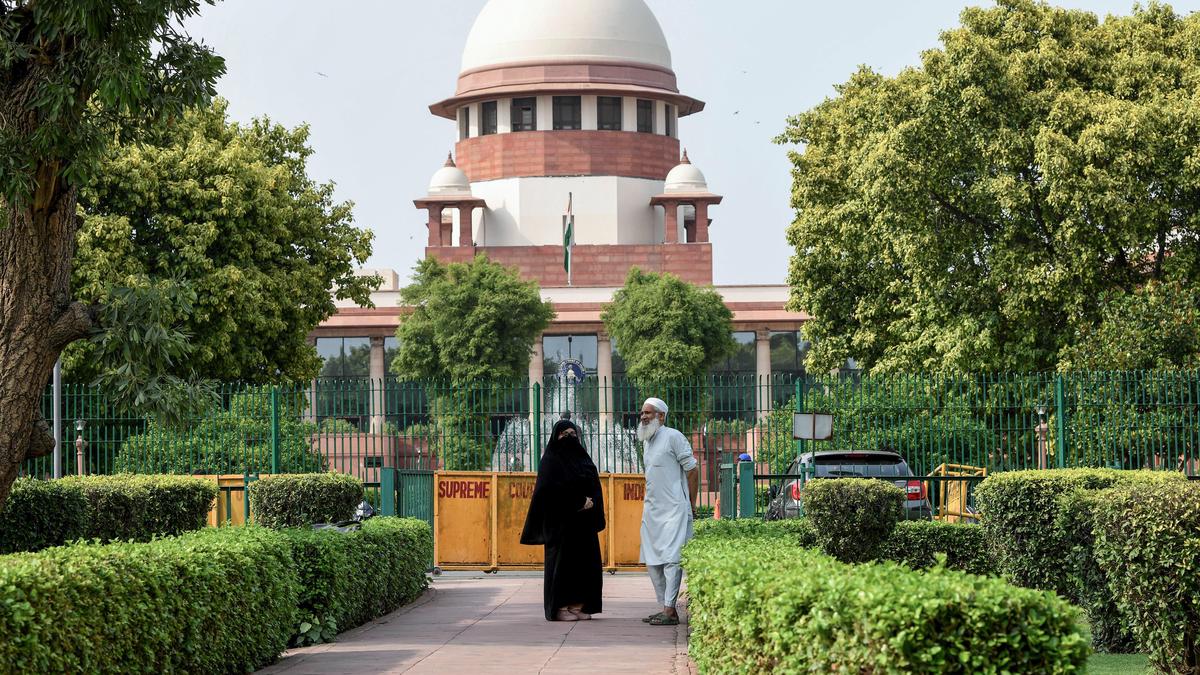
The Supreme Court has slammed the use of the U.P. Gangsters Act in cases of isolated communal violence, stating that state power cannot be used as an instrument of harassment.
- The Supreme Court ruled that the U.P. Gangsters Act is being misused in isolated communal incidents.
- Justice Sandeep Mehta emphasized that extraordinary laws require extraordinary evidence.
- The court quashed an FIR where the application of the Act lacked a nexus to organized crime.
New Delhi: In a landmark judgment, the Supreme Court of India has ruled that invoking the stringent Uttar Pradesh Gangsters Act to address a solitary incident of communal violence triggered by a social media post constitutes a misuse of the law. The court observed that the Act, designed to dismantle organized criminal syndicates, cannot be applied to spontaneous disturbances.
Departure from Legislative Intent
Writing the judgment, Justice Sandeep Mehta noted that the application of the Act to the appellants, following a single incident of communal flare-up, represented a significant departure from the law's core purpose. The court characterized the state's action as a "colourable exercise of power," meaning the power was used for purposes extraneous to its legitimate legal objectives.
Protection of Constitutional Liberty
The apex court reminded the State that under Article 21 of the Constitution, no person shall be deprived of their life or personal liberty except through a fair, just, and reasonable legal procedure. The court stressed that when extraordinary legislation with stringent provisions is invoked, the safeguards for personal liberty must be even more robust.
The power conferred upon the State cannot be wielded as an instrument of harassment or intimidation, particularly where political motivations may be at play.
Why This Matters: BozokMedia Analysis
BozokMedia analysis shows that this ruling serves as a critical check on executive overreach. By demanding a "reasonable nexus" between the accused and organized criminal activity, the Court is preventing the transformation of specialized anti-crime tools into general-purpose policing instruments used for political or social suppression.
Historical Background
The U.P. Gangsters Act was enacted to provide law enforcement with powerful tools to combat organized crime, extortion, and gang-related violence. However, the legal community has frequently debated the threshold required to classify an individual as a 'gangster,' fearing that the lack of strict evidentiary standards could lead to arbitrary arrests.
Frequently Asked Questions
1. What was the core reason for the Supreme Court's decision?
The court found that the incident lacked the 'essential threshold' of organized criminal activity required to invoke the Gangster Act.
2. What does the court say about evidence in such cases?
The court held that extraordinary penal provisions must be supported by concrete, verifiable facts rather than vague assertions.