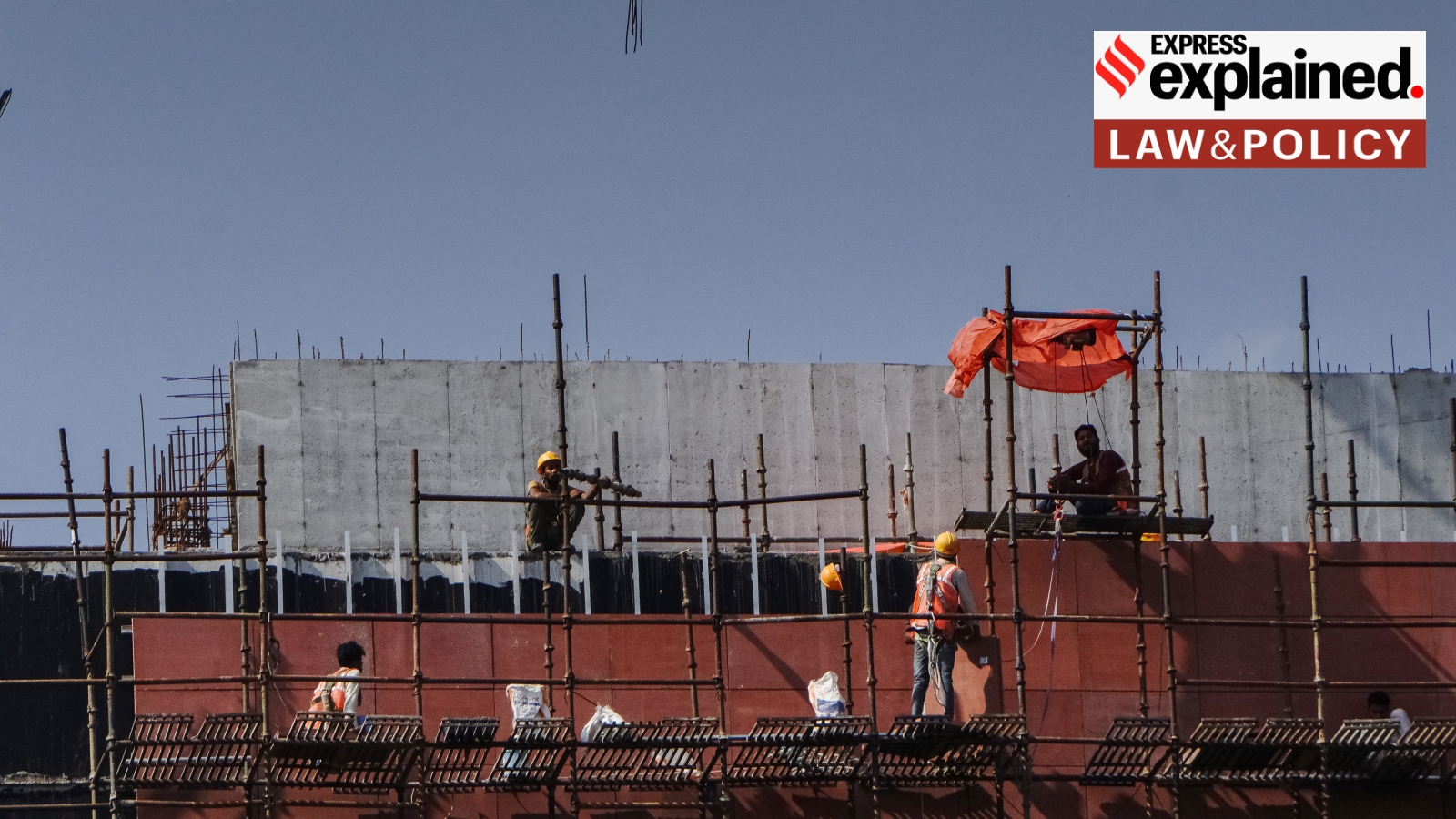
A nine-judge Constitution Bench of the Supreme Court has delivered a fractured verdict on the definition of 'industry', impacting decades of labour jurisprudence. While the 1978 'triple test' remains for pending cases, the new Industrial Relations Code will follow a different path.
- A 9-judge Supreme Court bench issued a split verdict on the definition of 'industry'.
- The 1978 'Triple Test' from the Bangalore Water Supply case will still apply to pending litigation.
- The new Industrial Relations Code, 2020, will be interpreted independently of this ruling.
- Judges were divided between requiring a 'commercial character' and protecting 'social welfare' workers.
In a landmark judgment that concludes a legal debate spanning decades, a nine-judge Constitution Bench of the Supreme Court has delivered a fractured verdict regarding what constitutes an "industry" under Indian labour law. The ruling addresses whether entities like hospitals, universities, and charitable institutions fall under the ambit of industrial protections.
Historical Context: The 1978 Precedent
The crux of the dispute lies in Section 2(j) of the erstwhile Industrial Disputes Act, 1947. In 1978, a seven-judge bench in the Bangalore Water Supply and Sewerage Board vs A Rajappa case established the famous "triple test." This test mandated that any systematic activity organized through employer-employee cooperation for the production or distribution of goods or services constitutes an industry, regardless of a profit motive.
Despite attempts by Parliament in 1982 to amend the definition to exclude certain sectors, those amendments were never officially notified, leaving the expansive 1978 definition as the operating standard for decades.
The Split: Commerciality vs. Social Welfare
The current Constitution Bench was deeply divided on how to interpret this definition moving forward. CJI Surya Kant, writing for a majority, suggested that the triple test requires "calibration." He argued that for an activity to qualify as an industry, it should possess a discernible commercial character similar to trade or business. This seeks to exclude purely charitable or sovereign functions from the industrial umbrella.
The division within the bench highlights the ongoing tension between economic enterprise and the protective mandate of labour welfare legislation.
On the other side, Justice B.V. Nagarathna and other dissenting judges defended the 1978 approach. They argued that introducing a commercial requirement could strip workers in essential services—such as healthcare and education—of their statutory protections simply because their employers are non-profit entities.
Why This Matters: BozokMedia Analysis
BozokMedia analysis shows that while the legal status quo remains for ongoing litigation, the long-term implications are profound. The verdict creates a bifurcated legal landscape: the old regime continues to protect workers under the expansive 1978 test, while the future of labour relations in India will be dictated by the Industrial Relations Code, 2020, which will be interpreted on its own merits without the shadow of this split verdict.
Frequently Asked Questions
1. Will this verdict change the rules for current court cases?
No, pending cases under the repealed Industrial Disputes Act will still be decided using the 1978 'triple test'.
2. How will the new Industrial Relations Code be affected?
The new Code will be interpreted independently based on its own specific text and legal scheme.