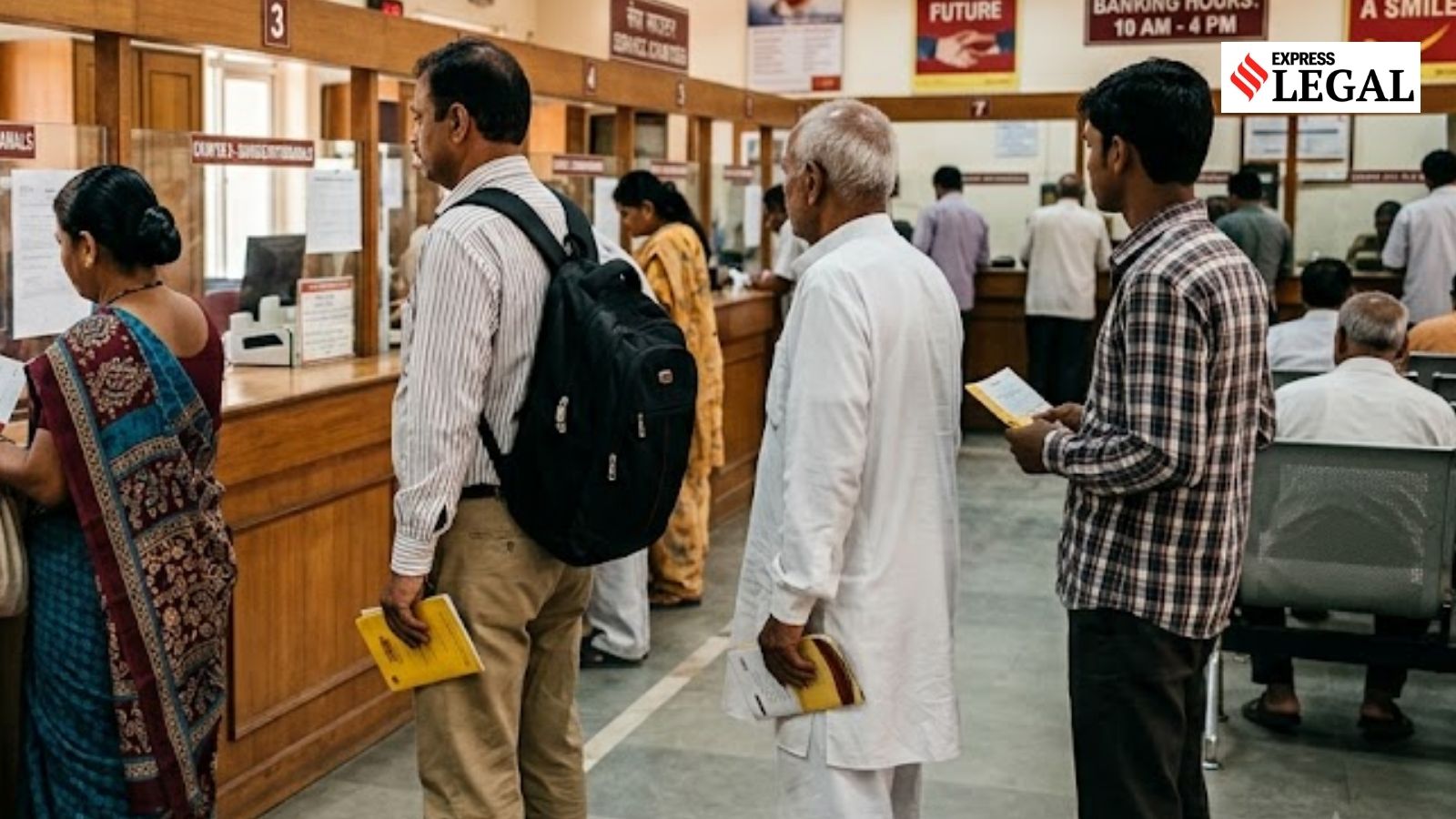
In a landmark ruling, the Rajasthan High Court has prohibited banks and police from freezing entire bank accounts over minor disputed transactions, ordering that only the suspected amount be blocked.
- Banks cannot freeze entire accounts for transaction-specific cyber complaints.
- Only the disputed amount can be placed under restraint, leaving the remaining balance accessible.
- Indefinite freezes based on vague or unverified communications are now prohibited.
- Investigating officers must periodically review the necessity of account freezes.
The Rajasthan High Court has delivered a significant judgment aimed at protecting bona fide account holders from arbitrary financial restrictions. Justice Anand Sharma observed that while the state has a duty to track stolen funds in cyber-fraud cases, this duty cannot override the fundamental property rights of citizens through disproportionate actions.
The court intervened after several petitions revealed a disturbing trend: individuals and businesses were finding their entire life savings or operational capital frozen due to suspected transactions as small as ₹100 or ₹1,000. In many instances, the account holders were neither accused nor suspects, yet their accounts remained inoperative indefinitely, even after receiving clean chits from investigating agencies.
Why This Matters
BozokMedia analysis shows that this ruling addresses a systemic failure in the intersection of digital policing and banking. For years, the "freeze-first, ask-later" approach has crippled small businesses and individuals. By decoupling the disputed amount from the total balance, the court is ensuring that the fight against cybercrime does not inadvertently become a tool for financial harassment.
"The balance between investigative necessity and individual liberty is delicate; a blanket freeze on a bank account is a disproportionate penalty before a crime is even proven."
During the proceedings, the State argued that cybercrimes involve rapid, multi-layered transfers, making it essential to lock accounts to prevent funds from vanishing. However, the Court maintained that a fair, transparent, and time-bound mechanism is essential to maintain faith in the digital banking system.
The court further clarified that the absence of a First Information Report (FIR) does not make preliminary investigations illegal, but it does mean that a vague letter from an Investigating Officer cannot be the sole basis for an indefinite freeze. Banks are now directed to confine restraints to the identifiable disputed amount, subject to lawful directions.
| Previous Practice | New High Court Mandate |
|---|---|
| Entire account frozen for any suspected transaction. | Only the disputed amount is frozen. |
| Indefinite freezes pending investigation. | Periodic review by IO and supervisory officers. |
| Freeze based on vague communications. | Requires lawful, reasoned, and verified directions. |
Frequently Asked Questions
Q1: Can the police still freeze my account?
Yes, but they can only freeze the specific amount that is suspected to be linked to fraud, not the entire balance of the account.
Q2: What should I do if my account is still fully frozen?
Account holders can approach the concerned bank or the court, citing this Rajasthan High Court judgment to request the release of undisputed funds.