The Khargone Ram Navami violence cases are collapsing in court due to flawed investigations, contradictory forensic reports, and a failure to identify accused persons.
- All three completed riot trials in Khargone have resulted in acquittals.
- Forensic reports failed to detect any traces of petrol or kerosene used in alleged arson.
- Police struggled to identify specific accused, often relying on generic names without addresses.
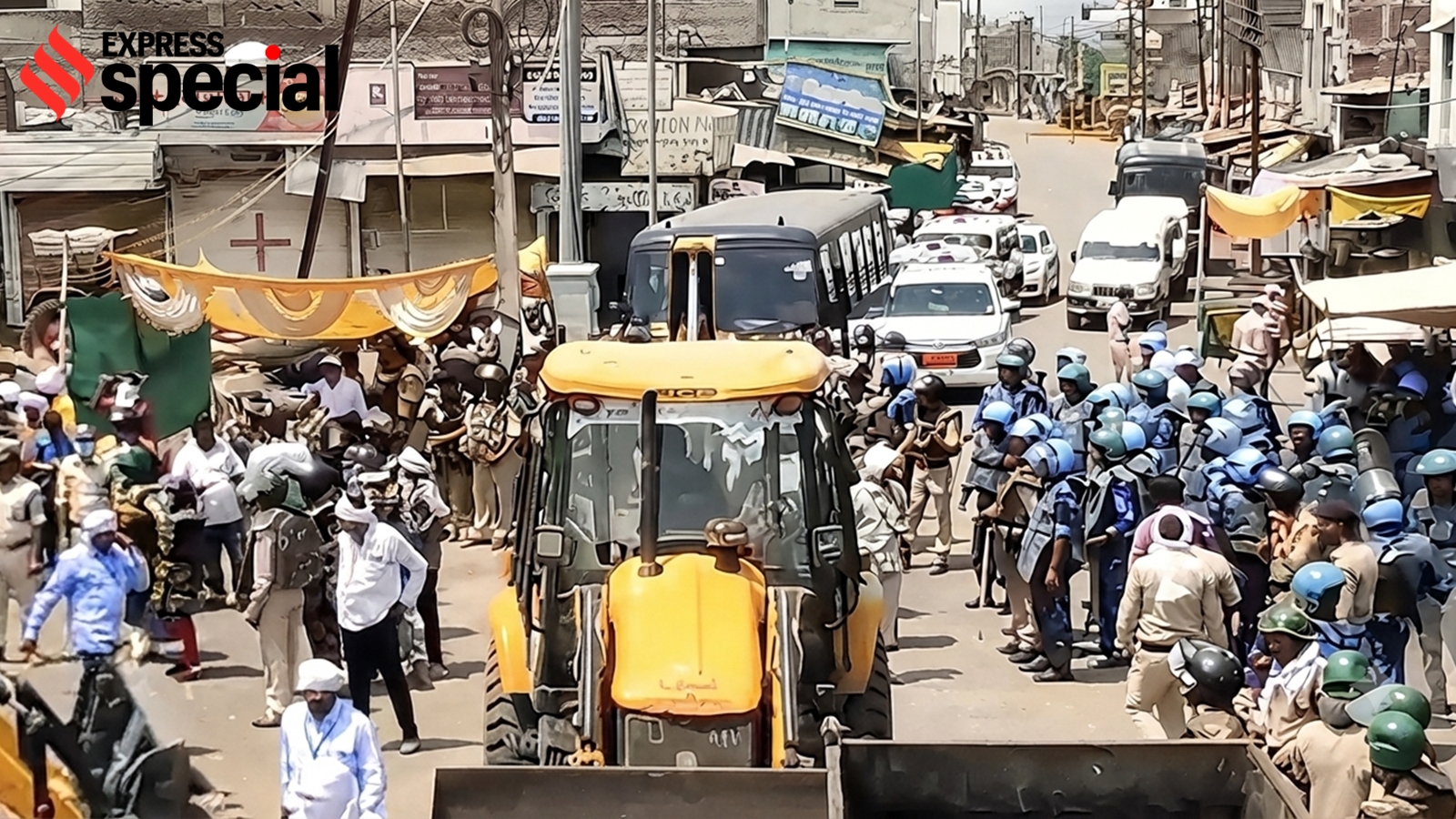
The legal proceedings surrounding the 2022 Khargone Ram Navami violence in Madhya Pradesh are facing a systemic breakdown. What began with high-profile political vows of 'strictest action' and massive administrative demolitions is now unraveling in the courtroom, with cases ending in acquittals and dead ends.
On July 27, a Sessions Court acquitted 11 men accused in the violence that left one dead and several high-ranking police officials injured. This follows a pattern seen in previous trials where the prosecution's inability to link specific individuals to the crimes has led to total judicial failure.
A Failure of Investigation and Forensic Contradictions
An investigation into court records reveals a staggering gap between the police narrative and scientific reality. In one significant case involving the burning of an ancestral home, the prosecution alleged the use of petrol bombs. However, the Forensic Science Laboratory (FSL) report directly contradicted this, finding no traces of inflammable hydrocarbons in the burnt debris or glass bottles.
Furthermore, the transition from 'unknown persons' in initial FIRs to specific named accused has been widely questioned by judges. The courts have noted that the investigation failed to explain how and when criminal conspiracies were formed among the accused.
The Khargone trials expose a critical disconnect between aggressive administrative action and the rigorous evidentiary standards required by law.
BozokMedia analysis shows that the misuse of digital evidence has also played a role. In several instances, pen drives containing footage were never played in court, or they lacked the mandatory certification under Section 65B of the Indian Evidence Act, rendering them legally useless.
Why This Matters
This collapse of cases is not just a legal setback; it is a blow to the credibility of law enforcement. When the state moves swiftly to demolish properties and arrest suspects but fails to sustain those charges in court, it creates a vacuum of accountability and undermines the rule of law.
Frequently Asked Questions (FAQs)
1. Why are the accused being acquitted in the Khargone cases?
Accusations are failing due to a lack of concrete evidence, forensic reports that contradict the arson theory, and witnesses turning hostile.
2. What was the administration's immediate response to the riots?
The administration demolished approximately 16 houses and 29 shops in the affected areas, citing irregularities.