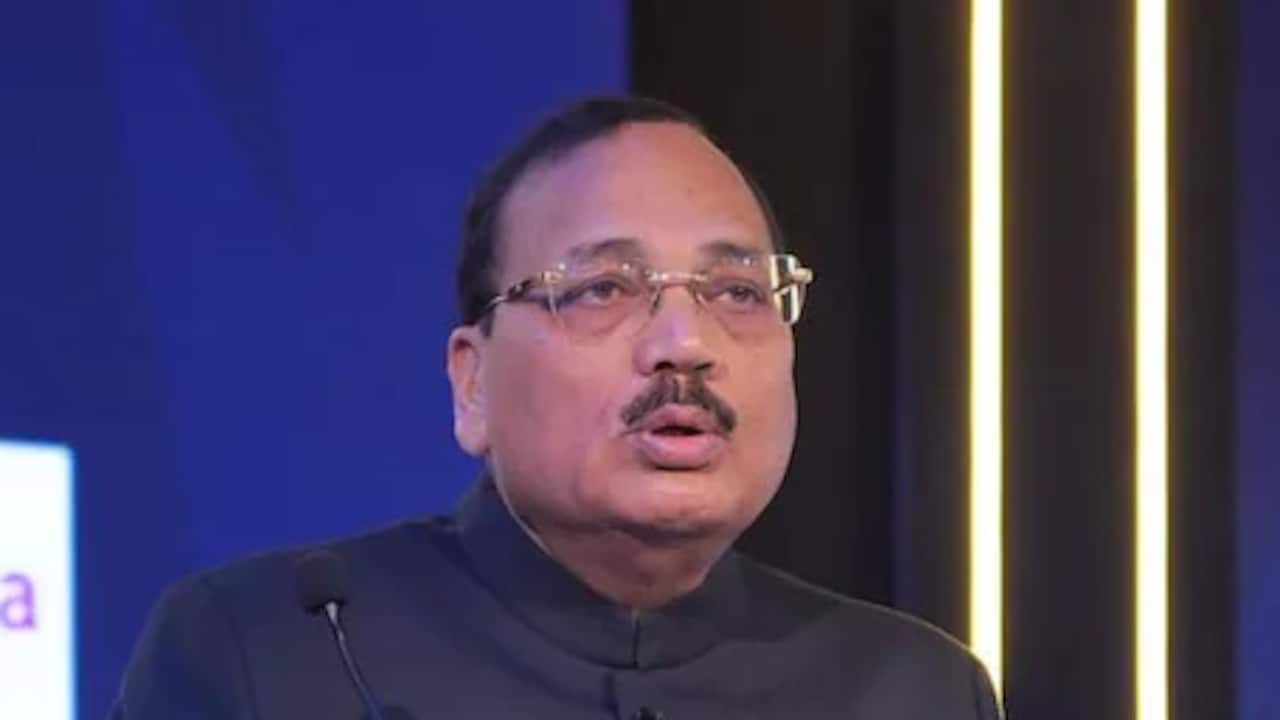
Supreme Court Justice Sanjeev Mehta has urged the CJI to appoint a Chief Justice from another state to Rajasthan High Court, following serious allegations of case listing manipulation by the acting CJ.
- Justice Sanjeev Mehta of the Supreme Court has raised concerns over judicial administration in Rajasthan.
- Allegations have been leveled against Acting CJ Sanjeev Prakash Sharma regarding the manipulation of case listings.
- A formal request has been made to the CJI to appoint a Chief Justice from a different state to ensure impartiality.
In a development that has sent shockwaves through the Indian legal fraternity, Supreme Court Justice Sanjeev Mehta has formally requested the Chief Justice of India (CJI) to intervene in the administrative functioning of the Rajasthan High Court. Justice Mehta has called for the immediate appointment of a Chief Justice from an external state to head the Rajasthan High Court, citing deep-seated concerns regarding judicial integrity.
The crux of the controversy lies in the allegations directed at the current Acting Chief Justice, Sanjeev Prakash Sharma. It is alleged that there has been deliberate manipulation in the listing of cases—a critical administrative function that determines the sequence and judicial bench assigned to various legal matters. Such allegations, if proven, strike at the very heart of the principle of 'equality before the law.'
Why This Matters
BozokMedia analysis shows that the integrity of case listing is the bedrock of a functional judiciary. When the mechanism that decides which judge hears which case is compromised, it creates an environment ripe for bias and systemic corruption. This isn't just a regional administrative issue; it is a fundamental challenge to the rule of law that could undermine public confidence in the entire Indian judicial hierarchy.
The sanctity of judicial proceedings depends entirely on the transparency of administrative processes like case listing.
Historically, the appointment of Chief Justices to High Courts has been a mechanism used by the judiciary to ensure impartiality and prevent local influences. Justice Mehta's demand for an 'outside' Chief Justice follows a precedent where external oversight is required to restore institutional trust when internal mechanisms appear to have failed.
Legal analysts suggest that the CJI's response to this plea will be a litmus test for the Supreme Court's ability to self-regulate and maintain discipline within the High Courts. The implications of this standoff could extend to several pending litigations in Rajasthan, as the validity of current administrative decisions may come under scrutiny.
Frequently Asked Questions
Question 1: What is the specific allegation against the Acting CJ of Rajasthan?
Answer: The allegation is that Acting CJ Sanjeev Prakash Sharma has been manipulating the listing of judicial cases.
Question 2: What solution has Justice Mehta proposed?
Answer: He has proposed that a Chief Justice from a different state should be appointed to lead the Rajasthan High Court to ensure neutrality.