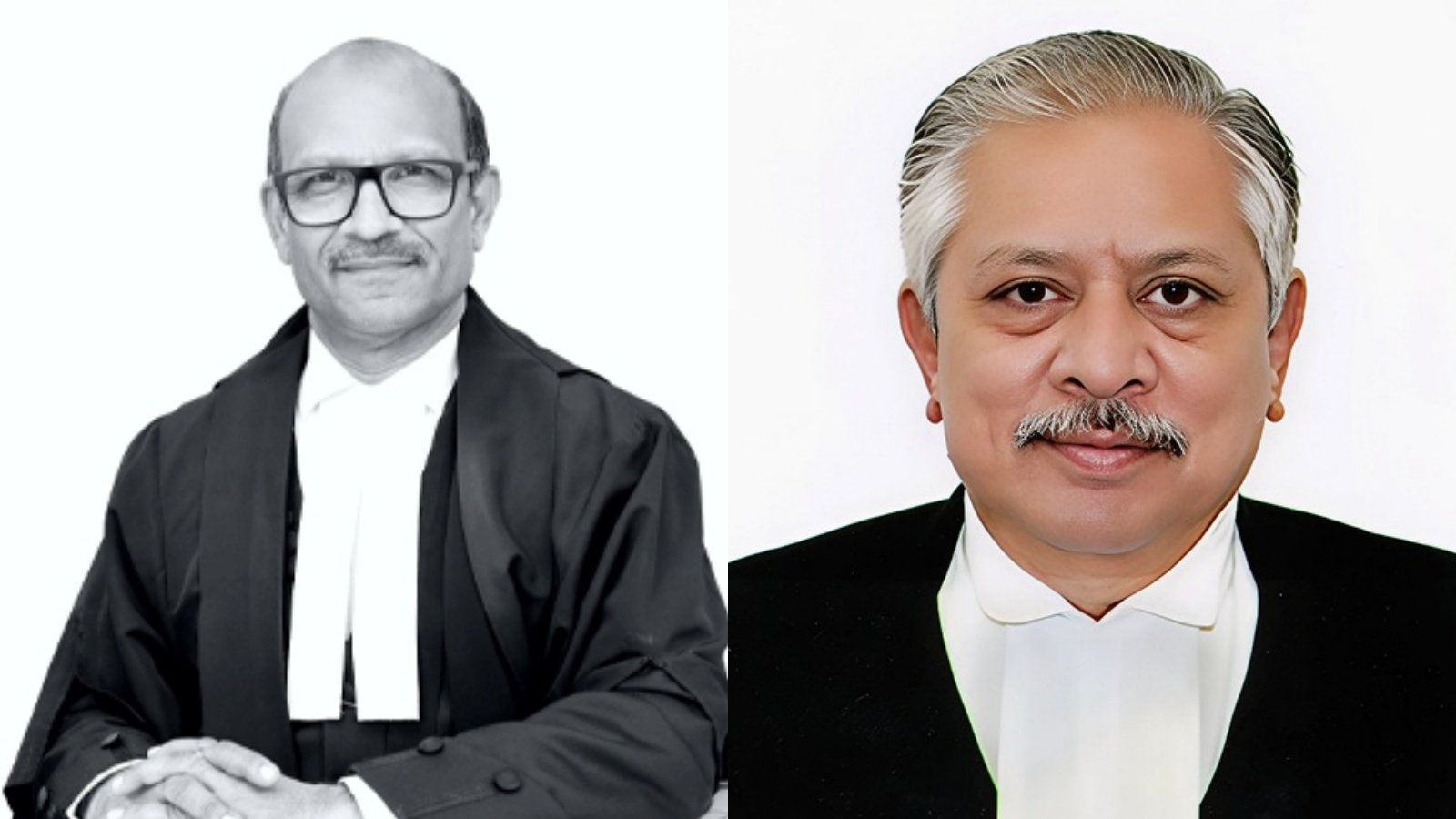
Chief Justice of India Surya Kant has demanded responses from both sides following serious allegations of 'maladministration' leveled by Supreme Court Justice Sandeep Mehta against a Rajasthan High Court judge.
- Justice Sandeep Mehta alleged 'gross maladministration' and favoritism in Rajasthan High Court.
- CJI Surya Kant emphasized that allegations against sitting judges must follow institutional mechanisms.
- The Collegium is currently deliberating on Chief Justice appointments across several High Courts.
Chief Justice of India (CJI) Surya Kant has formally sought comments from "both sides" regarding a brewing controversy involving Supreme Court judge Justice Sandeep Mehta and Rajasthan High Court Acting Chief Justice Justice S.P. Sharma. The friction arose after Justice Mehta penned letters alleging systemic issues within the Rajasthan High Court.
In his communication to the CJI, Justice Mehta requested the transfer of Justice Sharma and sought the appointment of a permanent Chief Justice from a different High Court. The allegations include "gross maladministration," misuse of administrative authority, and favoritism in the functioning of the Rajasthan High Court. This development comes at a critical time when the Collegium is actively considering appointments for several High Courts.
Why This Matters
BozokMedia analysis shows that this conflict highlights the delicate balance of power and administrative oversight within the Indian judicial hierarchy. Allegations from a sitting Supreme Court judge against a High Court official create a significant institutional challenge that tests the strength of the Collegium's decision-making process.
The integrity of the judiciary relies on resolving internal conflicts through established legal channels rather than through public or media-driven narratives.
The CJI's office issued a firm stance, stating that while the concerns raised by Justice Mehta have been noted, any allegations against a sitting judge must be handled strictly through the established institutional mechanism. The statement emphasized that the Supreme Court cannot allow individual complaints to be adjudicated in the public domain.
Currently, seven of the 25 High Courts in India are led by Acting Chief Justices. While the Collegium has recently recommended appointments for the Patna, Bombay, Calcutta, and Punjab and Haryana High Courts, decisions for Rajasthan, Madhya Pradesh, and Jammu & Kashmir remain pending. Justice Sharma, who has been the Acting Chief Justice since September 2025, was a primary candidate for a permanent appointment.
Frequently Asked Questions
1. What are the specific allegations made by Justice Mehta?
He alleged maladministration, misuse of power, and favoritism within the Rajasthan High Court.
2. What is the CJI's current stance on the matter?
The CJI maintains that both sides must be heard and that the matter must be resolved through formal institutional channels.