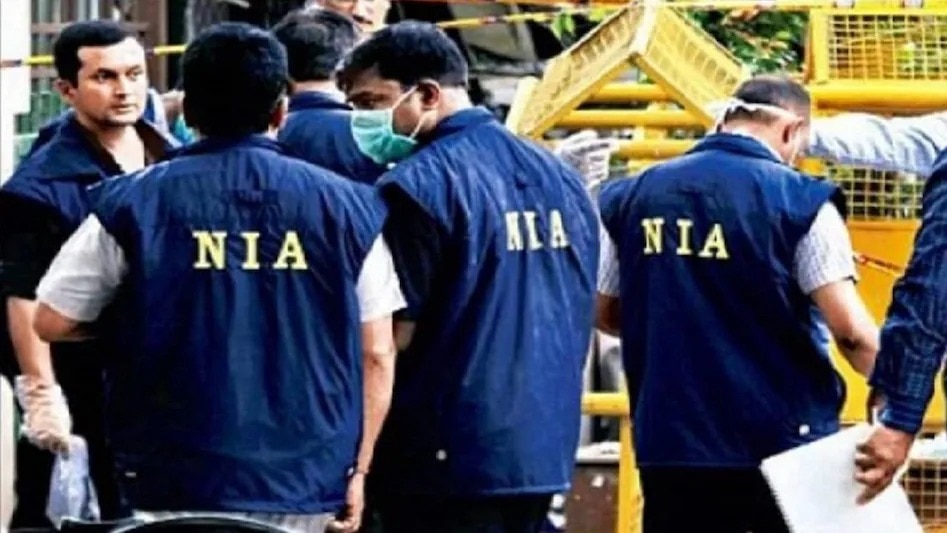
A special NIA court in Mumbai has rejected the National Investigation Agency's plea to cancel the bail of four key accused in the Elgar Parishad case, citing insufficient evidence of bail condition violations.
- The Special NIA Court upheld the bail of P. Varavara Rao, Vernon Gonsalves, Sudha Bharadwaj, and Arun Ferroira.
- NIA alleged the accused violated bail terms by attending a meeting at the Mumbai Press Club.
- The court ruled that mere presence at a meeting does not prove involvement in banned activities.
- CCTV footage lacked audio, making it impossible to verify the content of the discussions.
In a significant legal development, a special NIA Court in Mumbai has dismissed the National Investigation Agency's (NIA) application seeking to cancel the bail of four prominent accused in the long-standing Elgar Parishad case. The court observed that the agency failed to provide substantial evidence to prove that the accused had violated the specific conditions of their bail.
The Core Allegations
The NIA had moved the court claiming that the accused—P. Varavara Rao, Vernon Gonsalves, Sudha Bharadwaj, and Arun Ferroira—attended a meeting on the terrace of the Mumbai Press Club on January 19, 2026. The agency alleged that this gathering was intended to promote the ideology of the banned CPI (Maoist) organization and to strategize the 'Urban Naxal' movement. Under their bail conditions, the accused were strictly prohibited from contacting co-accused or individuals involved in similar activities.
Judicial Observations
Presiding Judge Chakor S. Baviskar scrutinized the evidence, including CCTV footage of the meeting in question. However, the court noted a critical gap: the footage lacked audio, making it impossible to determine the actual nature of the conversation.
The court held that mere presence at a gathering cannot be equated with the promotion of Maoist ideology or participation in banned activities.
The court emphasized that for bail to be revoked, there must be compelling circumstances such as interference with the judicial process, misuse of liberty, or attempts to abscond. The court noted that even if discussions regarding co-accused or legal matters took place, it does not automatically constitute a violation of bail terms unless proven to be part of an illegal conspiracy.
Why This Matters
BozokMedia analysis shows that this ruling sets a high threshold for investigative agencies attempting to revoke bail in high-profile political or activist cases. It reinforces the principle that suspicion, even when backed by circumstantial presence, is not a substitute for concrete proof of criminal intent or breach of legal conditions.
Frequently Asked Questions
1. Who are the four accused whose bail was maintained?
The accused are P. Varavara Rao, Vernon Gonsalves, Sudha Bharadwaj, and Arun Ferroira.
2. What was the basis of the NIA's plea?
The NIA claimed the accused violated bail conditions by attending a meeting at the Mumbai Press Club to discuss Maoist strategies.