The Gujarat High Court has granted bail to a woman convicted of an acid attack on a bus conductor, citing a lack of conclusive identification and missing physical evidence.
- Gujarat High Court suspended the 10-year sentence of Mahezbinbanu Chhuvara.
- Court noted that CCTV footage failed to identify the attacker due to the burqa covering the face.
- Critical evidence, including gloves, clothes, and the acid container, were not seized by police.
The Gujarat High Court has intervened in a high-profile acid attack case, suspending the 10-year rigorous imprisonment of a woman convicted of attacking a bus conductor in Ahmedabad. Justice Vimal K Vyas granted the relief after observing significant gaps in the prosecution's case, stating that the identity of the convict was not established beyond reasonable doubt.
The convict, 42-year-old Mahezbinbanu Chhuvara, was previously sentenced by the Ahmedabad City Civil and Sessions Court. The prosecution alleged that Chhuvara attacked 51-year-old Rakesh Brahmbhatt, an AMTS bus conductor, out of 'malice and jealousy' following the end of a romantic relationship. The victim suffered severe injuries to his right eye, back, and private parts.
The Failure of Identification
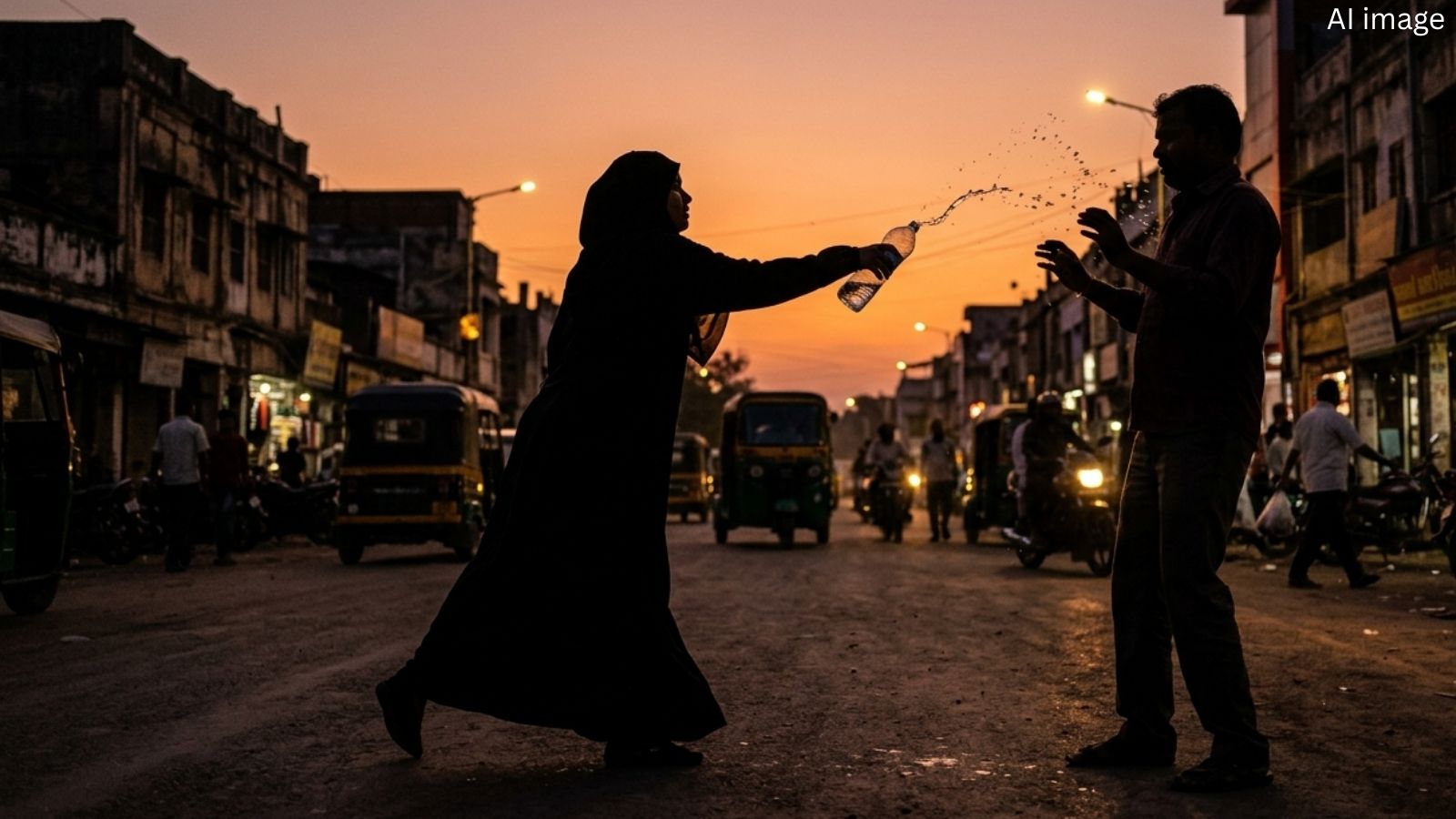
A pivotal point in the High Court's decision was the ambiguity of the visual evidence. The court noted that witnesses saw a person clad in a burqa fleeing the scene, but the face was entirely obscured. Even the victim, Rakesh Brahmbhatt, admitted during cross-examination that he could not definitively state whether the person in the CCTV footage was a man or a woman.
"The integrity of a criminal conviction rests on the seamless link between the accused and the crime scene; where that link is broken by missing evidence, the law must lean toward liberty."p>
Critical Lapses in Investigation
The court highlighted a shocking lack of forensic diligence. According to the testimony of Investigating Officer Ishwarbhai Gamit, the police failed to seize the clothes and gloves allegedly worn by the attacker. Furthermore, the plastic can used to throw the corrosive liquid was never recovered. The defense also pointed out that no digital footprints—such as WhatsApp messages or call records—were provided to prove the alleged relationship between the two parties.
Why This Matters
BozokMedia analysis shows that this case serves as a textbook example of the dangers of 'circumstantial over-reliance.' When law enforcement agencies rely on witness testimonies that are contradictory—such as the conflicting accounts of the victim's transport to the hospital—without backing them up with physical evidence, the entire prosecution collapses under judicial scrutiny.
The court also noted contradictions regarding the eyewitness testimony of the victim's son, Om. While the prosecution claimed the victim was taken to GCS Hospital immediately, medical records suggested a different sequence of events, further casting doubt on the complainant's version of the story.
Frequently Asked Questions
Q1: Has the woman been acquitted of all charges?
No, she has not been acquitted. Her sentence has been suspended, and she has been granted bail while her appeal against the conviction is pending.
Q2: What are the conditions of her bail?
She must provide a fresh bond of Rs 15,000 with one surety and is prohibited from leaving India without the court's permission.