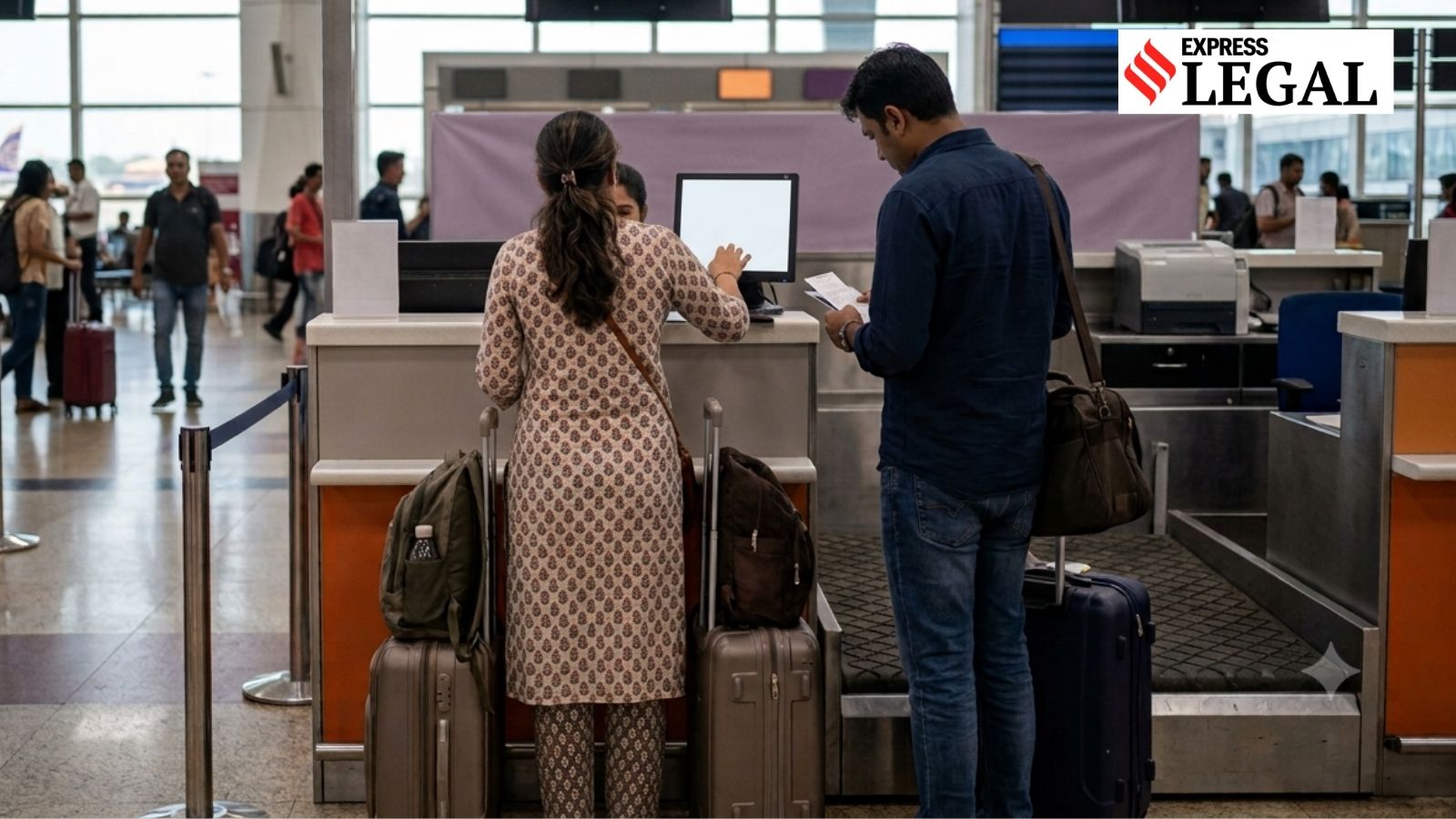
The District Consumer Commission in New Delhi has ordered an airline and a travel agency to pay ₹1.8 lakh to passengers who missed their flight due to a scheduling update sent to an incorrect email address. The ruling emphasizes the mandatory duty of service providers to ensure accurate communication.
- Airline and travel agency jointly ordered to pay ₹1.8 lakh in damages.
- Passengers missed a London-Delhi flight due to notification sent to a wrong email ID.
- Compensation covers ticket refunds, mental agony, and litigation costs.
In a significant ruling for passenger rights, the District Consumer Commission in New Delhi recently directed an airline and a travel agency to pay a total of ₹1.8 lakh to two passengers. The dispute arose after the travelers were denied boarding on a London-Delhi flight because they were unaware of a schedule change that had been communicated to an incorrect email address.
President Poonam Chaudhry and member Shekhar Chandra ordered the airline to refund ₹30,500 spent on emergency replacement tickets. Furthermore, both the airline and the travel agency were ordered to pay ₹50,000 each to the two complainants as compensation for mental agony and harassment, along with ₹25,000 each toward litigation expenses.
The Sequence of Events
The complainants had booked their tickets through a travel agency for a journey from London to Delhi. Their return flight was originally scheduled for 11:45 am. The passengers arrived at the airport at 9:43 am, well within the reporting window. However, they were shocked to find that the flight had been rescheduled to 10:45 am, and they were denied boarding for arriving 'late'.
The situation was exacerbated by the passengers' visa status. Fearing an overstay beyond the six-month limit permitted under their UK tourist visas, they were forced to purchase expensive new tickets immediately to avoid legal complications with immigration authorities. Upon returning to India, they discovered that the airline had sent the timing update to an incorrect email address.
Why This Matters
BozokMedia analysis shows that this case highlights a critical gap in the synergy between airlines and third-party booking agents. In an era of automated notifications, 'technical glitches' are often used as shields. This judgment establishes that when a customer's data is available to both parties, the failure to communicate critical changes constitutes a 'deficiency in service' regardless of who sent the email.
The burden of ensuring the delivery of critical travel updates lies solely with the service provider, not the consumer.
During the proceedings, the airline attempted to shift blame to the travel agency, claiming they had no control over third-party information. Conversely, the agency argued that flight operations were strictly the airline's domain. The commission rejected both arguments, noting that both parties possessed the correct email address and failed in their mandatory obligation to notify the passengers.
Frequently Asked Questions
Q1: Can both the airline and the agent be held liable?
Yes, if both parties had access to the customer's correct contact details and failed to ensure the notification was received, they can be held jointly liable.
Q2: What was the total compensation awarded in this case?
The total payout was ₹1.8 lakh, encompassing the cost of new tickets, compensation for mental distress, and legal fees.