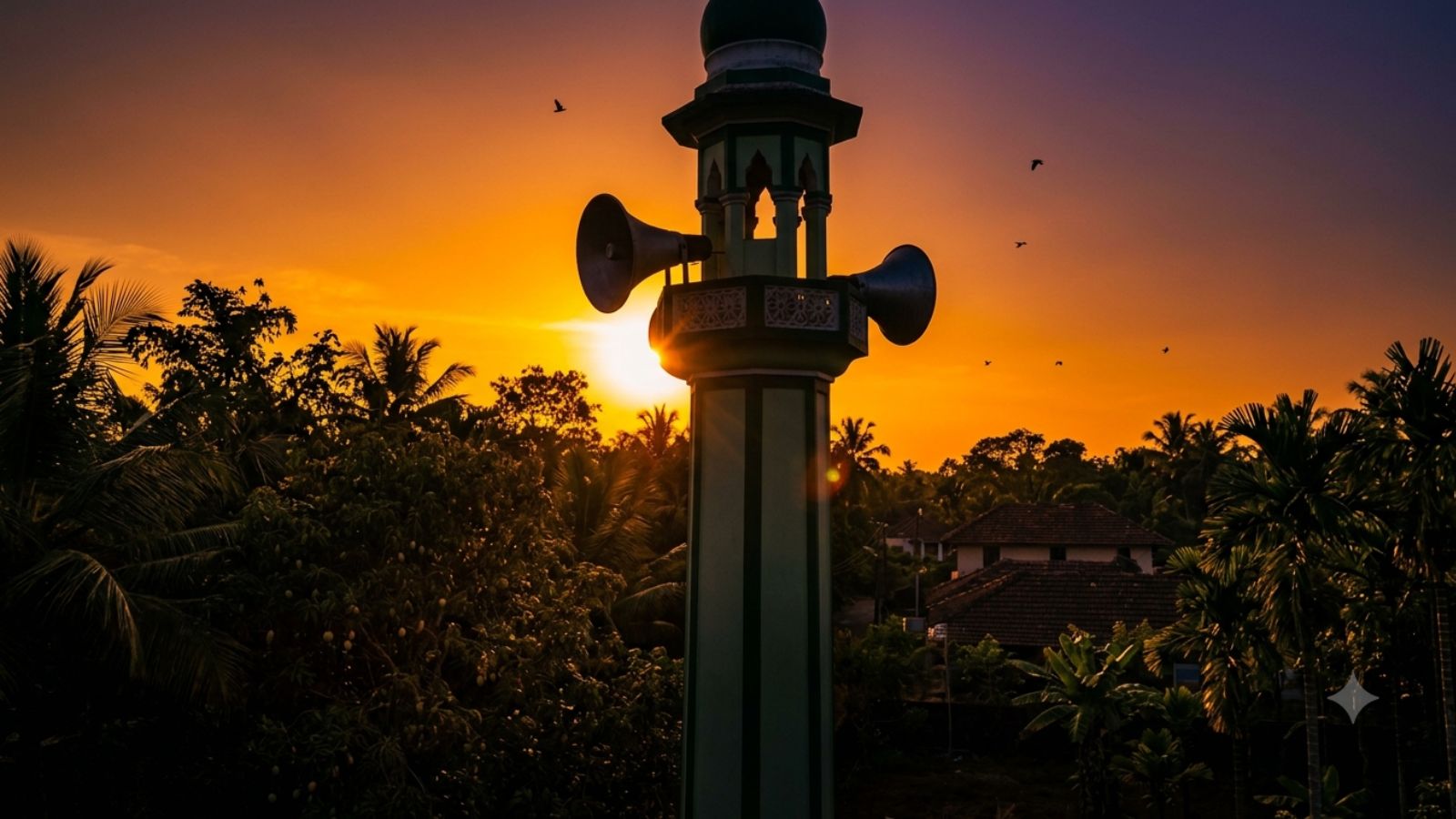
The Karnataka High Court has reinstated a mosque's loudspeaker license in Dakshina Kannada, ruling that the police cancelled it without following the principles of natural justice or issuing a prior notice.
- The Karnataka High Court restored the loudspeaker license for a mosque in Kariyangala village.
- The court ruled that the Deputy Superintendent of Police (DySP) failed to follow due process.
- The judgment emphasizes that administrative power must be exercised within the bounds of natural justice.
In a significant ruling, the Karnataka High Court has restored the license of a mosque in the Dakshina Kannada district to use loudspeakers for religious activities, including the azaan. Justice Suraj Govindaraj observed that the police action in cancelling the license was procedurally flawed and violated the fundamental principles of natural justice.
The dispute originated from a complaint filed by a local resident, Yogesh, alleging that the use of loudspeakers during Ramzan caused public disturbance. Following this, the Deputy Superintendent of Police (DySP) of the Bantwal sub-division issued an order on August 13, 2025, cancelling the mosque's permission to use public address systems.
Failure of Due Process
During the proceedings, the government advocate argued that the local village panchayat had issued a notice regarding unauthorized installations. However, the court rejected this contention, noting that the panchayat is not the licensing authority. The bench emphasized that since the police are the authority responsible for issuing loudspeaker licenses, they were legally obligated to issue a formal notice and provide the petitioner with a fair opportunity to be heard before passing any adverse order.
"No authority can proceed to pass an order just because it has the power to do so. It has to comply with the applicable requirements therein."
Why This Matters
BozokMedia analysis shows that this judgment serves as a critical check on administrative overreach. By emphasizing that power must be accompanied by procedure, the court has reinforced the idea that even in matters of public nuisance, the rights of individuals and institutions to be heard cannot be bypassed by the state machinery.
Historical Context of Noise Regulation
The regulation of loudspeakers in India is governed by the Noise Pollution (Regulation and Control) Rules, 2000. While these rules aim to curb noise pollution, they often intersect with religious freedoms protected under the Constitution. Legal battles frequently arise when local authorities attempt to restrict religious practices without adhering to the strict procedural mandates required by law.
Frequently Asked Questions
1. Why did the court overturn the DySP's order?
The court found that the police cancelled the license without issuing a show-cause notice or giving the mosque management a chance to respond.
2. What is the current status of the license?
The court has 'read down' the cancellation order as a show-cause notice, meaning the license remains operational while the mosque prepares its reply.