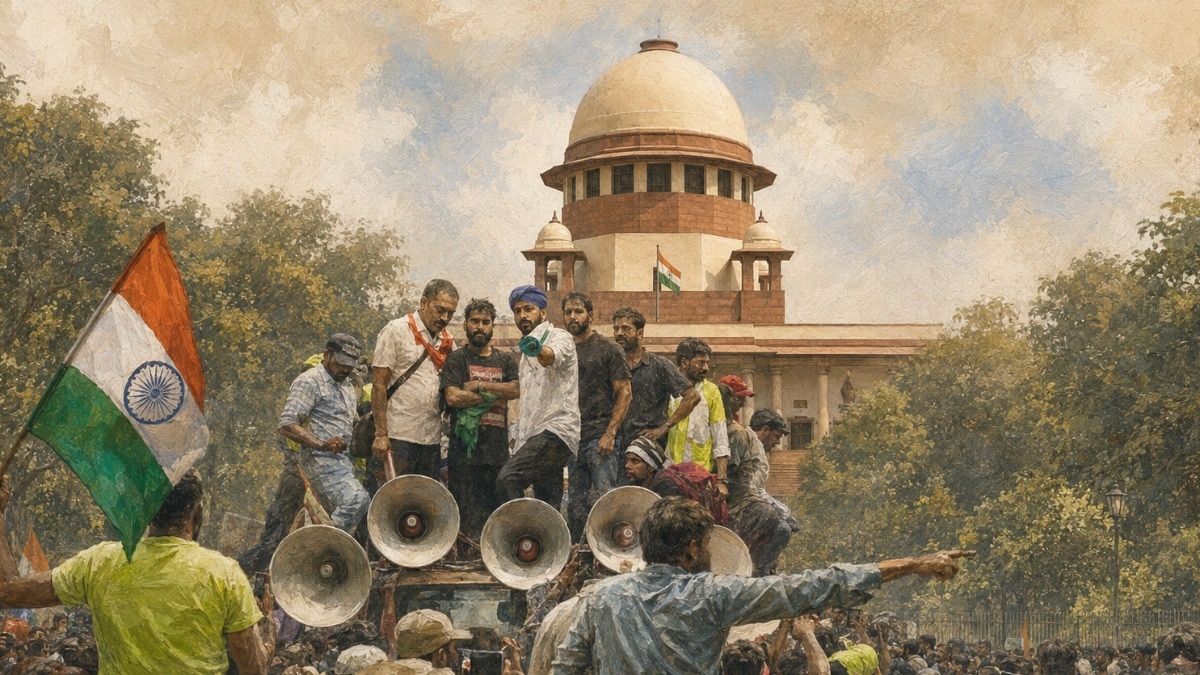
In a landmark move, the Supreme Court has utilized its extraordinary powers under Article 142 to quash FIRs filed against students protesting the NEET-UG 2026 paper leak. This same power was famously used in the Ayodhya verdict to ensure equitable justice.
- The Supreme Court quashed FIRs against protesters involved in the CJP-led NEET-UG agitation using Article 142.
- The court ordered that these FIRs will not be investigated and are closed for all intents and purposes.
- Article 142 was previously used in the Ayodhya case to allot land for a mosque.
- Relief is limited to ordinary protesters; those with criminal records face separate investigation.
The Supreme Court of India has once again demonstrated its extraordinary judicial authority by invoking Article 142 of the Constitution. A three-judge bench, headed by Chief Justice of India Surya Kant, ordered the quashing of FIRs registered against students and youths who participated in the Cockroach Janta Party (CJP)-led protests regarding the NEET-UG 2026 question-paper leak. The court declared that these FIRs "will not be investigated, and will be closed for all intents and purposes."
The protests, which began in late July following reports of paper leaks, saw significant escalations, particularly during the CJP-led Parliament March on July 20. While many demonstrations were peaceful, certain instances of violence in Central Delhi resulted in injuries to over 200 police personnel, leading to widespread criminal cases being filed across multiple states including Maharashtra, Assam, Bihar, and West Bengal.
Why This Matters
BozokMedia analysis shows that the invocation of Article 142 serves as a critical safety valve in the Indian legal system. By stepping in to quash these FIRs, the Supreme Court has prioritized the future of the student community over protracted legal battles, effectively resolving a massive standoff between the government and youth activists. This move highlights the Court's role in performing 'complete justice' when statutory laws might otherwise lead to disproportionate hardship.
"Article 142 is the ultimate tool for the Supreme Court to bridge the gap between the letter of the law and the spirit of justice."
The historical significance of this power cannot be overstated. In 2019, during the Ayodhya verdict, the Supreme Court used Article 142 to direct the government to allot five acres of land in Ayodhya for the construction of a mosque. This was done to remedy the unlawful dispossession of the Muslim community in 1949, ensuring that the verdict provided equitable relief to all parties involved.
However, the Court was careful to draw a line. While providing relief to general protesters, the bench allowed law enforcement agencies to separately examine the involvement of 2,873 individuals suspected of having prior criminal records or direct links to the violence that occurred during the demonstrations.
Frequently Asked Questions
1. What is the significance of Article 142?
Article 142 allows the Supreme Court to pass any decree or order necessary for doing 'complete justice' in any matter pending before it, overriding ordinary legal procedures if necessary.
2. Does this quashing apply to everyone involved in the protests?
No, the relief is specifically for ordinary protesters. Individuals with criminal backgrounds or links to violence are subject to separate investigation.